
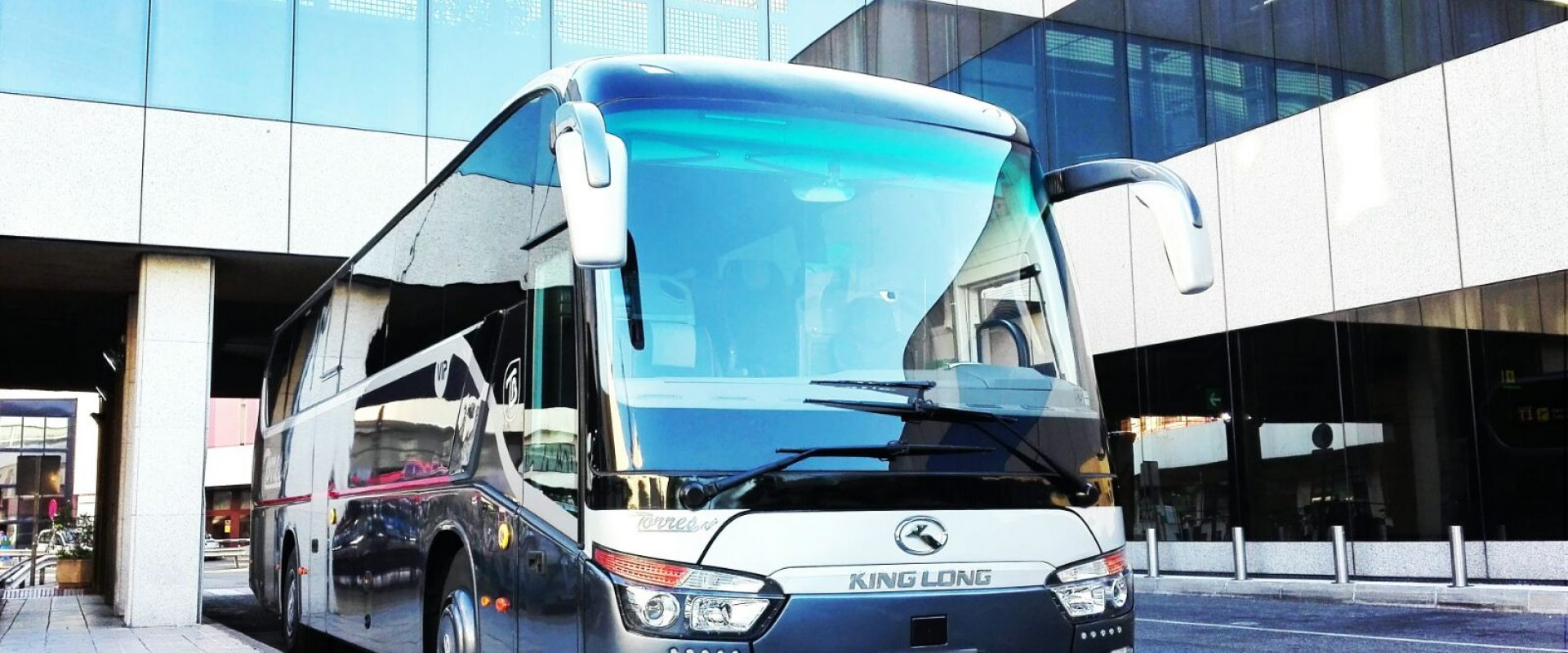
Ever stared at a huge coach bus rolling down the highway and thought, “How many seats on a coach bus would actually fit my group?” You’re not alone—most of us have faced that moment when a transport quote shows a vague “50‑seat vehicle” and we’re left guessing whether it’ll feel cramped or spacious.
It’s a little confusing, especially when you’re juggling a wedding party, a corporate retreat, or a school field trip. You want enough room for everyone to sit comfortably, but you also don’t want to pay for empty seats you’ll never use.
At Torres Bus we’ve been moving people around Madrid and beyond for over three decades, and we’ve learned that coach capacity isn’t a one‑size‑fits‑all number. Our fleet runs from cozy 7‑seat minibuses perfect for a VIP airport transfer, all the way up to massive 70‑seat coaches ideal for a concert crew or a multi‑day tour across Spain.
Why does the exact seat count matter? First, it determines the amount of personal space each passenger enjoys—think legroom, seat recline, and easy access to luggage compartments. Second, it impacts the overall cost per head, because larger vehicles usually come with higher fuel and driver fees. And third, local regulations sometimes dictate the maximum passengers for certain road types or event venues.
Imagine you’re planning a day trip to Toledo with a group of 30 friends. A 24‑seat mini‑coach would leave you scrambling for extra seats, while a 50‑seat coach might feel like a floating living room—plenty of wiggle room for souvenirs and a few extra stops at a café. On the other hand, a corporate client sending 12 executives to a conference will probably prefer a sleek 12‑seat executive coach that feels more like a boardroom on wheels.
So, how do you decide which size is right for you? It boils down to three quick questions: How many people are actually traveling? What level of comfort and amenities do they expect? And what’s your budget ceiling?
In the next sections we’ll break down the most common seat configurations, walk you through the pros and cons of each, and give you a handy checklist to match your event’s vibe with the perfect bus size. By the end, you’ll be able to answer the “how many seats on a coach bus” question with confidence, and book the vehicle that feels tailor‑made for your journey.
TL;DR
Choosing the right coach size hinges on how many people travel, the comfort level you need, and your budget constraints.
Our quick guide walks you through seat configurations—from 7‑seat minibuses to 70‑seat coaches—so you can book the perfect bus without guesswork and enjoy smooth, hassle‑free travel for every occasion today.
Step 1: Understand Coach Bus Seating Configurations
Ever walked onto a coach and thought, «Is there enough elbow room for my grandma?» That moment of doubt is exactly why you need to decode the seating layout before you click ‘book’. Let’s break it down together.
First off, coach buses aren’t all the same. Torres Bus runs a fleet that ranges from tight‑fit 7‑seat minibuses to sprawling 70‑seat luxury coaches. The difference isn’t just the number of chairs – it’s how those chairs are arranged, the width of the aisle, and the extra space for luggage.
Typical seat layouts you’ll encounter
2‑plus‑2 configuration: Two seats on each side of the aisle. You’ll see this on most 40‑ to 50‑seat coaches. It’s a solid middle ground – decent legroom, easy walk‑through, and a predictable price point.
2‑plus‑1 configuration: One seat on the driver’s side, two on the opposite. This shows up on premium executive coaches (12‑16 seats) where comfort trumps capacity. You get a wider aisle and more personal space – perfect for a boardroom‑on‑wheels vibe.
Staggered or “theatre” style: Seats are slightly offset, giving you a bit more shoulder room without widening the bus. It’s common in 24‑ to 30‑seat mini‑coaches used for school trips or small tours.
But how do you decide which layout fits your group? Think about three things: the total headcount, the comfort expectations, and the route itself. A winding mountain road might feel cramped in a 2‑plus‑2 layout, while a straight highway trip to Toledo can handle a denser seating plan.
Here’s a quick cheat‑sheet you can print out:
- 7‑12 seats: Ideal for VIP airport transfers or small corporate teams. Look for 2‑plus‑1 or lounge‑style seats.
- 13‑24 seats: Good for school outings or boutique tours. Staggered rows keep everyone comfortable.
- 25‑50 seats: Best for weddings, concerts, or day trips with friends. 2‑plus‑2 is the most common.
- 51‑70 seats: Full‑size coaches for large conferences or multi‑day tours. Expect tighter legroom but more space for luggage.
And if you’re still fuzzy on the numbers, our How many seats in a minibus? Complete Guide to Capacity Options walks you through every size tier, so you can match the bus to your guest list without guessing.
Now, let’s talk about the “real‑world” impact of those configurations. Picture this: you’ve booked a 24‑seat mini‑coach for a school field trip to Segovia. The seats are staggered, the aisle is wide enough for a wheelchair, and there’s a dedicated luggage rack at the back. The kids can stretch out a bit, the teachers can move around easily, and you avoid the dreaded “someone can’t get their backpack in” drama.
Contrast that with a 50‑seat coach on a corporate retreat where every seat is a straight‑up 2‑plus‑2. If the agenda includes a workshop with laptops, you’ll appreciate the extra aisle space for power strips and quick coffee runs.
So, how do you translate all this into a decision? Grab a pen, write down your passenger count, then map it against the layout options above. Add a buffer of two‑three seats for unexpected guests or extra luggage, and you’ve got a solid starting point.
Need a visual aid? Below is a quick video that walks you through the interior of a typical 50‑seat coach, pointing out the seat pitch, aisle width, and luggage compartments. It’ll help you picture the space before you step inside.
After you’ve watched that, take a moment to imagine your own group sitting there. Who’s likely to need extra legroom? Who’s bringing bulky gear? Those mental notes will guide you toward the right configuration.
And if you’re planning a cruise‑based itinerary, you might want to coordinate ground transport with a travel advisor. Wanderlust Travel often partners with bus operators like Torres Bus to handle airport‑to‑port shuttles, making the whole journey seamless.
Finally, don’t forget the human side of the equation: the driver. A comfortable cabin means a relaxed driver, which translates to smoother rides. For larger events you might even consider hiring an extra crew member to help with boarding – that’s where platforms like TalentsHive can connect you with reliable event staff.
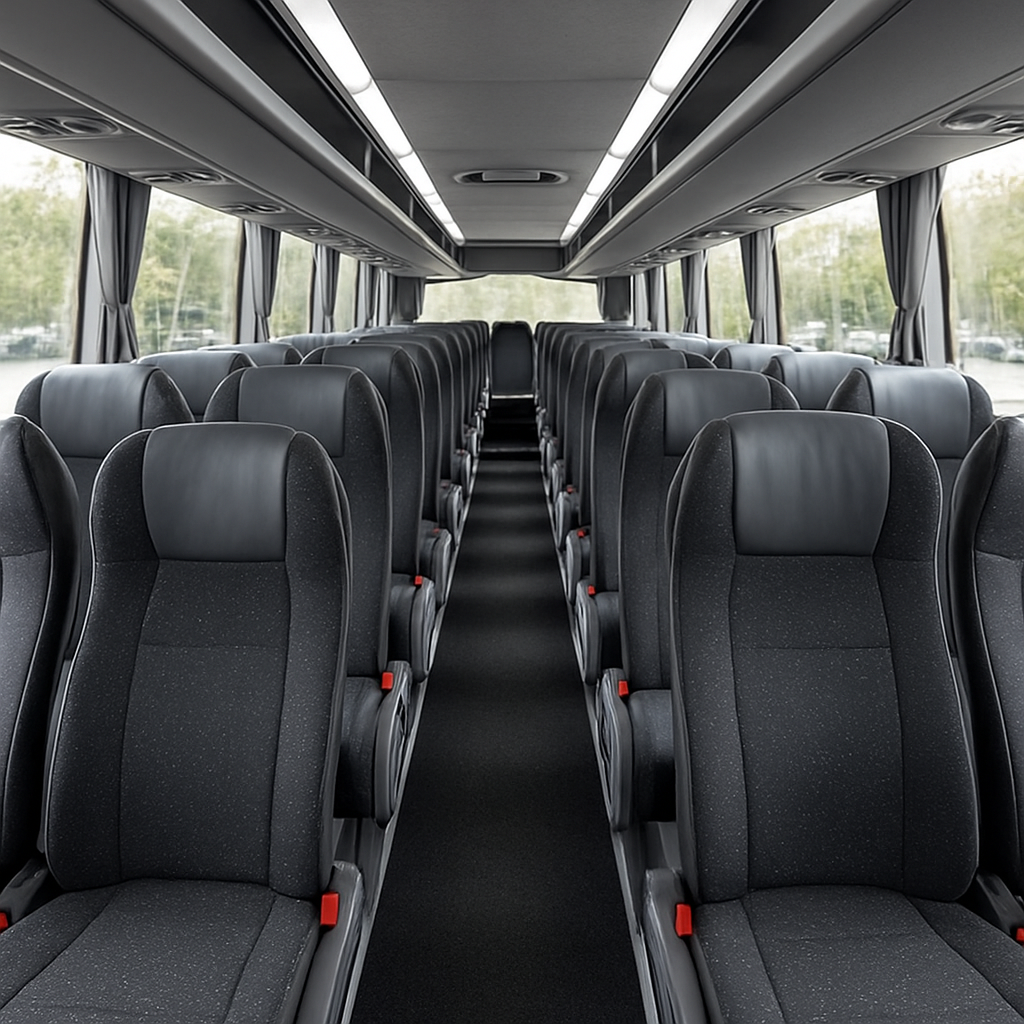
Ready to visualise your perfect coach? Below is a placeholder for an image that captures the essence of a well‑configured bus interior.
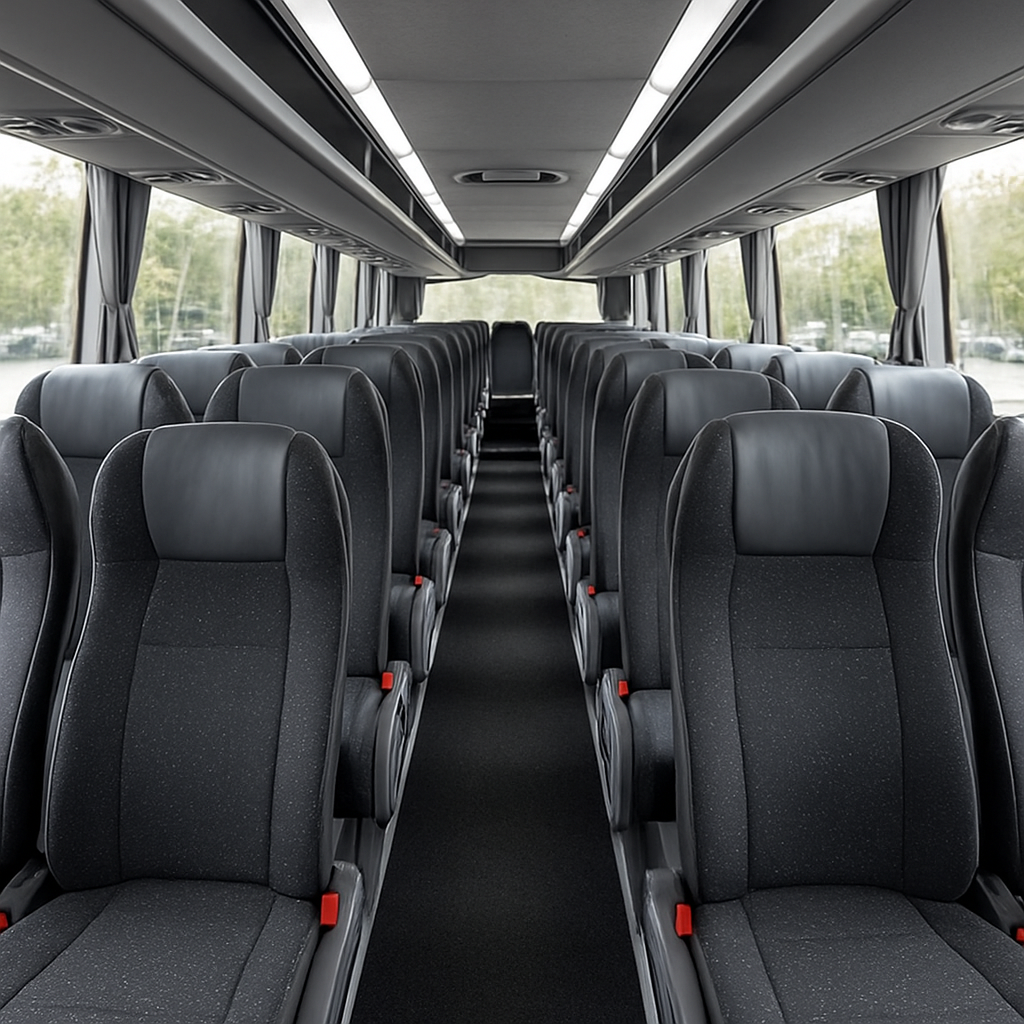
Take these steps, match the layout to your group’s needs, and you’ll avoid the common pitfall of “too many seats, not enough comfort.” When you book, you’ll know exactly why you chose a 2‑plus‑1 executive coach over a 2‑plus‑2 standard model – and your passengers will thank you for the extra space.
Step 2: Factors That Influence Seat Capacity
Ever wonder why two coaches that look identical can hold a different number of passengers? That moment of doubt is what we’re tackling here – the hidden variables that turn a simple seat count into a real‑world decision.
First off, the layout you chose in Step 1 is only the starting point. From there, things like onboard amenities, local regulations, and even the amount of luggage your group carries can shave seats off the theoretical maximum.
So, what should you keep an eye on when you’re trying to answer “how many seats on a coach bus” for your specific event?
Vehicle size and layout
The base capacity comes from the manufacturer’s seat map – a 24‑seat mini‑coach, a 50‑seat standard coach, or a 70‑seat high‑capacity bus. Those numbers are printed on the vehicle’s specification sheet and give you the ceiling before any adjustments.
Amenities that eat seats
Anything you add for comfort or convenience costs you a seat or two. A restroom module can knock out 2‑4 seats, a small galley or snack bar might remove another 1‑2, and wider leather seats with extra legroom can drop the count by a handful. The trade‑off is usually worth it for longer trips, but you need to factor it in now.
Regulatory and safety limits
Local and national rules set hard caps on how many passengers you can legally carry. Seat‑belt requirements, axle load limits, and maximum vehicle length all play a role. In Spain, the Ministry of Transport dictates the maximum seating for each coach class, so the number on the spec sheet is already vetted against those rules.
Luggage and passenger weight
Every suitcase, musical instrument, or sports gear adds weight. Most operators use a rule‑of‑thumb: subtract 1‑2 seats for every 10 kg of extra cargo per passenger, especially on smaller minibuses where the cargo bay is limited. Overloading the under‑carriage space not only breaches the GVWR (gross vehicle weight rating) but can also force you to downgrade the seat count for safety.
Accessibility and wheelchair spaces
If you have guests who need a wheelchair or a mobility aid, the bus will need a dedicated securement area. That typically removes 3‑5 fixed seats, depending on the lift configuration. It’s not a penalty – it’s a legal requirement and a comfort boost for those travelers.
Trip length and comfort buffer
For short hops (under two hours) you can often squeeze the maximum seats. For anything longer, most planners shave 10‑20 % off the theoretical capacity to give passengers extra legroom, a chance to stretch, and room for onboard amenities. Think of it as a “comfort cushion” that prevents the coach from feeling like a sardine can.
Here’s a quick checklist you can run through while you’re on the phone with a provider:
- Ask for the exact seat map and note any restroom, galley, or lounge modules.
- Confirm whether the listed number includes wheelchair‑accessible spaces.
- Calculate luggage volume per passenger and see if the cargo bay can handle it without sacrificing seats.
- Check local regulations for maximum passenger limits on the route you’ll take.
- Decide if a 5‑10 % reduction for long‑haul comfort makes sense for your group.
By walking through these factors, you’ll turn the vague question “how many seats on a coach bus” into a concrete answer that matches your event’s vibe and budget. And remember, the most reliable way to lock down the right number is to request a detailed seat‑map from Torres Bus – they’ll show you exactly what you’re getting before you sign.
According to industry data, mini and shuttle buses usually seat 12‑35 passengers, midsize coaches hold 24‑47, and full‑size motorcoaches can accommodate 47‑90, depending on the layout and amenities you choose (see the capacity breakdown). Use those ranges as a sanity check against the specific vehicle you’re eyeing.
Now that you know what pulls the numbers up or down, you can confidently match the right coach to your group, avoid surprise seat shortages, and keep everyone comfortable on the road.
Step 3: Standard Seat Layouts and Capacity Ranges
Alright, let’s get into the nitty‑ gritty of what those numbers actually mean on the ground. You’ve already counted heads and thought about luggage – now you need to translate that into a real‑world seat map.
2‑by‑2 Classic Coach
The workhorse of any fleet is the classic 2‑by‑2 arrangement: two seats on each side of a central aisle. It’s the layout you picture when you think of a “coach bus.” Because the aisle is generous, it works well for families with strollers, wheelchair‑accessible lifts, or anyone who just likes a little elbow room.
In Spain you’ll typically see this layout on mid‑size coaches that seat anywhere from 24 to 50 passengers, depending on the overall length of the vehicle. If you add a small restroom or a snack kiosk, you’ll lose a couple of rows – but you gain comfort for longer trips.
2‑by‑1 Executive with Lounge
Step up a notch and you get the 2‑by‑1 plus a lounge module at the rear. One seat on the driver’s side, two opposite, and a mini‑conference area with swivel chairs or a low table. This is the go‑to for corporate off‑sites, wedding parties, or any group that wants to feel like they’re in a boardroom on wheels.
Because the seats are wider and the aisle is narrower, the total capacity drops to roughly 12‑20 seats. That sounds low, but think about the extra legroom, power outlets, and the fact you’re not cramming strangers together.
Theater‑Style 3‑Across “High‑Capacity”
When you need to move a big crew or a school field trip, the theater‑style layout squeezes three seats across the width. It’s common on 40‑ to 70‑seat coaches that travel longer distances. Legroom can shrink to around 70 cm, so it’s best for trips under three hours where everyone’s okay with a tighter squeeze.
According to a motorcoach capacity guide, many operators offer a 40‑passenger standard coach and a 56‑passenger luxury coach as baseline optionsmotorcoach capacity guide. Those numbers line up with the theater layout range you’ll see in Spain.
How to Turn a Layout into a Seat Count
1. Grab the exact seat map. Ask Torres Bus for a PDF that shows every row, aisle, and any modules (restroom, galley, wheelchair space).
2. Mark any “dead zones.” Those are seats you’ll lose if you request extra legroom, a USB charging hub, or a small bar.
3. Apply a comfort buffer. For trips over two hours, shave off 5‑10 % of the raw count. It feels weird to cut seats, but the extra stretch time makes the journey feel a lot less cramped.
4. Double‑check regulations. Spain’s transport ministry caps passenger numbers by vehicle class, so the figure on the spec sheet is already vetted – just make sure any custom modules don’t push you over the legal limit.
Real‑World Quick‑Check
Imagine you’re planning a wedding rehearsal dinner in Toledo for 30 guests plus a couple of parents. You pick a 2‑by‑2 coach that officially seats 48. Subtract 4 seats for a small refreshment table, another 2 for a wheelchair lift, and a 10 % comfort buffer (≈5 seats). You end up with 37 usable seats – more than enough, with room to spare for luggage.
Now picture a corporate tech team of 15 heading to a conference in Barcelona. The 2‑by‑1 executive layout with a lounge fits 18 seats, but you want extra power ports. Remove 2 seats for a larger media rack, and you’re at 16 – still perfect for the group.
Finally, a school field trip of 40 students plus 2 teachers. A theater‑style 70‑seat coach feels roomy enough, even after you strip out 6 seats for a portable whiteboard and a small first‑aid station.
Bottom line: the layout you choose directly shapes the capacity range, and a quick math check keeps you from over‑booking or ending up with empty seats. Grab the seat map, apply the buffer, and you’ll know exactly how many seats on a coach bus you actually have for your event.
Step 4: Compare Different Coach Sizes and Their Seating
When you finally sit down with the seat map, the first thing you’ll notice is that not all coaches are created equal. A 7‑seat minibus feels like a private car, while a 70‑seat motorcoach can look more like a small auditorium. Understanding those size brackets is the key to answering how many seats on a coach bus actually work for your group.
Let’s break the fleet into three practical buckets that Torres Bus actually offers: the micro‑minibus (7‑16 seats), the midsize coach (24‑50 seats) and the full‑size high‑capacity coach (50‑70 seats). Each bucket comes with its own seating layout quirks, amenity trade‑offs, and a sweet spot for different event types.
Micro‑minibus (7‑16 seats) – Think about a wedding party of close relatives, a VIP airport transfer, or a small school field trip. The layout is usually a 2‑by‑1 configuration with a couple of seats behind the driver and a narrow aisle. Because the vehicle is compact, you often get extra legroom per seat, and you can even request a wheelchair‑accessible module without losing more than two seats.
Midsize coach (24‑50 seats) – This is the workhorse for most day trips to Toledo, Segovia or a corporate off‑site. The classic 2‑by‑2 row dominates, giving you a comfortable 32‑inch seat width and a generous aisle for luggage or a stroller. If you need a small galley, a restroom, or a media rack, expect to lose about 2‑4 seats, but you still end up with a solid capacity for groups of 30‑40 people.
Full‑size high‑capacity coach (50‑70 seats) – Ideal for large school groups, concert crews, or a pilgrimage tour across Spain. The theater‑style 3‑across layout squeezes the most heads into the cabin, but legroom drops to around 70 cm. Because every row is packed, you’ll want to add a 10‑15 % comfort buffer for trips over two hours – that’s the difference between a cramped ride and a tolerable one.
Now, let’s turn that into a quick checklist you can run while you’re on the phone with Torres Bus:
Identify the vehicle size you’re eye‑looking at – micro‑minibus, midsize, or full‑size.
Ask for the exact seat map and note any built‑in modules (restroom, galley, wheelchair space) that will eat seats.
Calculate your required seats: total guests + 5‑10 % buffer for last‑minute changes.
Subtract seats lost to amenities – usually 2‑4 for a restroom, 1‑2 for a media rack, 3‑5 for a wheelchair lift.
Compare the final number with the vehicle’s capacity range. If you’re above the top of the range, move up a size bucket.
Doing this math in a notebook or a quick spreadsheet takes less than two minutes, and it saves you from the dreaded ‘oops, we don’t have enough seats’ moment on the day of the trip.
If you’re leaning toward an executive‑style 2‑by‑1 layout, remember that the seats are often wider and arranged in single‑ and double‑row configurations – just like the executive‑style seating described by Concord Coach Lines their premium service page notes.
Here’s a visual that sums up the three size buckets and their typical seat counts.

Notice how the legroom and aisle width shrink as you move from the micro‑minibus to the high‑capacity coach. That visual cue helps you decide whether you need extra comfort for a three‑hour tour or can afford the tighter squeeze for a short city hop.
Bottom line: by matching your group size, amenity needs, and trip length to the right coach bucket, you instantly know how many seats on a coach bus will actually be usable. Grab a pen, run the checklist, and you’ll walk into the booking call with confidence – no guesswork, just a clear seat count that fits your event perfectly.
Step 5: Regulations and Legal Limits on Coach Seating
Alright, you’ve scoped out layouts and counted heads – now it’s time to face the rules that actually dictate how many seats you can legally put on a coach. In Spain, a handful of national and regional regulations set hard caps, and they’re not just bureaucratic fluff – they protect safety, weight distribution, and passenger comfort.
Know the vehicle class first
Every coach belongs to a class defined by its length, axle count, and gross vehicle weight rating (GVWR). The Ministry of Transport publishes a table that says, for example, a 12‑meter, two‑axle coach can carry up to 55 seated passengers, while a 13‑meter, three‑axle model can stretch to 70. If you try to squeeze more than the class allows, you’ll run into illegal overload penalties and, worse, a safety risk on the road.
So, before you ask the driver how many seats you want, double‑check the vehicle’s class on the spec sheet. Torres Bus always includes that info, so you’ll know exactly where the legal ceiling sits.
Seat‑belt and accessibility rules
Spanish law mandates that every seat must have a functioning seat‑belt. That means any extra lounge or media module you add can’t replace a belt‑equipped seat unless you officially re‑classify the space as a wheelchair area. Wheelchair‑accessible zones also eat a few seats – usually three to five – but they’re non‑negotiable for compliance with the European Accessibility Act.
Ask your provider: “Does the quoted seat count include the mandatory wheelchair space?” If they say no, subtract those seats yourself before you lock in the contract.
Weight and axle limits
Every axle has a maximum load, and the total GVWR can’t be exceeded. A rule of thumb used by most operators in Madrid is to deduct one seat for every 10 kg of excess cargo per passenger when you’re close to the limit. That’s why a coach that technically seats 55 might realistically carry only 50 if you’re hauling a lot of luggage for a wedding party.
When you’re planning a multi‑day tour with suitcases, ask for the cargo‑to‑seat ratio. Torres Bus will give you a clear figure, and you can adjust the seat count accordingly.
Road‑type restrictions
Some regional roads, especially in historic towns like Ávila or Segovia, impose lower passenger limits on larger coaches to protect narrow streets and bridges. The local traffic authority will often post a maximum of 45 seats for any vehicle over 12 meters on those routes. If your itinerary includes such streets, you’ll need to pick a smaller bus or split the group.
Tip: run a quick “route check” with the driver before you sign the quote. It saves you a last‑minute scramble for an extra vehicle.
Quick compliance checklist
- Verify the coach’s class and its legal seat ceiling.
- Confirm every seat has a seat‑belt and that wheelchair spaces are counted.
- Calculate cargo weight and apply the 1‑seat‑per‑10 kg rule if you’re near the GVWR.
- Check local road restrictions for the specific cities you’ll visit.
- Ask the provider for a signed seat‑map that reflects all deductions.
Decision‑making table
| Regulation | What it caps | How to adjust your count |
|---|---|---|
| Vehicle class (length/axles) | Maximum passengers per class | Use the spec sheet; never exceed the listed ceiling. |
| Seat‑belt & wheelchair law | Seats must have belts; wheelchair zones replace seats | Subtract 3‑5 seats for each wheelchair space; ensure every remaining seat has a belt. |
| GVWR & cargo load | Total weight per axle | Deduct 1 seat per 10 kg of extra cargo above the standard load. |
By running through this checklist and the table, you’ll end up with a realistic, legal seat count that matches your event’s needs. No surprise “we can’t board everyone” moments, just a smooth ride that respects Spanish safety standards.
Once you have the legal number in hand, you can circle back to the comfort buffer we talked about earlier and decide whether to add a few extra seats for a tighter squeeze or keep a roomy vibe. Either way, you’ll be confident that the coach you book complies with every rule, so you can focus on enjoying the journey rather than worrying about paperwork.
Step 6: Choosing the Right Coach Size for Your Needs
Now that you’ve untangled the legal caps and the layout options, the real question is: which size actually feels right for your group?
First, grab your headcount. Write down the exact number of passengers, then add a 5‑10 % buffer for last‑minute sign‑ups or stray luggage. If you end up with 33 names, think of it as a 36‑seat requirement.
Next, ask yourself how much breathing room you want. A 24‑seat midsize coach with a 2‑by‑2 layout gives about 78 cm of legroom – great for a day trip to Toledo. If you’re ferrying seniors or a wedding party that will be standing up to chat, bump that up to a 30‑seat version or choose the executive 2‑by‑1 layout, which trades a few seats for wider seats and a small lounge.
Then, look at the trip length. For journeys under two hours you can squeeze the maximum seats without hurting comfort. Once you cross the three‑hour mark, subtract roughly 10 % of the raw capacity to create a comfort buffer. That means a 50‑seat high‑capacity coach becomes effectively 45 usable seats for a half‑day tour.
Now, match those numbers to the three size buckets Torres Bus offers.
Micro‑minibus (7‑16 seats)
This bucket is perfect for intimate groups – think a bridal party of 10, a VIP airport transfer, or a small school outing. Because the vehicle is compact, you often get extra legroom per seat, and adding a wheelchair‑accessible module only costs you one or two seats. If your adjusted headcount lands between 7 and 14, the micro‑minibus gives you that cozy, private feel without any wasted space.
Midsize coach (24‑50 seats)
The midsize range is the workhorse for most day‑trips and corporate off‑sites. A 30‑seat coach with a classic 2‑by‑2 layout balances capacity and comfort, while a 40‑seat version lets you add a small refreshment table or a media rack without breaking the legal ceiling. If your buffer‑adjusted total sits anywhere from 20 to 45, you’re in the sweet spot of this bucket.
Full‑size high‑capacity coach (50‑70 seats)
When you’re moving large crews, school groups, or concert staff, the high‑capacity coach is the only realistic option. The theater‑style 3‑across layout packs the most heads, but remember to carve out a 10‑15 % comfort cushion for trips longer than two hours. So, if your final seat count after buffers is 55 or more, look at a 60‑seat or 70‑seat coach and decide whether you want a few empty seats for luggage or a tighter, more economical load.
Quick decision checklist
- Count passengers, then add a 5‑10 % buffer.
- Decide the comfort level – extra legroom vs. maximum capacity.
- Consider trip length – apply a 10 % seat reduction for journeys over two hours.
- Map the adjusted total to micro‑minibus, midsize, or full‑size buckets.
- Factor in any mandatory wheelchair spaces or amenity modules (restroom, galley, media rack).
- Confirm the final number stays below the legal ceiling for the chosen vehicle class.
At the end of the day, the right coach size isn’t just a number – it’s the feeling you get when you step onto the bus and know there’s enough room to stretch, chat, and enjoy the ride. Use the checklist above, run the simple math, and you’ll walk into the booking call with Torres Bus confident that you’ve nailed the perfect fit.
Conclusion
So you’ve walked through layouts, buffers, and legal caps – now the picture is clear.
When you ask yourself «how many seats on a coach bus» you actually want confidence that the bus will feel roomy enough for conversation, luggage, and a few stretch breaks.
Remember the three size buckets Torres Bus offers: micro‑minibus (7‑16 seats), midsize coach (24‑50 seats), and full‑size high‑capacity coach (50‑70 seats). Pick the bucket that matches your adjusted headcount after the 5‑10 % buffer.
Next, check the amenities you need. A restroom or media rack will shave a couple of seats, but the trade‑off is worth it for longer trips.
Finally, run the quick checklist one more time: headcount + buffer, subtract seats for wheelchair spaces or extra modules, then verify you stay under the legal ceiling for that vehicle class.
If the numbers line up, you can walk into the booking call with Torres Bus knowing you’ve nailed the perfect fit.
And here’s a little tip: keep a one‑page cheat sheet of your calculations on your phone. When the driver asks for your final seat count, you’ll have it ready without fumbling.
Whether it’s a wedding party, a corporate roadshow, or a school field trip, the right coach size turns a logistical headache into a smooth, enjoyable ride.
Ready to book? Give Torres Bus a quick call or drop a message, and let the experts confirm your final seat count today.
FAQ
How many seats does a typical coach bus have in Spain?
Most coaches in Spain fall into three size buckets that Torres Bus offers: a micro‑minibus with 7‑16 seats, a midsize coach with 24‑50 seats, and a full‑size high‑capacity coach that can hold 50‑70 passengers. The exact number depends on the layout you choose – a 2‑by‑2 classic layout maximises capacity, while a 2‑by‑1 executive layout sacrifices a few seats for extra legroom and a lounge area. In practice, you’ll see a 48‑seat midsize coach or a 60‑seat high‑capacity model as the most common configurations.
Can I add amenities like a restroom or Wi‑Fi without losing too many seats?
Yes, but every module eats seats. A compact restroom typically removes 2‑4 seats, a media rack or small galley takes another 1‑2, and a wheelchair‑accessible lift can cost 3‑5 fixed seats. The trade‑off is usually worth it for longer trips because comfort and compliance with Spanish accessibility law are non‑negotiable. When you request these features, ask Torres Bus for an updated seat map so you know exactly how many usable seats remain.
What buffer should I use for last‑minute guests or extra luggage?
We recommend adding a 5‑10 % buffer to your headcount. If you’ve counted 30 guests, calculate an extra 2‑3 seats for unexpected sign‑ups or bulky luggage. This buffer also gives you room to subtract seats that disappear when you add a restroom, wheelchair space, or extra legroom. The buffer keeps your final seat count safely under the legal ceiling for the vehicle class you’ve chosen.
How do I make sure the coach complies with Spanish legal limits?
First, check the vehicle class on the spec sheet – it tells you the maximum legal passenger count for that length and axle configuration. Next, verify that every seat has a seat‑belt and that any wheelchair zones are counted as required by the European Accessibility Act. Finally, consider the GVWR: if you’re hauling a lot of luggage, subtract one seat for every 10 kg of excess cargo. Torres Bus will confirm these details before you sign the contract.
Is it possible to book a coach for a short‑term event like a wedding rehearsal?
Absolutely. For a wedding rehearsal with 30‑40 guests, a midsize 2‑by‑2 coach that officially seats 48 works well. Subtract seats for a small refreshment table (2‑3 seats) and any wheelchair space you need, then apply your 5‑10 % buffer. You’ll end up with roughly 35‑38 usable seats, which leaves a comfortable margin for luggage and a few extra chairs for the bridal party.
How many seats can I expect on a high‑capacity coach for a school field trip?
A high‑capacity coach in the 70‑seat range usually follows a theater‑style 3‑across layout. After accounting for a restroom (‑3 seats), a first‑aid station (‑1 seat) and a 10 % comfort buffer for a half‑day trip, you typically have around 60‑62 usable seats. That’s plenty for a group of 45‑50 students plus teachers, and you still have space for backpacks in the under‑carriage.
What’s the fastest way to confirm the exact seat count before I book?
The quickest route is to ask Torres Bus for a PDF seat map that highlights all rows, aisles and any optional modules. Review the map, mark the seats you’ll lose to amenities, and apply your buffer. If you keep a one‑page cheat sheet on your phone, you can reference it during the booking call and instantly tell the driver, “I need 38 seats, including a wheelchair space.” This eliminates back‑and‑forth and speeds up the reservation.