
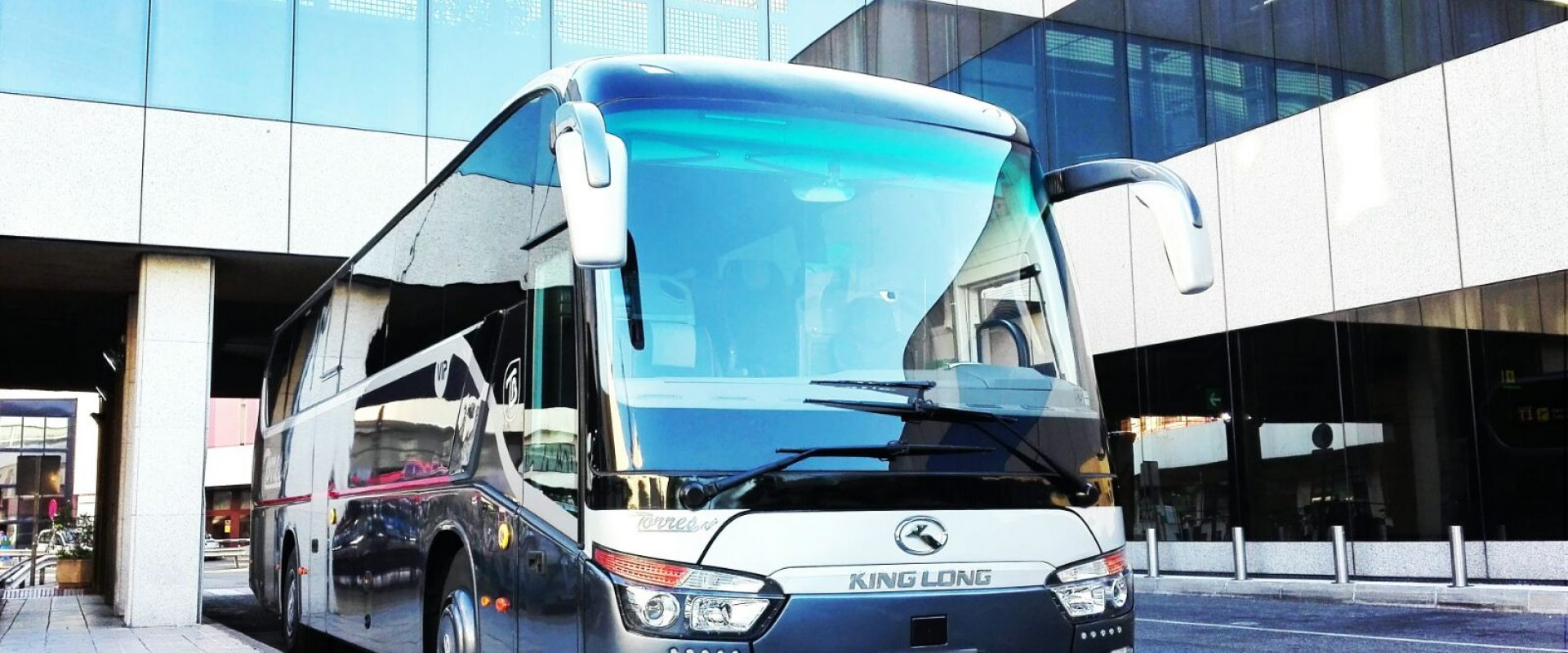
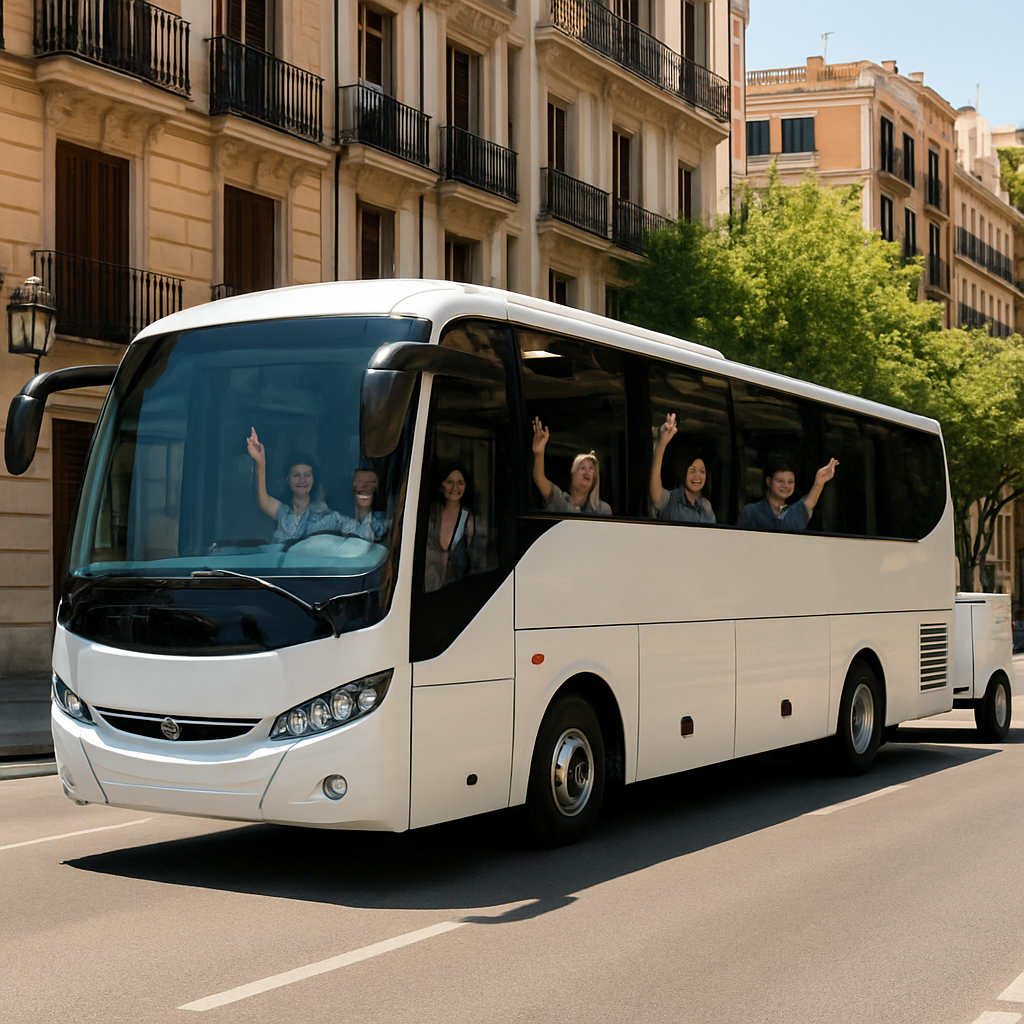
Ever found yourself juggling suitcases, backpacks, and a group of excited travelers, only to realize the coach you booked has no room for the extra gear?
You’re not alone—many event planners and tour operators hit that snag when they need a bit more storage for equipment, sports kits, or wedding gifts.
That’s where madrid coach with luggage trailer hire steps in, turning a cramped ride into a smooth, stress‑free journey.
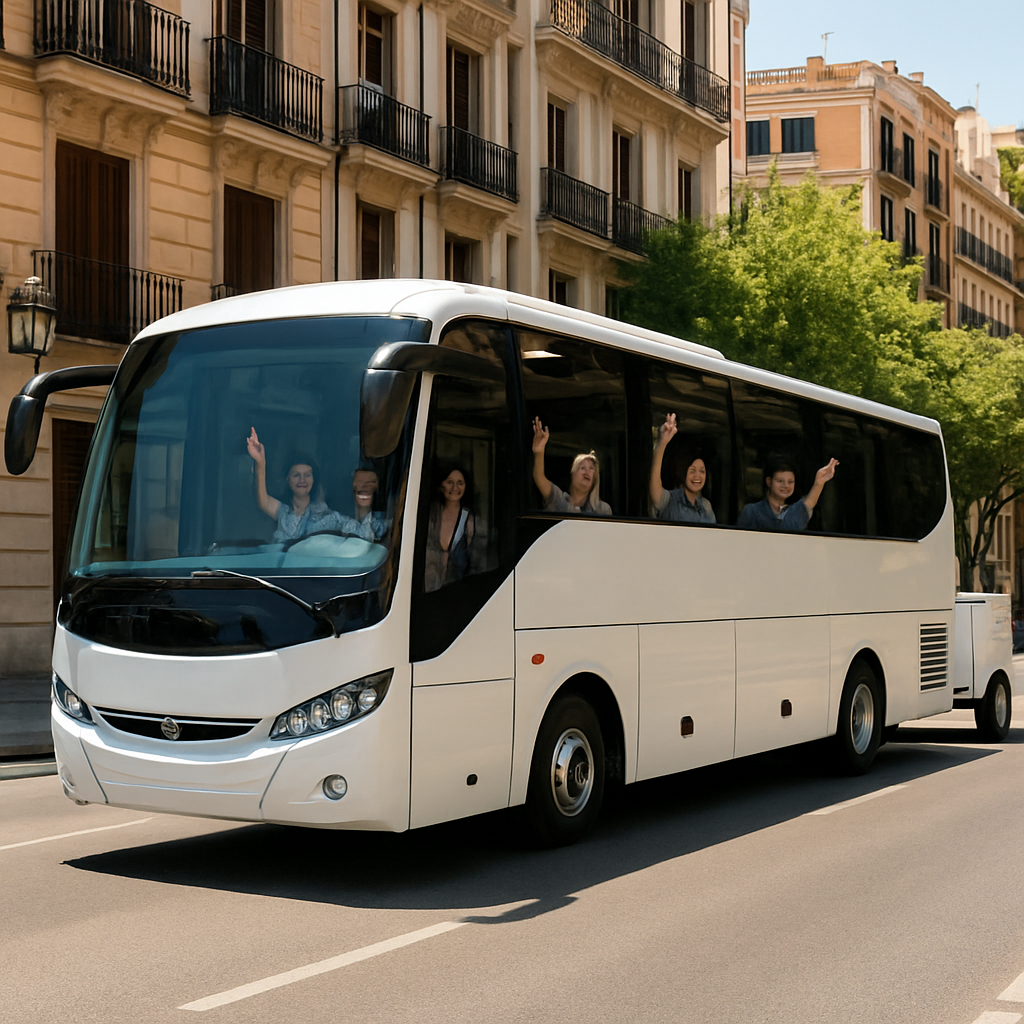
Imagine a sleek, modern coach pulling a compact, lockable trailer that slides onto the road like a quiet sidekick, ready to carry all those extra bags.
At Torres Bus we’ve been fine‑tuning this solution for over three decades, so you can trust that the trailer is matched to our fleet’s dimensions and safety standards.
Because we know you care about punctuality, the trailer’s hydraulic brakes sync with the coach, meaning you won’t lose a minute on the highway.
And the best part? You don’t have to sacrifice luxury—our VIP coaches still boast leather seats, climate control, and Wi‑Fi, while the trailer handles the luggage.
Whether you’re shuttling a sports team to a tournament, moving wedding décor between venues, or loading a pilgrimage group’s supplies, the extra space makes a huge difference.
So, how does the hiring process work? It’s as easy as a quick phone call or a few clicks on our website; we’ll confirm vehicle size, trailer capacity, and price in minutes.
We’ll also walk you through loading tips—like balancing weight and securing straps—so you avoid any surprise at customs or on narrow Spanish streets.
If you ever wonder whether a trailer will fit through a historic city gate, rest easy: our team does a site survey or provides exact dimensions beforehand.
Ready to ditch the luggage‑crunch dilemma? Let’s dive into the details of choosing the right coach and trailer combo for your Madrid adventure.
TL;DR
With madrid coach with luggage trailer hire, you gain extra space for gear, suits, or wedding décor while keeping passengers comfortable in a coach.
A quick call or few clicks secures the perfect combo, and our synced hydraulic brakes and dimensions guarantee punctual, stress‑free smooth travel across Madrid’s streets today.
Step 1: Assess Your Group and Luggage Needs
First thing’s first – how many people are you moving and what are they bringing? If you’ve ever tried to fit a wedding dress, a rack of guitars, and a box of souvenirs into a single coach, you know the headache. Start by writing down a headcount, then make a quick list of every big‑ticket item: suitcases, sport kits, décor crates, even that extra‑large cooler for the post‑match celebration.
Once you have the numbers, think about weight distribution. A trailer that’s too front‑heavy can make the coach feel sluggish, especially on the winding streets around the historic centre. A good rule of thumb is to keep the heaviest boxes closest to the axle and spread lighter bags toward the back. It sounds simple, but that little bit of balance can save you from a nasty brake‑fade on the highway.
Does your group include any passengers with reduced mobility? Torres Bus offers PMR‑adapted coaches, and the trailer can be fitted with a low‑step ramp so everyone gets on and off without a scramble. If you’re not sure, just give us a shout – we’ll match the right vehicle and trailer combo before you even think about loading.
Now, ask yourself: what’s the longest leg of the journey? If you’re heading from Barajas Airport to a wedding venue in the outskirts, you’ll want a trailer with a higher payload capacity than a short city hop. Our fleet includes trailers ranging from 500 kg to 2 000 kg, so there’s a size that fits every itinerary.
Here’s a quick checklist you can print out:
- Number of passengers
- List of large items (dimensions, weight)
- Any accessibility needs
- Longest travel distance
- Preferred loading order (heavy‑first or light‑first)
Got the list? Great. Next, compare your needs against the trailer specs. If you’re unsure how to read a payload chart, check out our Comprehensive Guide to Coach Hire in Madrid: Services, Tips & Options – it breaks down every size in plain English.
And don’t forget the little things that make a big difference: straps, tie‑downs, and a spare set of wheels. A couple of sturdy ratchet straps can keep a stack of cases from shifting when you hit a hill. If you’re moving delicate wedding décor, consider using padded blankets inside the trailer to protect glassware and candles.
So, what if you’re also handling a concert crew? You’ll need space for stage rigs, lighting trusses, and maybe even a road‑case for the soundboard. That’s where a partnership with a technical planning service can save you time. For detailed stage‑and‑lighting plans, see cinod.fr – they specialize in the kind of behind‑the‑scenes logistics that pair perfectly with our transport solutions.
Another common scenario is a cultural tour that includes live performances. If you’re booking Cuban musicians for a festival, you might want to line up both transport and talent in one go. The artist‑booking platform Totalisimo Alternativas is a handy resource for finding the right act while you sort out the trailer space.
Below is a short video that walks you through loading a typical luggage trailer. Watch it, then pause to match the steps with your own checklist.
Notice how the driver secures the straps before hitting the road? That extra minute is a small price to pay for peace of mind when you’re cruising past the Royal Palace.
Step 2: Pick the Right Coach Size and Trailer Capacity
Now that you’ve got a clear picture of how many people and how much gear you’re moving, the next puzzle piece is matching those numbers to the right coach and trailer.
First, think about the passenger experience. A 50‑seat coach feels roomy when you only have 30 guests, but it can look empty and waste fuel. On the flip side, squeezing 45 adults into a 30‑seat mini‑bus turns every trip into a game of musical chairs.
Size up the coach
Torres Bus offers a spectrum from 7‑seat minibuses to 70‑seat luxury coaches. Here’s a quick cheat sheet:
- 7‑12 seats – perfect for small corporate outings or a family wedding party.
- 20‑30 seats – great for school trips, sport teams, or a modest conference group.
- 40‑50 seats – ideal for medium‑sized tours, concert crews, or multi‑day excursions.
- 60‑70 seats – the go‑to for large festivals, pilgrimages, or corporate roadshows.
Ask yourself: “Will everyone be comfortable for a two‑hour ride, or do I need extra legroom for a longer day trip?” If you’re planning a day in Toledo with a few stops, a 40‑seat coach plus a trailer often hits the sweet spot.
Match trailer capacity to cargo volume
Trailer sizes at Torres Bus range from 2 m³ to 6 m³. The rule of thumb we’ve used with hundreds of clients is simple: if your cargo exceeds 70 % of the coach’s built‑in luggage space, bring a trailer.
Let’s run a quick example. You’ve got 25 suitcases (0.5 m³ each) and three bulky sound‑rig crates (1.2 m³ each). That’s about 13 m³ total. A 30‑seat coach typically offers around 8 m³ under‑floor, so you’d need a 5 m³ trailer to keep everything balanced.
Remember, heavier items belong low and near the axle – that’s what keeps handling stable. Light, odd‑shaped gear can sit toward the rear, but always leave a couple of metres of clearance for the brake system.
Factor in special needs
If you’re transporting wheelchair users or equipment for a film crew, choose a coach with a low‑floor entry and a ramp. The same model often comes with a trailer equipped with tie‑down rails, making it easier to secure wheelchairs or camera rigs without damaging the interior.
And don’t forget the bathroom situation. For a full‑day tour with a trailer, a coach that includes an onboard toilet saves everyone a pit stop – especially when you’re navigating narrow historic streets.
Now that you’ve seen the numbers, it’s time to visualise the combo. Pull up the fleet chart on Torres Bus’s website, tick the box next to the coach size that matches your passenger count, then glance at the trailer column until the capacity covers your cargo.
Here’s a quick checklist you can print out:
- Passenger count and any accessibility requirements.
- Total cargo volume (use the 0.5 m³ per suitcase shortcut).
- Desired coach size based on comfort and fuel efficiency.
- Trailer volume that meets or exceeds the cargo total.
- Placement of heavy items low and near the axle.
- Whether you need an onboard toilet or wheelchair ramp.
Got the checklist filled? Great. Give Torres Bus a call or drop a message through their quick‑quote form. Their logistics team will confirm the exact dimensions, run a load‑balance test, and lock in a price that reflects the coach‑trailer combo you need.
Bottom line: picking the right coach size and trailer capacity isn’t about buying the biggest vehicle you can find; it’s about aligning passenger comfort, cargo safety, and cost efficiency. When those three line up, you’ll cruise through Madrid’s streets with confidence, and your guests will thank you for the smooth ride.
Step 3: Find a Licensed Coach and Trailer Hire Service in Madrid
Okay, you’ve already sized the coach and figured out how much cargo you need. The next move is finding a company that actually has the licence, the expertise, and the peace‑of‑mind guarantee you deserve.
Does the idea of a shady operator make you cringe? Good. It should. A reputable provider protects you, your passengers, and your luggage – especially when you’re pulling a trailer through Madrid’s bustling streets.
Check the license and insurance
First thing: make sure the business is fully licensed by the Spanish Transport Authority (Dirección General de Transporte). A quick glance at their website should show a licence number, and you can verify it on the official portal.
Ask for proof of insurance that covers both the coach and the trailer. You want coverage for passenger liability, cargo damage, and any third‑party claims if you’re navigating narrow historic alleys.
Ask the right questions
Now that you’ve got the paperwork sorted, it’s time for a little conversation. Here are the must‑ask items:
- Do you have drivers with specific training for coach‑trailer combos?
- What’s the maintenance schedule for the trailer’s hydraulic brakes?
- Can you provide a detailed load‑balance test before the day of travel?
- Is there a backup coach if the trailer develops a problem en route?
These questions feel like a lot, but they’re really just the basics you’d expect from a seasoned operator.
Think about it this way: you’re not just hiring a vehicle; you’re hiring a partner who’ll keep your guests comfortable and your equipment safe.
Compare quotes and read reviews
Don’t settle for the first price you see. Ask at least three different services for a written quote that breaks down coach mileage, trailer rental, driver fees, and any extra charges for things like a wheelchair ramp or on‑board toilet.
Then, scour Google, TripAdvisor, and transport‑industry forums for recent reviews. Look for comments about punctuality, driver professionalism, and how well the trailer’s loading process was explained.
A pattern of “always on time” and “cargo arrived intact” is a green light. Repeated complaints about broken straps or late arrivals? Walk away.
Book and confirm the details
Once you’ve picked the provider that checks every box, lock it down with a written contract. The contract should include:
- Exact coach model and seat count.
- Trailer volume (in cubic metres) and any special equipment (e.g., lockable doors).
- Pick‑up and drop‑off locations, times, and who’s responsible for loading.
- Cancellation policy and any penalties.
Ask for a pre‑trip checklist that you can run through with the driver: verify tire pressure, brake fluid, and that the tie‑down rails in the trailer are ready.
And here’s a tiny tip: ask the driver to walk you through the loading plan the morning of the trip. A quick “let’s put the heavy boxes low and near the axle” reminder can save you a lot of hassle.
Finally, get a confirmation email that includes the driver’s name, phone number, and the fleet’s registration plates. That way, if anything feels off on the day, you have a direct line to the right person.
Bottom line: the right licensed coach and trailer hire service turns a logistical headache into a smooth, confidence‑boosting experience. By double‑checking licences, asking pointed questions, comparing real‑world feedback, and sealing the deal with clear paperwork, you’ll cruise through Madrid with peace of mind – and your guests will thank you for the hassle‑free ride.
Step 4: Complete the Booking and Prepare Required Documents
Alright, you’ve already nailed the coach size and the trailer capacity – now it’s time to lock everything down so you can sleep easy the night before the trip. This is the part where a few simple forms and a quick double‑check keep the whole operation from turning into a last‑minute scramble.
Confirm the booking details
First thing – send a short confirmation email to Torres Bus that repeats the exact coach model, seat count, trailer volume, pick‑up location, and departure time. A quick line like “Please confirm we have a 40‑seat coach with a 4 m³ trailer for 09:00 am pick‑up at Hotel Plaza Mayor” does the trick.
Ask them to reply with the driver’s name, phone number, and the fleet’s registration plates. Having those details in your inbox means you can call the driver directly if anything feels off on the day.
Does this feel redundant? Think of it as the safety net that catches a typo before it costs you time or money.
Gather the essential paperwork
Now pull together the documents you’ll need to show the driver and, if you’re moving valuable gear, the customs office or event venue. Here’s a quick checklist:
- Signed contract that lists coach and trailer specs, pick‑up/drop‑off times, and cancellation policy.
- Proof of insurance covering passengers, cargo, and third‑party liability.
- Copy of the driver’s licence and any special training certificates for coach‑trailer combos.
- Event or venue permits if you’re loading/unloading in restricted zones.
Keep everything in a single folder (digital PDF works fine) so you can hand it to the driver on the morning of departure.
Double‑check licences and insurance
Even though Torres Bus is fully licensed, it never hurts to verify the licence number on the Spanish Transport Authority portal. A quick screenshot of the licence page attached to your email thread gives you and the driver extra peace of mind.
If you’re transporting high‑value equipment – say a lighting rig worth several thousand euros – ask the provider to confirm that their cargo insurance covers the full declared value. You can usually add a short rider to the contract for a modest fee.
And here’s a tiny tip: ask the driver to show you the trailer’s hydraulic brake test record. It’s a one‑minute glance that assures the system will hold up on steep Madrid hills.
Final pre‑trip checklist
On the morning of the trip, run through a short pre‑trip checklist with the driver. Keep it conversational, something like:
- “Are the tire pressures at the recommended psi?”
- “Can you confirm the tie‑down rails are clean and ready?”
- “Let’s walk through the loading plan – heavy boxes low, light gear toward the rear.”
Take a photo of the loaded trailer and send it to your team. It’s a quick visual proof that everything’s secured before you hit the road.
When you’ve crossed all these boxes, you’ve turned a potentially stressful booking into a smooth, confidence‑boosting process. The coach and trailer will arrive on time, the driver will know exactly what to expect, and you’ll have all the paperwork ready to show anyone who asks.
| Document | Who Provides | When Needed | Notes |
|---|---|---|---|
| Signed contract | Torres Bus & you | Immediately after quote acceptance | Includes coach model, trailer volume, dates, cancellation policy |
| Insurance certificate | Torres Bus | Before departure | Must cover passengers, cargo, and third‑party liability |
| Driver licence & training proof | Driver (Torres Bus) | Morning of trip | Specifically for coach‑trailer combos |
Step 5: Manage Costs and Optimize Your Trip
So you’ve got the coach, the trailer, the paperwork – now the real question is: how do you keep the budget from exploding while still getting the smoothest ride possible?
Start with a transparent price breakdown
Ask Torres Bus for a line‑item quote. See the coach mileage rate, the trailer rental fee, driver overtime, any extra services like a wheelchair ramp or onboard toilet. When everything is laid out, you can spot hidden costs before they surprise you.
Tip: a small surcharge for “fuel surcharge” can balloon if the route isn’t optimized. That’s why we spend a few minutes mapping the most efficient path.
Route planning tricks that save money
Pull up a map and mark your pick‑up, drop‑off, and any mid‑trip stops. Then ask the driver which roads avoid steep climbs – the hydraulic brakes on the trailer work great, but climbing hills uses more fuel.
Does it sound like a hassle? Not really. A quick “let’s take the A‑2 instead of the M‑30” can shave off a kilometre or two and cut fuel costs by a few euros. Plus, smoother roads mean less wear on the trailer’s suspension.
Timing is everything
Early‑morning departures often avoid rush‑hour traffic in Madrid, which means a shorter trip and less fuel burned idling in traffic. If you can shift a 10 am start to 8 am, you’ll likely save both time and money.
And if you’re planning a multi‑day tour, bundle the daily mileage into a single contract. Many operators, including Torres Bus, offer a “multi‑day discount” that drops the per‑kilometre rate by 5‑10 %.
Load balance for efficiency
Heavy items low and near the axle not only improve handling – they also reduce drag. A well‑balanced trailer stays steadier, meaning the coach doesn’t have to work as hard to keep the combo stable.
Think about it: if you load a stack of speaker crates at the very back, the driver may need to brake harder on turns, which uses extra fuel. A quick walk‑through with the driver the morning of the trip can prevent that.
Watch out for hidden fees
Some companies charge extra for “late‑night loading” or “extra‑stop permits.” Before you sign, ask: “What’s the fee if we need to unload at a venue after 8 pm?” If the answer is “we’ll let you know later,” put that request in writing.
Also, double‑check the cancellation policy. A flexible clause that lets you adjust the date without a 50 % penalty can be a lifesaver if your event schedule shifts.
Leverage loyalty or repeat‑booking discounts
If you’re a frequent planner – say you organize quarterly pilgrimages or annual corporate roadshows – ask Torres Bus about a “return‑client rate.” Many family‑owned fleets love rewarding repeat business, and the discount can be enough to cover the cost of a premium amenity like onboard Wi‑Fi.
Even a modest 3‑% discount on a €2,000 hire adds up over multiple trips.
Use a simple cost‑tracking sheet
Create a spreadsheet with columns for: coach fee, trailer fee, fuel estimate, driver overtime, extra services, and contingency. Update it after you receive the final invoice. Seeing the numbers side by side makes it easy to spot where you saved and where you overspent.
When you review the sheet, ask yourself: “Did the route choice shave off fuel? Did the load‑balance tip help?” Those little reflections turn a one‑off trip into a repeatable, cost‑efficient process.
Bottom line: managing costs isn’t about cutting corners; it’s about being smart with the details – price transparency, efficient routing, timing, load balance, and a bit of negotiation.

Conclusion
We’ve walked through everything you need to feel confident about madrid coach with luggage trailer hire, from sizing the coach to locking in a transparent quote.
Remember, the magic happens when you match passenger comfort with just enough trailer space, then double‑check licences, insurance, and that load‑balance plan on the morning of the trip.
So, what’s the next move? Grab your quick checklist, pop an email to Torres Bus confirming the coach model, trailer volume, and driver contact, then run through the pre‑trip sheet we outlined. A few minutes now saves a headache later.
Key takeaways
- Assess group size and cargo, then choose a coach‑trailer combo that leaves room to breathe.
- Verify licences, insurance, and driver training – it’s non‑negotiable.
- Use a simple cost‑tracking spreadsheet to spot savings and keep the budget on track.
- Ask Torres Bus about repeat‑client discounts or added amenities like Wi‑Fi or an onboard toilet.
When you’ve checked those boxes, you’ll not only avoid the dreaded “no room for the gear” panic, you’ll also deliver a smooth, on‑time experience that your guests will remember fondly.
Ready to lock in your coach and trailer? Reach out to Torres Bus today and turn your next Madrid adventure into a hassle‑free journey.
We’re excited to help you travel smarter.
FAQ
Do I really need a luggage trailer for my madrid coach with luggage trailer hire?
It depends on how much gear you’re moving. If you’re hauling more than a few suitcases per passenger – say sports equipment, wedding décor, or a sound‑rig – a trailer can save you from stuffing everything into the coach’s under‑floor space. That extra room means passengers stay comfortable and you avoid the dreaded “no room for the gear” panic on the road.
How do I pick the right trailer size for my group?
Start by converting your cargo into cubic metres – roughly 0.5 m³ per medium suitcase, 1 m³ for larger items. Then compare that total to the trailer options Torres Bus offers (2 m³ to 6 m³). If your load exceeds about 70 % of the coach’s built‑in luggage capacity, bump up to the next trailer size. A 4 m³ trailer usually covers a midsize wedding or a youth sports team.
What licences and insurance do I need for madrid coach with luggage trailer hire?
Torres Bus holds a full Spanish Transport Authority licence, and they provide a combined passenger‑and‑cargo insurance certificate. As the client, you just need to verify that the licence number matches the official portal and that the insurance covers the declared value of any high‑ticket gear. Keeping a copy of both documents on the day of travel is a simple safety net.
Will a trailer dramatically increase my budget?
The extra fee is usually a flat daily rate plus a small mileage surcharge – far less than paying for a bigger coach outright. For example, a 4 m³ trailer might add €80‑€120 per day. If you offset that by using a smaller coach, you often end up spending less overall while still getting the space you need.
Can I load the trailer myself, or do I need a professional?
You can load it yourself as long as you follow basic safety steps: place the heaviest items low and near the axle, secure everything with the built‑in tie‑down rails, and double‑check the hydraulic brake lock. Torres Bus’s driver will walk you through the plan on the morning of the trip, so you won’t be left guessing.
What if the trailer won’t fit through a historic gate or narrow street?
Before you lock in the hire, ask Torres Bus for exact exterior dimensions. Their team can run a site‑survey or compare the trailer width to known gate clearances in Madrid’s old town. If the fit is tight, they’ll suggest a slimmer model or a different loading point, keeping your itinerary on track.
What maintenance checks are done on the trailer before my trip?
Torres Bus runs a pre‑trip inspection on every trailer – think of it as a quick health check before a road‑trip. The crew checks hydraulic brake fluid levels, tests the brake sync with the coach, inspects tire tread and pressure, and verifies that all tie‑down rails are clean and functional. They also confirm the lighting and lock mechanisms work. You’ll get a short report on the day of departure, so you know the trailer is ready to roll without surprises.
Additional Resources
Now that you’ve got the basics of madrid coach with luggage trailer hire under control, you might be wondering where to turn next for the nitty‑gritty details.
Quick checklist you can print
• Coach model, seat count, and trailer volume
• Driver contact, licence number, and insurance proof
• Load‑balance plan (heavy items low, straps ready)
• Site‑survey results for historic gates or narrow streets
• Emergency contact and cancellation policy
Having this on a single sheet saves you from hunting through emails on the day of departure.
Helpful guides you can skim
If you need a deeper dive into onboard amenities, the Madrid coach hire with toilet guide walks you through the pros of a bathroom on board and how it impacts trailer loading.
Looking for connectivity on the road? The Wi‑Fi guide explains the options for keeping your crew online while the trailer sits safely behind the coach.
Where to ask real‑world questions
Forums dedicated to Spanish group travel, local event‑planner Facebook groups, and the Torres Bus customer support line are gold mines for tips you won’t find in a brochure.
So, what’s the next step? Grab the checklist, skim the relevant guide, and fire off a quick question in a travel forum. You’ll walk into the loading area feeling prepared, not panicked.