
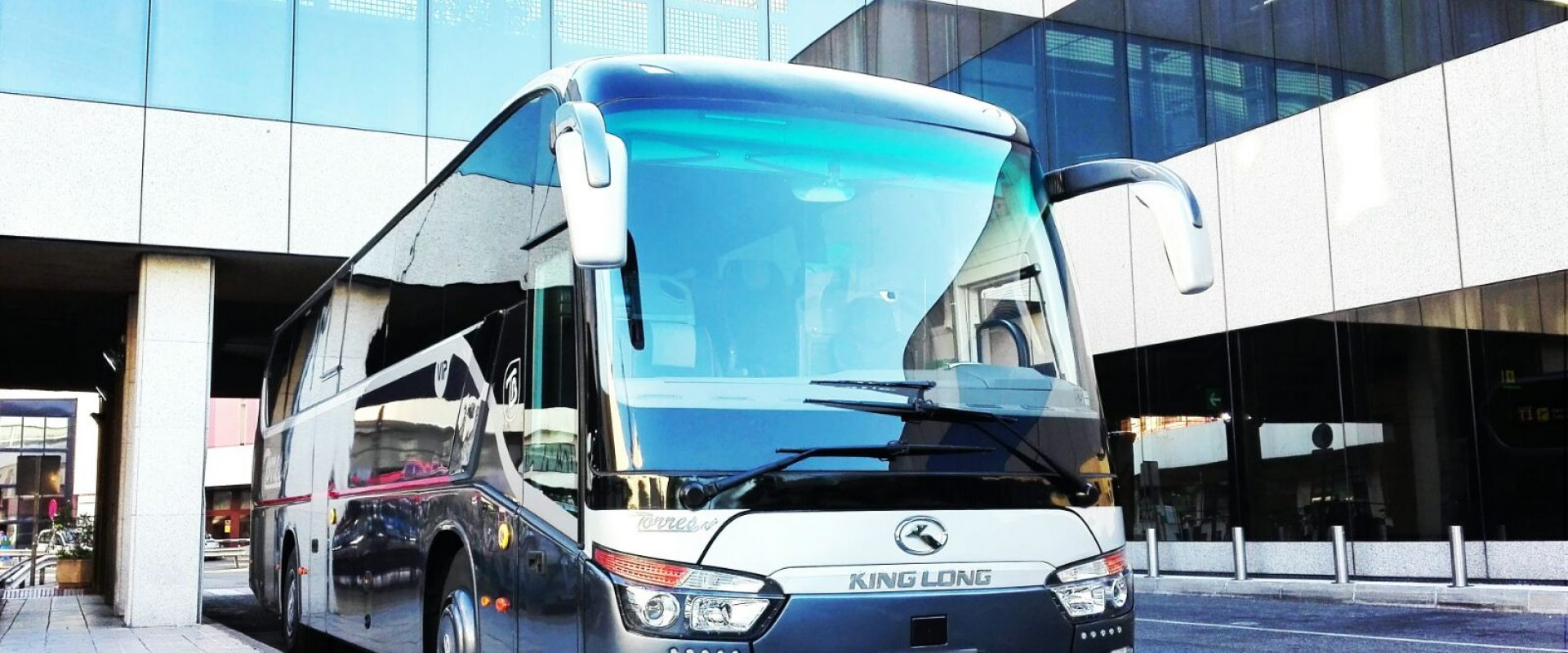

Imagine pulling up to Madrid–Barajas Airport with a sleek, climate‑controlled minibus waiting just for your group of twenty, the doors sliding open as you step out of the terminal, and the driver greets you by name.
Sounds like a stress‑free start, right? But most travelers end up juggling taxis, public buses, or a hodgepodge of rides that never quite fit a party of that size.
That’s where a dedicated Madrid airport transfer for 20 people makes all the difference. You get a vehicle sized exactly for your crew, a professional driver who knows the fastest routes, and the peace of mind that comes from knowing everyone will arrive together, on time, and ready to enjoy the day ahead.
And the best part? You don’t have to become a logistics wizard overnight. A family‑run company like Torres Bus has been fine‑tuning group transport for over three decades, so they already know the little details that turn a decent ride into a memorable experience.
Picture this: you’re leading a corporate off‑site, twenty teammates step out of the terminal, stretch, sip coffee from the driver’s onboard cooler, and settle into plush seats that even the most jet‑lagged colleague appreciates.
Meanwhile, the driver handles the paperwork, monitors traffic in real time, and drops you off right at your hotel lobby or conference venue without a hitch. No frantic calls to taxis, no scrambling for a larger bus that sits half empty, and certainly no awkward moments trying to squeeze extra suitcases into a cramped van.
So, if you’re wondering whether a 20‑seat minibus is worth the investment, think about the hidden costs of missed connections, lost productivity, and the stress of coordinating multiple rides. One well‑planned transfer not only saves time and money, it also sets a positive tone for the entire trip.
Ready to make your arrival effortless? Let’s explore how to choose the perfect service for your group.
TL;DR
A dedicated Madrid airport transfer for 20 people gives you a comfortable, on‑time ride with a professional driver who handles all logistics, and peace of mind.
Skip the hassle of taxis or overcrowded vans, and let Torres Bus ensure your team arrives relaxed, ready to focus on the day ahead smoothly.
Step 1: Choose the Right Vehicle Size and Type
Imagine your team of twenty stepping off the plane, lugging a few suitcases, and instantly spotting a sleek, climate‑controlled minibus with your company logo on the side. That moment of relief is the result of picking the right vehicle size and type before you even set foot in Madrid.
First thing’s first: you need a vehicle that seats everyone comfortably — no crammed elbows, no awkward shoe‑sharing. For a group of exactly twenty, a 20‑seat minibus is the sweet spot. It gives each passenger a dedicated seat, enough luggage space, and a chance to stretch out after a long flight.
Why a 20‑seat minibus beats a van or a full‑size coach
Vans typically max out at 12‑15 seats, which means you’d have to split your group across two vehicles. That doubles the coordination effort, the cost of drivers, and the chance someone gets left behind. A full‑size coach, on the other hand, often seats 40‑50 people, leaving half the seats empty and the ride feeling less intimate.
With a 20‑seat minibus you get the best of both worlds: the intimacy of a smaller vehicle and the capacity to keep the whole crew together. Plus, the driver can focus on a single pickup point, reducing wait times at the terminal.
Key features to look for
1. Luggage capacity. A typical 20‑seater offers around 3‑4 cubic meters of cargo space—enough for two medium suitcases per passenger. If you know some colleagues travel with oversized gear (like golf clubs or camera equipment), ask the provider about optional roof racks.
2. Climate control. Madrid can be scorching in summer and chilly in winter. Look for individual air vents or a fully automated HVAC system that keeps the cabin at a comfortable temperature for everyone.
3. Accessibility. If your group includes someone with reduced mobility, verify that the minibus has a low‑floor entry or a wheelchair ramp. Many providers, including Torres Bus, offer PMR‑adapted models.
Real‑world examples
Case 1: A tech startup flew in 20 engineers for a two‑day hackathon. They booked a 20‑seat minibus with Wi‑Fi and power outlets. The engineers were able to plug in laptops during the 30‑minute drive to the co‑working space, turning travel time into productive prep.
Case 2: A wedding party of twenty grandparents, parents, and a few kids needed a smooth transfer from Barajas to a historic venue outside Madrid. The minibus’s padded seats and onboard refreshments kept the older guests comfortable, while the driver handled the narrow country roads without a hitch.
Case 3: A film crew required quick, reliable transport for talent and equipment. They chose a minibus with extra under‑floor storage for lights and a built‑in sound system for on‑the‑go briefings. The crew praised the “mobile office” vibe that let them review scripts during the ride.
Actionable checklist
- Confirm passenger count (including any late arrivals).
- Ask for luggage dimensions and calculate total volume.
- Check for climate control, Wi‑Fi, power outlets, and accessibility features.
- Request a vehicle walk‑through photo or video before booking.
- Lock in the driver’s language skills (English‑speaking drivers are often preferred for international groups).
Once you’ve ticked those boxes, you’re ready to move to the next step: securing the service and confirming the itinerary.
Need a concrete starting point? Take a look at 20 seater minibus hire Coaches Hire Spain – Madrid for a quick overview of available models, pricing tiers, and optional upgrades.
And don’t forget to coordinate the transfer with your broader travel plan. Pairing your ground transport with a trusted travel advisor can smooth out flight changes, accommodation tweaks, and last‑minute itinerary tweaks. For example, Wanderlust Travel USA can help you align flights, hotels, and this minibus booking into a single, stress‑free itinerary.

By taking the time to match the vehicle size and type to your exact needs, you eliminate the guesswork that often turns a simple airport pickup into a logistical nightmare. The right minibus turns the ride into an extension of your event—whether that’s a conference, a wedding, or a film shoot—so you can arrive relaxed, focused, and ready to make the most of your time in Madrid.
Step 2: Compare Pricing and Service Packages
Now that you’ve nailed the vehicle size, it’s time to look at the money side of things. You probably already feel a little knot in your stomach when you think about budgeting for a group of twenty—does it end up costing a fortune or is there a sweet spot you can hit?
First, remember that a Madrid airport transfer for 20 people isn’t a one‑size‑fits‑all price. Providers like Torres Bus typically break their offers into three tiers: a no‑frills basic option, a mid‑range standard package, and a premium VIP experience. Each tier bundles different services, so you can match the level of comfort and convenience you actually need.
What’s in each tier?
Below is a quick snapshot of the most common package structures you’ll encounter. Think of it as a cheat‑sheet you can hand to your finance team.
| Package | Price Range (EUR) | Included Services | Notes |
|---|---|---|---|
| Basic | €500‑€650 | Minibus, driver, fuel, standard insurance | Good for straightforward airport‑to‑hotel runs, no extra amenities. |
| Standard | €650‑€850 | Everything in Basic + Wi‑Fi, bottled water, luggage assistance | Ideal for corporate teams that want a little extra comfort. |
| Premium (VIP) | €850‑€1,200 | All Standard features + onboard tablets, power outlets, personalized greeting, optional wheelchair ramp | Best for weddings, film crews, or any group that expects a boutique experience. |
Notice how the price jumps aren’t random; they line up with tangible upgrades. If you’re planning a wedding, the Premium tier’s personal greeting and wheelchair‑ramp option might save you a lot of hassle later.
So, how do you decide which tier is right? Start by listing the “must‑haves” for your group. Do you need Wi‑Fi for a quick debrief after the flight? Is a dedicated luggage assistant a non‑negotiable? Write those down, then map them to the table.
Real‑world pricing clues
While Torres Bus doesn’t publish a flat rate on its homepage, other reputable operators in Madrid outline their price brackets similarly. For instance, SIXT’s airport‑transfer service mentions a range of options from budget‑friendly to premium, reinforcing that tiered pricing is the norm in the market according to their transfer overview. That tells us you’re not looking at an outlier—most companies use this structure.
Here’s a quick sanity check: if your total budget for the transfer sits around €700, the Standard package is a safe bet. You’ll get Wi‑Fi for those last‑minute presentations and a driver who’ll handle the luggage without you having to lift a finger.
But what if you’re trying to squeeze every euro? The Basic tier can still be a solid choice—just be prepared to bring your own bottled water and maybe a portable charger for the team.
Another tip: ask for a detailed quote that breaks down each line item. Some providers hide extra fees for things like night‑time surcharges or tolls. Getting a clear spreadsheet lets you compare apples to apples across vendors.
And don’t forget to check if the driver’s language skills are included. For international groups, an English‑speaking driver can be a game‑changer, especially when you’re juggling airport signage and time‑sensitive schedules.
Below the table, you’ll often see an “optional extras” column. Typical add‑ons include:
- Extra luggage rack for oversized equipment.
- On‑board refreshments beyond bottled water.
- Real‑time GPS tracking for the organizer.
Pick only the ones that truly add value. Adding everything just to feel safe can balloon the cost without improving the experience.
Now, let’s watch a short video that walks through a typical booking flow for a 20‑seat minibus. It’ll show you where the price breakdown appears on the provider’s site, so you know exactly what you’re signing up for.
Take a moment to jot down the three things you’d ask a provider during a quote call: (1) total cost including taxes, (2) what’s covered under “insurance”, and (3) any hidden surcharges for airport fees.
When you’ve got those answers, you can line up the options side‑by‑side, see which tier gives you the best bang for your buck, and lock in a price before the travel season spikes. That’s the sweet spot where budgeting meets peace of mind.
Step 3: Book with a Reputable Provider
Now that you’ve scoped the vehicle and priced the tiers, the next move is to lock in a provider you can actually trust.
Why does reputation matter? Because a 20‑seat minibus isn’t just a metal box – it’s the hinge that holds your whole itinerary together, from the moment you step off the plane to the final drop‑off at the hotel.
First thing to do is to verify that the company is fully licensed for airport transfers in Madrid and that its fleet meets the safety standards set by the Spanish transport authority.
A quick way to check is to pop the provider’s licence number into the Dirección General de Transporte website – if it shows up clean, you’ve cleared the first hurdle.
Next, hunt for reviews that speak specifically about 20‑person airport runs. Look for comments about punctuality, driver professionalism, and – crucially – whether the driver speaks English or your group’s language.
If you’re not fluent in Spanish, a provider that guarantees an English‑speaking driver can save you from the kind of scramble one traveler described on a travel forum discussion about tight connections, where a 90‑minute layover felt like a race against time because no one at the airport understood them.
Ask for a written quote that breaks down every line item – base fare, fuel surcharge, airport fees, taxes, and any optional extras you’ve already decided to skip.
When the quote lands in your inbox, compare it side‑by‑side with at least two other reputable firms. The cheapest option isn’t always the safest; look for hidden costs like night‑time premiums or tolls that aren’t listed up front.
A solid provider will also offer a clear cancellation policy. Travel plans shift – a delayed flight or a sudden change in group size – so you want the peace of mind that you won’t be hit with a surprise fee.
Before you press ‘confirm’, schedule a quick call with the dispatcher. Use it to verify the driver’s name, confirm the vehicle’s registration, and ask about the exact pickup point – whether the driver waits at the curb outside Terminal 4 or meets you at the arrivals hall.
Finally, get a written confirmation that includes the provider’s contact number, the driver’s mobile, and a backup plan if something goes awry – for example, a second vehicle on standby for large luggage or a late‑night flight.
Here’s a quick checklist you can print out or save on your phone before you call.
- Verify license number on the transport authority site.
- Confirm English‑speaking driver for international groups.
- Ask for a detailed, itemized quote (fuel, taxes, fees).
- Check cancellation policy and any hidden surcharges.
- Get driver’s name, phone, and vehicle registration in writing.
When you’re ready to pay, use a secure method like a credit card or PayPal that offers buyer protection. Avoid cash deposits unless the company provides a receipt and a clear refund clause. After the payment is processed, ask for a confirmation email that includes the booking reference – you’ll need that number if you have to adjust the schedule later.
Once everything checks out, hit confirm and relax – your Madrid airport transfer for 20 people is now set.
Step 4: Prepare Travel Documents and Passenger Details
Okay, you’ve nailed the vehicle and the price – now it’s time to make sure nobody gets stuck at the gate because a passport page is missing or a passenger’s name is spelled wrong. It sounds boring, but trust me, the paperwork part is where a smooth Madrid airport transfer for 20 people can either fly or flop.
First thing’s first: pull together a master list of every traveler. I like to call it the «Passenger Sheet.» Open a simple spreadsheet and create columns for full name (exactly as it appears on the ID), flight number, arrival time, phone number, and any special notes (wheelchair, extra luggage, dietary quirks for the onboard snack box). One row per person, and you’ll have a quick‑look reference for the driver and the dispatch office.
Collect the right IDs
Spain’s airport security checks the passport or national ID against the reservation name. If you’re handling a mixed group – a few EU citizens, a couple of US visitors, maybe a couple of non‑EU friends – make sure each name matches the travel document character for character. A missing accent or an extra middle initial can cause a delay, and the driver will be stuck waiting while you scramble for a correction.
Tip: ask each traveler to forward a photo of their passport or ID to a shared folder ahead of time. That way you can double‑check spelling without digging through emails at the last minute.
Share the details with your driver
When the driver’s on the ground, they become your eyes and ears. Send them the Passenger Sheet at least 24 hours before the flight lands. Include the driver’s mobile, the vehicle’s registration, and a clear pickup point – «meet at arrivals hall, Gate A23, with a blue Torres Bus sign» works better than «wait outside terminal.»
And don’t forget a backup plan. Ask the driver to confirm a secondary contact (maybe the dispatcher’s number) in case the first phone drops or the airport Wi‑Fi hiccups.
Document the trip itself
Beyond passenger names, you’ll need a few more pieces of paperwork:
- Booking reference. This is the code the company sent you after you paid. Keep it handy; the driver may need it for airport entry permits.
- Insurance copy. Some corporate policies require proof of passenger liability coverage before they sign off on the expense report.
- Special‑service forms. If you’ve booked a wheelchair ramp or a pet carrier, the driver’s paperwork will include a checklist to ensure the equipment is properly secured.
Store all of these as PDFs in the same folder as the Passenger Sheet. When you arrive at the airport, a quick glance at the tablet or phone will confirm you’ve got everything.
What about minors?
If any of the twenty are under 18, you’ll need a signed parental consent form. Spanish law allows minors to travel unaccompanied on a private transfer, but the driver must see a signed document stating the guardian’s approval and emergency contact details. It’s a tiny extra step that saves a lot of awkward questions at the curb.
So, what’s the best way to gather all these signatures? A simple Google Form works wonders – you can embed a checkbox for consent and even capture a digital signature if you enable the right add‑on.
Final checklist before you hit ‘confirm’
Take a minute now and run through this quick audit:
- Passenger Sheet completed and double‑checked for spelling.
- All passports/IDs photographed and stored.
- Booking reference, insurance, and any special‑service forms uploaded.
- Driver’s contact info sent with clear pickup instructions.
- Backup contact (dispatcher) shared with driver.
- Parental consent forms for any minors.
If you can tick every box without hunting for a missing file, you’ve basically guaranteed a stress‑free handoff at the terminal. The driver will know exactly who to look for, where to park, and how to load the luggage without a fuss.
One last thought: keep a printed copy of the Passenger Sheet in the minibus. Phones die, signals drop, and a hard copy is the ultimate fallback. It also gives the driver a professional look – they can hand it to the airport staff if anyone questions the group.
When the doors swing open and you see the driver’s name on the badge, you’ll feel that familiar sigh of relief. The paperwork is out of the way, the minibus is waiting, and the twenty of you can roll into Madrid feeling like you’ve just nailed the first part of a perfect trip.

Step 5: Optimize the Day of Transfer – Timing, Pick‑up, and Drop‑off
Picture this: you’ve just landed at Barajas, the baggage carousel is humming, and you spot a sleek 20‑seat minibus with a friendly driver holding a bright sign that reads your company’s name. That instant sense of relief is exactly what we’re aiming for, and it all starts with nailing the timing, the pick‑up spot, and the drop‑off plan.
Timing the arrival
First, double‑check the flight status the night before. A quick glance at the airline’s live board (or a push notification from the booking app) tells you whether you’re looking at a smooth 10:15 am arrival or a delayed 12:45 pm landing.
Build in a buffer – we usually recommend 30 minutes for a domestic flight and up to an hour for an international one. That cushion covers runway delays, customs queues, and the inevitable “where’s my luggage?” moment. If the flight is early in the morning, remember that airport staff may be slower before the rush hour picks up, so a slightly larger buffer can save you from a frantic scramble.
And don’t forget the “real‑time” check. On the day of travel, pull up the flight tracker on your phone 15 minutes before the scheduled arrival. If the plane is running late, text the driver instantly – most drivers carry a portable Wi‑Fi hotspot and can adjust their position in the parking lot without missing you.
Fine‑tuning the pick‑up spot
Barajas has several terminals, each with its own arrivals hall layout. Tell the driver the exact gate (or at least the terminal) and whether you want to meet at the main arrivals corridor, the curb outside Gate A23, or the designated “private transfer” area. A clear, concise instruction like “meet us at the blue Torres Bus sign right outside arrivals, Terminal 4, near the coffee kiosk” beats a vague “wait outside the airport.”
Use visual cues. A printed sign with the company logo, a bright color, or even a small balloon can make you stand out in a sea of travelers. It’s a tiny detail, but it saves minutes and prevents the driver from wandering the terminal looking for a nameless group.
Keep the driver in the loop about any last‑minute changes – a late‑arriving colleague, a sudden seat upgrade, or a luggage issue. A quick WhatsApp or SMS with the updated headcount lets the driver re‑calculate space and adjust any extra‑luggage equipment (like a roof rack) on the fly.
Drop‑off done right
When you’re ready to leave the airport, confirm the exact drop‑off address beforehand. For hotels, ask for the preferred entrance (main lobby vs. side entrance) and whether they have a dedicated loading zone. If you’re heading to a conference center, note the nearest side door that the driver can use without navigating through a crowded lobby.
Traffic in Madrid can be a wild card, especially during rush hour. A savvy driver will check live traffic data and may suggest an alternative route – perhaps via the M‑30 instead of the A‑2 – to shave off 10–15 minutes. Share any time‑critical constraints (e.g., “must be in the meeting room by 9:00 am”) so the driver can prioritize the fastest path.
Finally, think about the handoff. If you have a guide or a local contact waiting, give the driver their name and phone number. A brief “meet me at the front desk, I’m wearing a red scarf” note ensures a smooth transition from vehicle to venue.
Quick day‑of checklist
- Confirm flight number, arrival time, and terminal 24 hours before.
- Set a real‑time flight tracker alert for the day of.
- Agree on a specific pick‑up location with visual signage.
- Share driver’s mobile and backup contact with all travelers.
- Verify drop‑off address, preferred entrance, and any traffic‑aware route options.
- Prepare a printed “Passenger Sheet” and a small sign with your logo for the driver.
By treating timing, pick‑up, and drop‑off as three interconnected moves rather than three separate tasks, you turn a potentially chaotic airport moment into a seamless part of your Madrid airport transfer for 20 people. You’ll walk out of Barajas feeling like the day’s already half‑won, and the rest of the itinerary can flow just as smoothly.
Conclusion
After walking through the why, the what, and the how, you’ve probably felt the tension melt a bit just thinking about a smooth Madrid airport transfer for 20 people.
Imagine the driver greeting you by name, the luggage sliding onto the ramp, and the minibus gliding out of Barajas while you sip a quick coffee. That picture isn’t a fantasy – it’s the result of a few deliberate choices we’ve outlined.
So, what’s the next move? First, lock in the vehicle size that matches your headcount. Then, compare the three pricing tiers and pick the one that gives you the comforts you can’t do without – Wi‑Fi for the last‑minute deck, bottled water for the early birds, or a VIP greeting for a wedding crew.
Next, verify the provider’s licence, grab an itemised quote, and get the driver’s contact details in writing. A quick checklist on the day of travel – flight tracker alert, signed passenger sheet, and a bright sign – will keep everything on track.
Finally, give yourself a mental high‑five when the doors close behind the last passenger. You’ve turned what could have been a chaotic scramble into a seamless start to your Madrid adventure.
Ready to make it happen? Reach out to Torres Bus today and let the experts handle the details while you focus on the agenda that really matters.
FAQ
What’s the best way to confirm a Madrid airport transfer for 20 people?
Give the provider the flight number, scheduled arrival time, and terminal as soon as you have them, then ask for a written confirmation that includes the driver’s name, mobile, and vehicle registration. A quick email with a passenger sheet attached lets everyone double‑check spelling and luggage needs. We always recommend confirming at least 48 hours before departure so the driver can plan the exact pickup spot and any special signage.
How early should I book the minibus to lock in the price?
Most operators lock in their rates as soon as you sign the quote, but the sweet spot is to book 2‑3 weeks ahead of a busy travel period. That gives you enough time to compare the three pricing tiers, request any extras and still avoid the seasonal surcharges that pop up in May‑July. If you’re travelling during a major conference or holiday, aim for at least a month’s notice to secure the 20‑seat minibus you need.
If my flight is delayed, can the driver wait?
Yes – most reputable companies monitor your flight in real time and will adjust the driver’s arrival accordingly. Send them the airline’s tracking link, and ask the driver to keep their phone on while they wait at the designated curb. If the plane lands later than expected, the driver usually waits up to 45 minutes without extra charge; beyond that they’ll let you know any overtime fees before they apply.
Are there any hidden fees I should watch out for?
A transparent quote should break down fuel, tolls, airport fees, insurance and any optional extras like Wi‑Fi or a rooftop luggage rack. Beware of “service charge” line items that hide a percentage markup, and double‑check whether night‑time or holiday surcharges apply. Ask the provider to confirm that the price you see includes VAT and that there are no hidden administrative fees once the trip is complete.
Can I request Wi‑Fi or power outlets for a corporate group?
Absolutely – most 20‑seat minibuses come with power sockets and a reliable Wi‑Fi router, but you need to request them when you place the order. Specify the number of devices you expect and whether you want a dedicated tablet for presentations. The driver will usually test the connection before you board, so you can start your debrief or share the latest slides the moment the doors close.
Is the minibus suitable for passengers with reduced mobility?
Torres Bus offers PMR‑adapted minibuses with low‑floor entry and optional wheelchair ramps, so you don’t have to worry about accessibility. Tell the company the exact needs – for example, a passenger using a manual wheelchair and two pieces of luggage – and they’ll assign the right vehicle and a driver trained in safe loading. It’s a good idea to get a written confirmation of the accessibility features at least 48 hours before travel.
What’s the cancellation policy if my plans change at the last minute?
Most firms give a 24‑hour free‑cancellation window and then charge a modest percentage if you pull out later. Make sure the policy is clearly written in the quote and ask whether you can switch the date instead of cancelling outright – that flexibility can save you a lot of money if your itinerary shifts. Keep the booking reference handy; you’ll need it to invoke the cancellation or reschedule.
Additional Tips & Resources
You’ve made it through the checklist, but a few extra tricks can turn a good Madrid airport transfer for 20 people into a flawless experience.
Pack a “transfer kit”
Grab a small tote and toss in a printed passenger sheet, a spare charger, and a few bottled waters. It sounds simple, but when the driver hands you the sheet at the curb, everyone knows exactly who’s who – no frantic name‑checking.
Include a quick “who’s‑in‑charge” card with the organizer’s phone number. If the Wi‑Fi drops or the driver needs a last‑minute route tweak, that single line can save minutes.
Leverage real‑time flight tracking
Set up a free alert on the airline’s website or a travel app. When the plane lands early or late, shoot a quick WhatsApp to the driver. Most Torres Bus drivers keep a mobile hotspot, so they can shift the pickup spot without missing you.
Pro tip: share the tracking link with the whole group. That way, if someone’s late, the rest of the party isn’t left guessing.
Think beyond the airport
Ask the provider if they can hold the vehicle for a short “buffer window” after the scheduled drop‑off. It’s a tiny extra fee, but it protects you if a meeting runs over or a venue is hard to find.
Also, see if they offer a “return shuttle” to the airport for late‑night flights. Having the same driver handle both legs keeps the experience consistent and often cheaper than booking a second vehicle.
Quick resource roundup
- Download a free PDF checklist from the Spanish transport authority – it details the licenses you should see on a reputable provider.
- Visit the official Madrid‑Barajas website for live traffic maps; you can suggest an alternate route to the driver before you even board.
- Keep a copy of the provider’s cancellation policy on your phone; a quick screenshot can prevent surprise fees if plans shift.
Finally, give yourself a mental high‑five once you see the minibus pulling up, sign the passenger sheet, and settle in. Those small prep steps mean you spend the ride reviewing slides, chatting with colleagues, or simply enjoying the view, rather than worrying about logistics.