
Imagine stepping off a long flight, wheels still humming, and realizing you’ve got a crew of fifteen plus a mountain of suitcases waiting for a ride to the hotel.
That moment of panic – “How the heck are we all getting there without leaving anyone or anything behind?” – is something we’ve heard from event planners, corporate travel managers, and even families celebrating a big reunion.
In Madrid, the answer is simple: a dedicated Madrid airport transfer for 15 people with luggage. A single, comfortable minibus eliminates the chaos of juggling multiple taxis, the uncertainty of public transport, and the endless back‑and‑forth of coordinating separate rides.
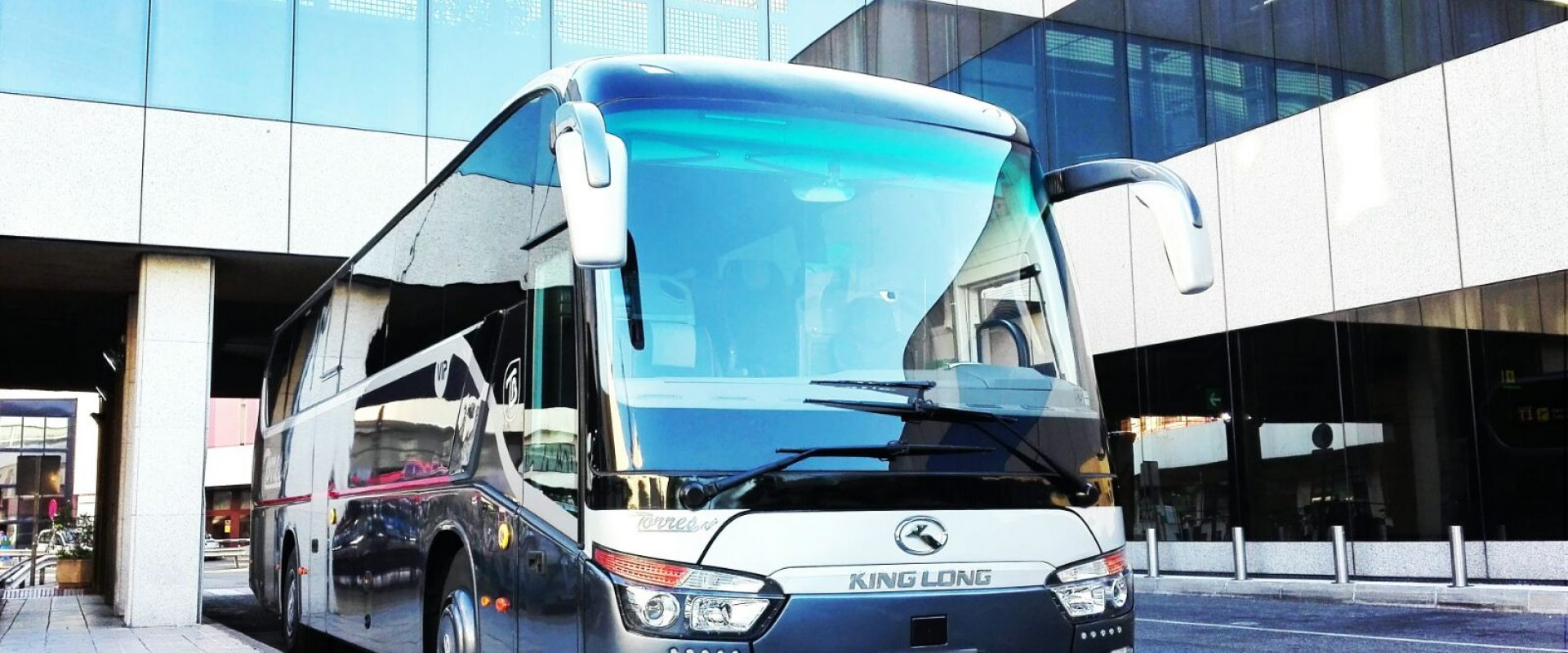
We’ve been arranging group transfers for over three decades, so we know the little details that turn a smooth journey into a stress‑free experience. First, the vehicle size matters – a 16‑seat luxury minibus gives you enough room for fifteen passengers and their bags without feeling cramped.
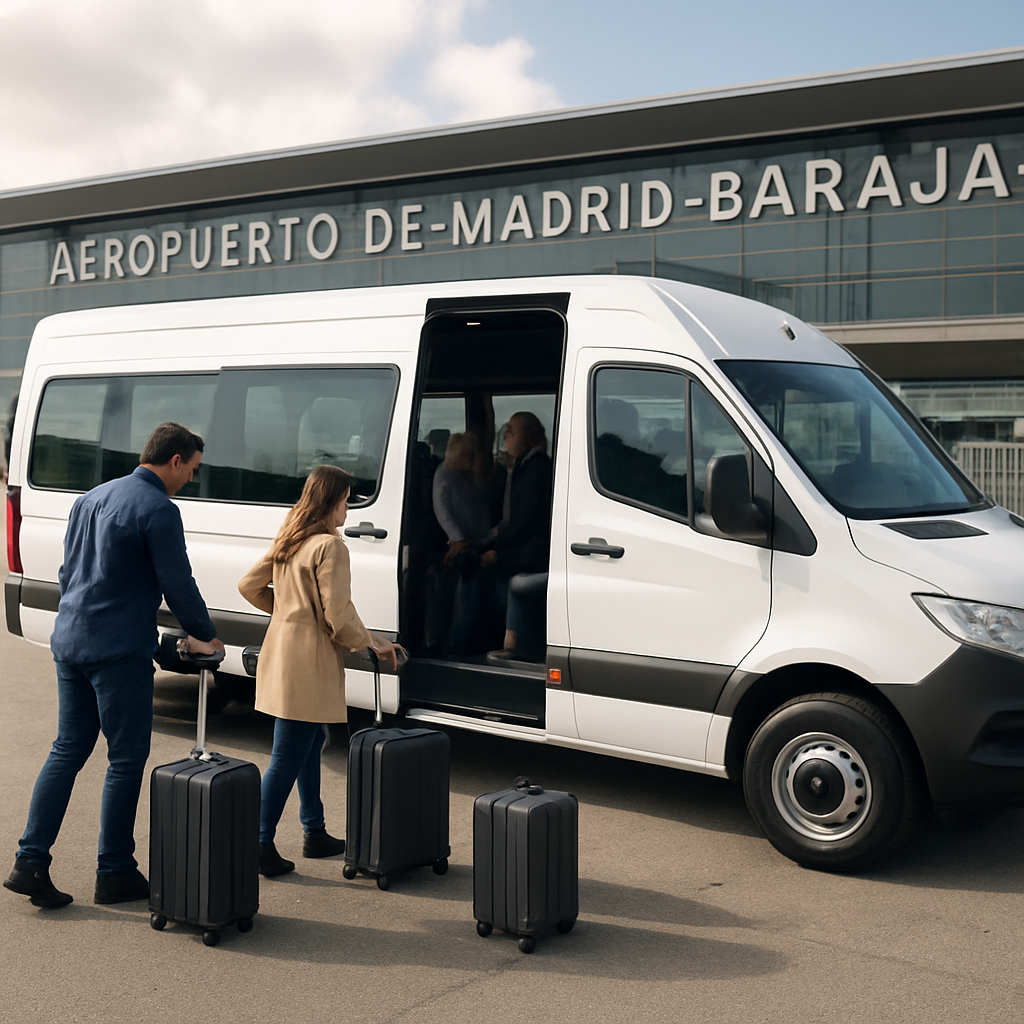
Second, luggage space is crucial. Our minibuses feature low‑floor entry and generous cargo areas, so even oversized suitcases slide in easily. No more cramming overhead bins or leaving a bag behind at the curb.
Third, timing is everything. With a professional driver who knows Barajas Airport inside out, you’ll never miss a flight connection or waste minutes waiting in traffic. Our drivers track real‑time flight information and adjust routes on the fly.
So, whether you’re coordinating a corporate off‑site, a wedding party, or a school trip, the right Madrid airport transfer for 15 people with luggage saves you time, money, and a lot of headaches.
Ready to skip the hassle? Let’s dive into how you can plan the perfect group transfer, from choosing the right vehicle to confirming the pick‑up details, and make sure every suitcase arrives safely at its destination.
And remember, a smooth start sets the tone for the whole Madrid adventure.
TL;DR
If you’re juggling fifteen travelers plus luggage, a single 16‑seat minibus from Torres Bus is the perfect Madrid airport transfer for 15 people with luggage, turning chaos into a smooth, on‑time ride from Barajas to any hotel.
We handle vehicle size, ample cargo space, and real‑time flight tracking so you can relax, focus on your event, and arrive ready to enjoy Madrid without a hitch.
Step 1: Determine Your Transfer Needs
First thing’s first – you need to know exactly what you’re moving. It’s not just fifteen people; it’s fifteen suitcases, a few backpacks, maybe a stroller, and that one oversized guitar case that always shows up at the last minute. Ask yourself: how much cargo space does our group really need?
In our experience, a 16‑seat minibus gives you the sweet spot between passenger comfort and luggage capacity. The low‑floor entry means you won’t be wrestling heavy bags over a step, and the rear cargo bay can swallow two large suitcases per passenger without turning the cabin into a sardine tin.
Map out the journey
Next, sketch a quick timeline. When does the flight land? How long does customs usually take at Barajas? Do you have a meeting at 10 am or a wedding ceremony at 3 pm? Plotting these milestones helps you decide whether you need a driver who can wait for a delayed flight or one who will rush you straight to the hotel.
Tip: many event planners forget to factor in traffic spikes around airport exits. Madrid rush hour can add 20‑30 minutes, so always add a buffer.
Know your passenger mix
Are you shuttling a corporate team in suits, a family with kids, or a wedding party in dresses? Different groups have different needs. For a corporate group, you might prioritize Wi‑Fi and power outlets. For a wedding, you’ll want space for dresses to stay wrinkle‑free and perhaps a small cooler for champagne.
And if you have any guests with reduced mobility, let us know early. Our fleet includes vehicles adapted for PMR, so no one gets left behind.
Watching the video above gives you a visual sense of how a minibus loads and unloads. Notice the luggage rack – that’s where those oversized duffel bags will sit, keeping the aisles clear for everyone.

Now, let’s talk numbers. A typical 16‑seat minibus can hold roughly 2 m³ of luggage. That translates to about 12‑15 standard suitcases plus a few larger items. If you’re pushing the limits, consider a 20‑seat version – it’s still easy to navigate city streets but gives you that extra 20% cargo headroom.
When you’ve nailed down the vehicle size, it’s time to lock in the service. Rent a Bus for Madrid Airport Transfer walks you through the booking steps, from selecting the exact model to confirming the driver’s real‑time flight‑tracking setup.
One more thing – don’t forget to think about the little comforts that make a big difference. A couple of water bottles, a portable charger, and a few magazines can turn a cramped ride into a pleasant mini‑break.
Looking for the perfect travel bag to fit that extra suitcase? Check out the best mini designer bags for sophisticated style in 2025 – they’re sleek, lightweight, and fit nicely in the minibus’s overhead compartments.
If your group is headed to a cruise after the Madrid leg, you might appreciate this timing guide: When is the best time to cruise the Southern Caribbean? It helps you sync your airport transfer with the cruise departure schedule.
Lastly, for those who rely on AI‑driven travel assistants, a quick look at Assistaix can show you how to automate reminders about pickup times and flight updates, keeping everything on track without a second thought.
Step 2: Choose the Right Vehicle Size and Type
Alright, you’ve got your passenger count and a rough idea of the luggage load. Now the fun part begins: picking the vehicle that feels just right for a Madrid airport transfer for 15 people with luggage. It’s a bit like choosing a pair of shoes – you need the right fit, a little style, and enough room for the socks.
Size matters, but so does shape
First off, don’t get tangled up in seat numbers alone. A 16‑seat minibus is the sweet spot for fifteen travelers, but you also have to think about cargo volume. If you’re hauling two medium suitcases per person, you’re looking at roughly 30‑35 bags. That’s where the cargo‑space specs come in.
In our experience, a vehicle with at least 4‑5 cubic metres of storage will keep the suitcases off the floor and the passengers comfortable. Anything less and you’ll hear the dreaded “where do we put this?” a few minutes after the doors close.
Match the ride to the event
Different occasions have different vibes. A corporate off‑site might need a quiet cabin, Wi‑Fi, and maybe a power outlet for laptops. A wedding party, on the other hand, will appreciate a bit more headroom for dresses, flower boxes, and a small champagne cooler. Think about the atmosphere you want to set before you click “book”.
Does your group include any oversized gear – golf clubs, ski equipment, or a musical instrument? If yes, you might want to jump up to a 20‑seat model or add a small trailer. It’s better to have a little extra space than to scramble for a third vehicle at the last minute.
Budget‑friendly choices
Here’s a quick way to keep the cost in check: start with the smallest vehicle that meets your seat and cargo needs, then add options only if you truly need them. A 16‑seat luxury minibus typically runs €150‑€200 one‑way in Madrid, while a 20‑seat can add €30‑€50. If you need Wi‑Fi or a premium sound system, factor in another €20‑€30.
Remember, most companies (including us) charge a flat rate for waiting time – usually the first hour is free, then it’s about €20 per extra hour. So if your flight lands late, a slightly larger vehicle might actually save you money by avoiding a second driver.
Quick comparison
| Vehicle Type | Seating | Cargo Capacity (m³) | Best For |
|---|---|---|---|
| Luxury 16‑seat minibus | 15 passengers + driver | 4.5 | Standard transfers, corporate groups, small weddings |
| 20‑seat mid‑size minibus | 19 passengers + driver | 5.5 | Groups with extra luggage or sports gear |
| 30‑seat coach | 29 passengers + driver | 8.0 | Large families, school trips, event crews |
Take a glance at the table and ask yourself: which row feels like the right fit for the vibe you’re creating?
What to ask your driver or provider
When you’re on the phone (or chatting online), keep these questions handy:
- What’s the exact cargo volume? Can you fit three large suitcases per passenger?
- Is the low‑floor entry standard? It makes loading heavy bags a breeze.
- Do you offer a complimentary waiting hour? How much after that?
- Any optional extras like Wi‑Fi, bottled water, or a portable charger?
Getting clear answers now prevents surprise fees later – and who wants to argue about that after a long flight?
Visualize the loading process
Picture this: you step off the plane, the driver greets you, and the doors swing open. You’ve got a couple of kids juggling backpacks, a business traveler balancing a laptop bag, and a wedding planner lugging a small dress box. If the vehicle’s cargo area is low and wide, everyone can slide their stuff in without a wrestling match. If it’s cramped, you’ll hear the sighs and see the delay.
That mental snapshot can save you from a nightmare scenario where the driver has to make a second trip to the luggage carousel.
So, to wrap it up: start with the 16‑seat luxury minibus, double‑check cargo space, consider the event’s vibe, and ask the right questions. Once you’ve ticked those boxes, you’ll be ready to lock in a Madrid airport transfer for 15 people with luggage that feels smooth, spacious, and spot‑on for your group’s needs.
After watching the quick video walkthrough, you’ll see how a well‑chosen vehicle makes the whole transfer feel like a breeze, not a chore.
Step 3: Calculate Luggage Requirements and Pricing
Alright, you’ve nailed the passenger count and vehicle size, but now the real puzzle pops up: how many suitcases are we actually hauling, and what will that mean for the final price?
Start with a simple inventory
Grab a spreadsheet or even a napkin and list every piece of baggage you expect. In our experience, most travelers bring two medium suitcases plus a personal bag. For fifteen people that’s roughly 30‑35 pieces. Add any oversized items – think golf clubs, a stroller, or a wedding dress box – and you’ll quickly see if the 4‑5 m³ cargo area we mentioned earlier is enough.
Quick tip: ask each guest to note the dimensions of any “special” item. A 60 cm‑wide suitcase is easy, but a 120 cm‑long guitar? That changes the game.
Turn dimensions into cubic metres
Once you have lengths, widths and heights, multiply them (in metres) to get the volume per item. Add them all together and you have a total cubic‑metre figure. If the sum creeps past 4.5 m³, you might need to upgrade to a 20‑seat minibus that offers about 5.5 m³, or consider a small trailer.
Here’s a handy cheat‑sheet: a standard medium suitcase is roughly 0.15 m³, a duffel bag about 0.08 m³, and a large guitar around 0.25 m³. Plug those numbers in and you’ll see the picture clearer than a sunrise over Plaza Mayor.
Pricing basics – what you’re actually paying for
The base fee for a Madrid airport transfer for 15 people with luggage usually covers the vehicle, driver, fuel and a complimentary hour of waiting. In Madrid that sits around €150‑€200 one‑way, according to industry averages.
If you need extra cargo space, most providers add a surcharge – often €20‑€30 per extra cubic metre. So, if your calculations land you at 5.2 m³, you’re looking at an extra €30‑€40 on top of the base rate.
Don’t forget hidden costs: tolls on the M‑30, airport parking fees, and any waiting time beyond the free hour (typically €20 per additional hour). Adding those line items early prevents surprise invoices later.
And here’s a real‑world sanity check: a corporate client once told us they had 38 suitcases plus two large crates of promotional material. Their total cargo came to 5.8 m³, so we booked a 20‑seat minibus and added a €35 cargo surcharge. The final bill was €185 plus €20 for 45 minutes of extra wait – no drama at the airport.
Build a quick budgeting checklist
- Base vehicle fee (≈ €150‑€200)
- Cargo surcharge (≈ €20‑€30 × extra m³)
- Waiting time beyond the first hour (€20 per hour)
- Tolls & parking (usually €5‑€10)
- Optional extras – Wi‑Fi, bottled water, child seats (≈ €10‑€20 each)
Plug your numbers into a simple calculator and you’ll have a clear, upfront total before you even pick up the phone.
Timing matters – give yourself a buffer
Even the best‑packed minibus can’t help if your flight lands late. A quick look at a recent forum thread shows travelers debating whether 1 hour 15 minutes is enough to switch planes at Terminal 4. The consensus? Give yourself at least a 30‑minute cushion after the official arrival time, especially if you have a lot of luggage to load.
And here’s a quick timing note: a recent discussion on a travel forum shows travelers wondering if 1 hour 15 minutes is enough to change planes at Terminal 4. Most agree you should add a 30‑minute buffer, especially when you’re loading 30‑plus bags. flight transfer timing discussion on Rick Steves forum

Now you’ve got the numbers, the costs, and the timing all laid out. Take this checklist, run the calculations, and you’ll walk into the booking conversation with confidence, knowing exactly how much space you need and what it will cost.
Step 4: Book a Licensed Driver and Verify Credentials
Alright, you’ve already sized the minibus and crunched the luggage numbers – now it’s time to make sure the person behind the wheel is as reliable as the vehicle itself.
Why a licensed driver matters
Imagine stepping off a long‑haul flight, your group of fifteen groggy and your suitcases spilling out. A driver who knows Barajas inside out can shave minutes off the route, navigate the airport’s hidden lanes, and keep the kids from turning the back seats into a roller‑coaster. In our experience, a fully licensed, locally trained driver is the single factor that turns a “maybe late” into “right on time.”
But it’s not just about a paper license. You want someone who’s accustomed to handling 15 passengers plus luggage, who’s comfortable with the extra weight, and who can communicate in English (or Spanish, depending on your guests).
Gather the right credentials
Before you even pick up the phone, ask the provider for three things: a valid Spanish driving licence (or an EU equivalent), a professional driver’s permit for passenger transport (the “carta de conducir de transporte de viajeros”), and proof of recent medical clearance. A quick scan of the documents should show a clean record – no recent suspensions or major accidents.
Don’t forget insurance. The driver’s vehicle should be covered by a third‑party policy that includes passenger liability. If you’re moving valuable equipment (like wedding dresses or musical gear), ask whether the insurer adds “cargo coverage” for extra peace of mind.
Ask the right questions
When you call, sprinkle in a few practical questions that reveal experience:
- Do you track real‑time flight information and adjust pick‑up times automatically?
- How many suitcases can you comfortably load without bending down?
- What’s your policy if the flight is delayed beyond the complimentary hour?
- Can you provide a name badge or photo of the driver ahead of arrival?
Those answers will tell you whether the driver is just a “taxi” or a true airport‑transfer specialist.
Confirm before you confirm
Once you’ve narrowed it down, request a short email recap that lists the driver’s full name, licence number, vehicle registration, and the exact pick‑up address (including terminal and gate, if known). A confirmation that the driver will meet you at the arrivals hall, rather than the parking lot, can save a lot of scrambling.
And here’s a tiny habit that works wonders: send a quick WhatsApp or text the night before with the flight number and expected arrival time. Most of our drivers appreciate the heads‑up and will have the real‑time tracker already set.
Checklist for the final call
Before you hit “book”, run this quick mental checklist:
- Driver holds a valid Spanish passenger‑transport licence.
- Medical certificate and clean driving record are on file.
- Insurance covers both passengers and cargo.
- Driver confirms real‑time flight monitoring and a complimentary waiting hour.
- Contact details (phone, WhatsApp) are exchanged and a written recap is received.
If anything feels fuzzy, pause. A few extra minutes now avoid a stressful surprise at the airport.
Finally, remember that the driver is part of your group’s experience. A courteous smile, a helpful hand with luggage, and a smooth ride set the tone for the whole Madrid adventure. Booking a licensed driver and double‑checking credentials isn’t just a bureaucratic step – it’s the secret sauce that turns a chaotic arrival into a seamless start.
Step 5: Prepare for the Day of Transfer – Tips and Checklist
You’ve nailed the vehicle and the driver, now it’s time to make sure the actual day runs like a well‑rehearsed dance.
1. Lock in the flight details…again
Even if you wrote down the arrival time on the first call, flights love to surprise you. Pull the latest status on the airline’s site the night before and send the number to your driver via WhatsApp. In our experience a quick message saying “Delta 123 lands 08:55, gate B12” saves a lot of guessing.
Travel forums often recommend giving yourself at least a 30‑minute cushion after the scheduled arrival, especially when you have thirty‑plus suitcases to load. See what fellow travelers suggest on a Madrid airport transfer timing discussion.
2. Verify the driver’s kit
Ask for a photo of the driver’s ID badge, licence number and the vehicle registration. A quick glance at the licence (it should be a Spanish passenger‑transport licence) reassures you that the person behind the wheel is legit.
Also confirm that the driver has the real‑time flight tracker turned on and that a complimentary waiting hour is on the table. If the flight runs late, you’ll want that hour to roll over without extra charge.
3. Pack with the minibus in mind
Tell your group to label each piece of luggage with a colour code – red for priority bags, blue for bulkier items. That way, when the doors swing open, everyone knows where to slide their suitcase.
Encourage a “no‑shoe‑removal” policy inside the bus; a quick wipe of soles on the low‑floor entry keeps the cabin tidy for the next leg of the journey.
4. Build a simple timeline
Write a one‑page schedule and share it in the group chat:
- 06:30 – Check flight status online
- 07:15 – Send final flight details to driver
- 08:55 – Expected landing (add 30‑minute buffer)
- 09:30 – Meet driver at arrivals hall, show badge
- 09:45 – Load luggage, quick safety check
- 10:00 – Depart for hotel, enjoy a short welcome drink
Seeing the minutes laid out makes it easier to spot any gaps and gives your team a clear “what‑now” cue.
5. The final on‑site checklist
Right before you step off the plane, run through this mental list. If anything feels off, pause and clarify – a few seconds now prevent a scramble later.
- Driver’s name, photo, licence number confirmed
- Vehicle registration and colour verified
- Real‑time flight tracker active
- Complimentary waiting hour confirmed (and policy for extensions)
- Contact numbers exchanged (phone & WhatsApp)
- Luggage colour‑code system explained to the group
- Any special requests (child seat, wheelchair access) noted
- Payment method agreed and receipt promised
When you tick each box, you’ll feel that familiar calm that only comes from knowing you’ve covered every detail.
6. Money, insurance and emergency plan
Before you hand over the cash or swipe the card, ask the driver to email you a receipt that lists the base fee, any cargo surcharge and the waiting‑hour policy. Keep that receipt on your phone – it’s your proof if something looks off at the hotel.
Make sure the minibus insurance covers passenger liability and cargo. If you’re moving valuable wedding dresses or equipment, a quick note to the driver asking “does the policy include cargo coverage?” can save a headache later.
Finally, write down two emergency contacts: the driver’s mobile number and the local office of Torres Bus. If the flight is delayed beyond the complimentary hour, you’ll know exactly who to call for a smooth extension.
- Call driver as soon as you see a delay
- Confirm new waiting time and any extra fee
- Notify your hotel of the adjusted arrival
- Keep the receipt and insurance details handy
So, does that checklist feel doable? Give it a quick run‑through tonight, tweak any wording that sounds fuzzy, and tomorrow you’ll walk into Barajas with confidence, a smile, and a minibus ready to whisk your fifteen passengers and their gear straight to the hotel.
Conclusion
After walking through the whole planning maze, you can finally see why a dedicated Madrid airport transfer for 15 people with luggage feels like a secret weapon.
Think back to that moment you imagined stepping off the plane, bags in a frantic swirl, and wondering how to herd the group. With the right minibus size, a licensed driver, and a clear checklist, that anxiety evaporates.
In our experience, the biggest time‑saver is confirming the driver’s real‑time flight tracker and the complimentary waiting hour before you even land. A quick WhatsApp the night before saves you from a last‑minute scramble.
And the money side? Keeping the receipt, checking cargo coverage, and knowing the €20 per extra hour rule means no surprise invoices at the hotel.
So, what’s the next step? Grab that simple one‑page timeline we mentioned, run a final inventory of suitcases, and send the flight details to your driver. It’s a tiny habit that turns chaos into confidence.
Remember, a smooth start sets the tone for the entire Madrid adventure – from the hotel lobby to the city’s bustling streets.
If you’re ready to lock in a stress‑free ride, reach out to Torres Bus and let our team handle the details while you focus on the fun part of your trip.
FAQ
What is the best vehicle size for a Madrid airport transfer for 15 people with luggage?
For fifteen passengers plus their bags, a 16‑seat luxury minibus is usually the sweet spot. It gives you one spare seat for a driver or a late‑comer and around 4.5 m³ of cargo space – enough for 30‑35 medium suitcases. If you know you’ll have oversized items like golf clubs or a wedding dress box, stepping up to a 20‑seat model adds another cubic metre and avoids a last‑minute scramble.
How far in advance should I confirm the flight details with the driver?
We recommend sending the flight number and estimated arrival time at least 24 hours before you land. A quick WhatsApp the night before lets the driver activate the real‑time flight tracker, so they can adjust the pick‑up window if the plane is early or delayed. In our experience, that habit cuts wait‑time anxiety in half and prevents surprise fees.
Is there a complimentary waiting hour for Madrid airport transfers, and what happens if the flight is late?
Most providers, including Torres Bus, include a free one‑hour waiting period after the scheduled arrival. If the flight runs later, the driver will usually extend that hour at no extra charge, but you should confirm the policy when you book. Anything beyond the first hour is typically billed at around €20 per extra hour, so give yourself a 30‑minute buffer to stay within the free window.
What luggage limits should I plan for, and how do I avoid extra cargo fees?
Count on roughly two medium suitcases per passenger plus a personal bag. That translates to about 30‑35 pieces for a group of fifteen. Check the vehicle’s cargo capacity – 4.5 m³ for a 16‑seat minibus – and make sure the total volume doesn’t exceed it. If you’re close to the limit, consider removing a few non‑essential items or upgrading to a larger bus; the surcharge for extra cubic metres is usually €20‑€30, which is cheaper than a second vehicle.
Do the drivers speak English, and how can I verify their credentials?
Yes, most drivers in Madrid’s airport‑transfer market are bilingual. Ask the company for a photo of the driver’s ID badge, licence number, and vehicle registration before you confirm the booking. A valid Spanish passenger‑transport licence and a recent medical clearance are the minimum standards. Having that information in an email recap gives you peace of mind and a reference point if anything feels off on the day.
Can I request additional amenities like Wi‑Fi or bottled water for a corporate group?
Absolutely. When you lock in the minibus, let the provider know if you need on‑board Wi‑Fi, power outlets, or a small cooler for drinks. These extras usually add €10‑€20 per trip, but they’re a big win for a team that wants to review a presentation or stay refreshed after a long flight. Confirm the cost upfront so the invoice matches what you expect.
What’s the best way to handle payment and receipts for a large group?
Ask for a detailed invoice that breaks down the base fare, any cargo surcharge, waiting‑time fees, and optional extras. Pay by credit card or bank transfer and request a digital receipt you can forward to your finance department. Keeping that paper trail helps you reconcile expenses later and avoids any surprise charges once you’ve settled at the hotel.