
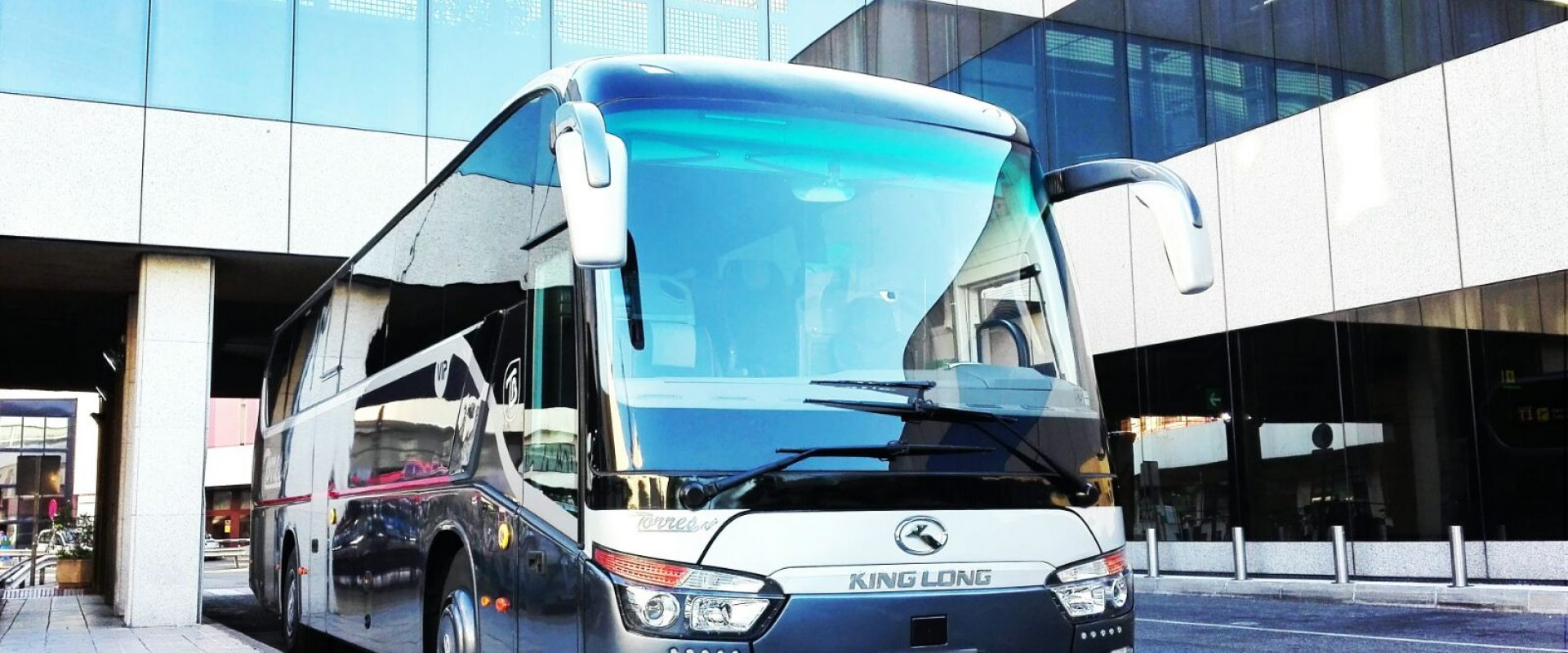

Picture this: you’ve just secured a prime booth at the IFEMA trade show, the buzz is building, and a wave of visitors is about to flood the exhibition floor.
Does the thought of shuttling dozens, maybe hundreds, of attendees from hotels to the venue make your stomach do a little flip? You’re not alone—most event planners feel that knot of anxiety the moment the schedule solidifies.
What if I told you there’s a way to turn that chaos into a smooth, almost invisible part of the experience? Imagine guests stepping onto a comfortable, climate‑controlled bus, greeted by a friendly driver who knows the quickest route through Madrid’s traffic, and arriving at IFEMA right on time, ready to explore.
That’s exactly what “How to organize group transportation in Madrid for IFEMA trade shows” is all about: taking the logistics headache out of the equation so you can focus on the real star of the show—your product.
First, let’s acknowledge the two biggest pain points: timing and reliability. Miss a shuttle and you risk angry exhibitors; a delayed bus can throw the whole day off schedule. The good news? With a seasoned partner like Torres Bus, you get a fleet that ranges from 7‑seat minibuses to 70‑seat coaches, all equipped for punctual departures and arrivals.
And because they’re family‑owned, you’ll deal with people who actually care about the little details—like a wheelchair‑accessible ramp for your PMR guests or a coffee service for early‑morning departures.
So, where do you start? Begin by mapping out your attendee clusters: which hotels are most popular, what are the peak arrival times, and how many people need special accommodations. Then, match those clusters to the right vehicle size. It’s a simple matching game, but it saves you from the dreaded “one‑bus‑fits‑all” fiasco.
Next, lock in a clear schedule. Give each shuttle a 10‑minute buffer, and ask the driver to confirm routes a day before. A quick check‑in call the morning of the show can make all the difference.
Finally, communicate the plan to your guests. A tidy email with pick‑up points, times, and a friendly note about the bus amenities builds confidence and excitement.
Ready to take the stress out of transport and let your IFEMA presence shine? Let’s dive in and map out the exact steps that turn a logistical nightmare into a seamless ride.
TL;DR
If you’re stressing over shuttles for IFEMA, know that a simple hotel‑cluster map, right‑size buses from Torres Bus, and a 10‑minute buffer turn chaos into a smooth ride.
Follow our every step‑by‑step guide, send a friendly pick‑up email, and watch your guests arrive on time, relaxed, and ready to explore today.
Step 1: Determine transport requirements for IFEMA attendees
First thing’s first – you’ve got a room full of excited visitors, and the thought of getting everyone from their hotels to IFEMA without a hiccup feels like trying to herd cats. Trust me, you’ve been there, and the good news is we can turn that nervous energy into a clear game plan.
Grab a coffee, open a spreadsheet, and let’s start sketching the big picture.
Map your attendee clusters
Look at your registration list and group guests by where they’re staying. Most planners find that three to five hotel clusters cover 80 % of the crowd. Plot those hotels on a simple map – even a hand‑drawn one works – so you can see which ones sit side‑by‑side and which are outliers.
Once you have the clusters, note the typical check‑in times. Early‑morning arrivals need a different shuttle schedule than those landing after lunch. A quick call to each hotel’s front desk can confirm peak times and any special loading dock rules.
Spot the special‑needs guests
Not everyone travels the same way. Some attendees will need wheelchair‑accessible ramps, others will be hauling exhibition materials or large display cases. Ask your registration form for any PMR or cargo requirements; a simple checkbox can save a lot of guesswork later.
Don’t forget the “late‑night crew” – exhibitors who finish their demo runs after the main event and need a safe ride home. Tag those folks now so you can slot them into a later‑hour bus without scrambling.
Size the right vehicle
Now comes the fun part: matching clusters to vehicle capacity. Torres Bus offers everything from 7‑seat minibuses to 70‑seat coaches, so you can right‑size each route. A rule of thumb is to aim for 80‑90 % occupancy; you don’t want a half‑empty coach, but you also don’t want to squeeze people in like sardines.
Here’s a quick checklist:
- Cluster size ≤ 10 people → 7‑seat minibus
- Cluster size 11‑30 people → 16‑ or 25‑seat minibuses
- Cluster size > 30 people → 50‑ or 70‑seat coach
If you’re unsure, the Ifema Shuttle Bus Hire Madrid: Complete Guide to Booking and Benefits breaks down the fleet options in plain language.
Build a buffer‑friendly schedule
Madrid traffic can be mercurial, especially during trade‑show weeks. Add a 10‑minute buffer to every pickup and drop‑off. It sounds tiny, but those minutes add up into a smoother ride for everyone.
When you draft the timetable, colour‑code it: green for on‑time windows, amber for peak‑traffic slots, and red for “must‑confirm” rides that need a driver’s call the night before.
While you’re fine‑tuning, consider a quick digital tool to visualise the routes. RebelGrowth offers a free transport‑planning template that many event teams swear by – it lets you drop pins, assign buses, and see the whole day at a glance.
Another piece of the puzzle is compliance. If your exhibitors are shipping gear across borders, they’ll need clean trade paperwork. A quick check with TradingDocs.AI can flag missing customs documents before you even load the first suitcase.
Take a moment after watching the video to jot down any questions that pop up – maybe you’re wondering how many luggage racks a 25‑seat coach actually has, or whether the driver can speak English. Those details become your “FAQ” for the driver brief later.

Now that you’ve mapped clusters, flagged special needs, sized the vehicles, and built a buffer‑rich timetable, you’re ready for the next step: contacting Torres Bus for a quote and confirming driver availability.
Pro tip: while you’re waiting on the quote, swing by Todo lo que necesitas saber para organizar una fiesta cubana en Barcelona for inspiration on how to keep the overall event vibe lively. Even if you’re not throwing a Cuban party, the guide’s checklist mindset works wonders for any large‑scale gathering.
Step 2: Choose the right vehicle type and capacity
Now that you’ve got a clear picture of who’s coming and when, the next puzzle piece is picking the perfect bus or minibus. It sounds simple, but the right size can be the difference between a relaxed ride and a cramped, grumpy crowd.
First, ask yourself: how many seats does each hotel cluster actually need? Look at your spreadsheet – you probably have groups ranging from 8‑12 people to 45‑plus. That’s where Torres Bus’s fleet shines. They have everything from 7‑seat luxury vans for a VIP executive team to 70‑seat coaches for big exhibitor groups.
Here’s a quick way to match the numbers:
- 1‑6 guests: a 7‑seat van or a 12‑seat minibus – ideal for a quick airport‑to‑hotel hop.
- 7‑15 guests: a 16‑seat micro‑bus – enough space for a couple of suitcases and a coffee cart.
- 16‑30 guests: a 25‑seat coach – perfect for a mid‑size hotel block, with room for a wheelchair ramp if needed.
- 31‑55 guests: a 50‑seat coach – the sweet spot for most exhibitor teams.
- 56+ guests: a 70‑seat coach – you’ll rarely need this at IFEMA, but it’s there for the big corporate delegations.
But numbers aren’t the only factor. Think about the journey itself. Are you crossing the M‑30 during rush hour? Do you want onboard Wi‑Fi so attendees can catch up on emails? Do you need a coffee service for early‑morning departures? Torres Bus can outfit any vehicle with those extras, so you can align the amenities with the size you choose.
Let’s talk accessibility. If you have guests with reduced mobility, a 25‑seat coach with a built‑in ramp is a lifesaver. It avoids the awkward stop‑and‑go of loading a wheelchair onto a tiny van. And because the ramp is part of the vehicle, you won’t have to coordinate a separate lift.
Now, a little anecdote: at last year’s IFEMA Tech Expo, a group of 42 German engineers was initially assigned a 50‑seat coach. The planner realized a few of them were VIPs who wanted a quieter space for a quick briefing. By swapping half the group into a 16‑seat micro‑bus and keeping the rest in the coach, everyone got the environment they needed, and the total cost stayed the same because the fleet is priced per vehicle, not per seat.
So, how do you lock in the right mix?
1. List every guest cluster with its headcount.
2. Match each cluster to the vehicle size bracket above.
3. Add a note for any special amenity – Wi‑Fi, coffee, wheelchair ramp.
4. Total the vehicles. If you end up with a gap (say you have a 12‑seat minibus half‑empty), consider merging two nearby clusters that share a similar pickup window.
5. Run the numbers with Torres Bus’s pricing sheet – the family‑owned company is transparent about per‑vehicle rates, so you’ll see exactly where you save by right‑sizing.
And remember the 10‑minute buffer we talked about earlier. Even the best‑planned route can hit a traffic jam, so giving each vehicle a little breathing room keeps the whole schedule from collapsing.
Here’s a visual reminder of the process:
After you’ve watched the short video, take a moment to glance at your matrix. Does every row have a vehicle that feels comfortable, not cramped? If you spot a red flag – like a 70‑seat coach for just 12 people – swap it out for a smaller option.
Finally, double‑check the driver’s checklist: vehicle type, capacity, special equipment, and route confirmation. A quick email the day before, and a friendly “good morning” call, seals the deal.
When the buses roll out on the morning of the show, you’ll notice the difference immediately – guests smile, they have space to stretch, and the driver knows exactly where to go. That’s the power of choosing the right vehicle type and capacity.
Step 3: Select a reliable bus/minibus rental provider
Alright, you’ve mapped the guests and sized the vehicles – now comes the part that can make or break the whole day: picking the right partner to actually drive those wheels. If you’ve ever wondered “how to organize group transportation in Madrid for IFEMA trade shows” without ending up with a late, cramped bus, this is the moment where you lock in peace of mind.
Why reliability matters more than a shiny logo
Imagine showing up at the hotel, watching the clock tick, and the bus never appears. That’s the nightmare every planner dreads, and it usually stems from a provider that looks good on paper but lacks the on‑the‑ground discipline.
So, what should you be looking for? Let’s break it down into bite‑size criteria you can scan in five minutes.
Checklist for a trustworthy rental partner
- 30‑plus years of local experience – it tells you the company knows Madrid traffic quirks, road works, and the best detour routes.
- Family‑owned or long‑standing management – you’ll deal with people who care about reputation, not just quarterly profit.
- Transparent, per‑vehicle pricing sheets – no hidden mileage fees that pop up after the fact.
- Modern, regularly serviced fleet ranging from 7‑seat vans to 70‑seat coaches, all with up‑to‑date safety inspections.
- Drivers with professional licenses, regular training, and a friendly, multilingual attitude (Spanish and English are a must at IFEMA).
- Full insurance coverage for passengers, cargo, and third‑party liability.
- Clear communication channels: a dedicated account manager, a confirmed email the day before, and a “good morning” call on the event day.
- Accessibility options – ramps or lifts for PMR guests, wheelchair‑secure seating, and enough room for equipment.
- Positive client testimonials specifically from trade‑show or exhibition events.
Does this list feel a bit long? That’s intentional. Each bullet protects a different part of your schedule, budget, or guest experience.
Do a quick “trust test” before you sign
First, ask for a recent pricing sheet. Torres Bus, for example, sends a clear PDF that shows exactly what a 12‑seat minibus costs versus a 50‑seat coach – no surprise line items.
Second, request references from at least two recent IFEMA exhibitors. A quick phone call will reveal whether the driver arrived on time, kept the promised buffer, and handled any last‑minute changes with grace.
Third, verify the fleet’s age and maintenance schedule. A modern coach with climate control, Wi‑Fi, and a coffee service will keep your attendees refreshed and productive, while an aging vehicle might break down mid‑route.
Flexibility is your safety net
Things change – a flight gets delayed, a VIP adds a last‑minute stop, or a road closure forces a detour. Your provider should be able to re‑assign a vehicle or add a spare bus at short notice, without charging you an arm‑and‑a‑leg fee.
Ask them: “If one of our groups runs 20 minutes late, can you shift the next pickup by a few minutes?” A confident “yes, we’ll adjust the schedule” is worth its weight in gold.
Local knowledge = smoother rides
Madrid’s M‑30 can be a traffic nightmare during rush hour, and the routes to IFEMA shift with construction. A provider based in the city will have a driver who knows the back‑streets, the fastest highway exits, and the best places to pull over for a quick coffee break.
When you hear a driver say, “We’ll take the A‑42 instead of the M‑30 today,” you know you’ve avoided a potential hour‑long jam.
Final step: lock it in with a simple contract
Write down the agreed vehicle types, capacities, amenities (Wi‑Fi, ramps, coffee), the exact pick‑up and drop‑off times, and the 10‑minute buffer you’ve already built into your schedule. Sign a contract that includes a cancellation clause – life happens, and you’ll want the option to adjust without penalty.
Give yourself a final sanity check: picture the morning of the show, the bus pulling up on time, guests stepping out with a smile, and the driver already waving you over for a quick “all set?” If that mental image feels solid, you’ve nailed the provider selection.
Now you can move on to the next step – communicating the plan to your attendees and watching everything roll out like a well‑rehearsed performance.
Step 4: Plan routes, schedules, and pick‑up points
Now that you’ve sized the buses and signed the contract, the real choreography begins: mapping out exactly where each shuttle will go, when it will leave, and where guests will hop on.
Does the idea of juggling multiple hotel clusters, traffic forecasts and 10‑minute buffers make your head spin? Trust me, you can tame that chaos with a simple three‑step planning sheet.
Step A – lock in the pick‑up points. Pull your spreadsheet of hotel clusters and draw a quick map of the neighbourhood. For each cluster, pick the most convenient entrance – usually the lobby or a side street with easy curb access. Write down the exact address, a landmark (like “next to the Torre de Madrid”), and whether the driver needs a ramp for PMR guests.
Step B – build the schedule. Start with the earliest arrival window you identified in Step 1. Add a 10‑minute buffer, then slot each vehicle’s departure time. If two groups are within a 15‑minute window and their hotels are on the same avenue, consider a single shared route with a brief stop‑over. The key is to keep the total travel time under the buffer you promised your attendees.
Step C – plot the route. Here’s where local knowledge shines. Ask your Torres Bus driver for the fastest arteries at the expected time of day – the A‑42 is often smoother than the M‑30 during rush hour, and a side road off the A‑42 can drop you off right by the IFEMA entrance without fighting traffic.
A quick sanity check: picture the clock at 8:45 am, the driver’s phone buzzing with a confirmation, and the bus pulling up at Hotel Eurobuilding right on schedule. Guests stroll out, grab their coffee, and board a clean, climate‑controlled coach that already knows the next turn. That mental snapshot is your safety net.
To make all this visible, create a one‑page route matrix. List the vehicle, pick‑up address, departure time, estimated travel time, and any special notes (wheelchair ramp, coffee service, extra luggage). Keep a copy on your phone and a printed copy in the driver’s pocket.
| Vehicle | Pick‑up point | Departure | Notes |
|---|---|---|---|
| 12‑seat minibus | Hotel Eurobuilding lobby | 09:10 | Wi‑Fi, coffee |
| 25‑seat coach | NH Collection side entrance | 09:30 | Ramp for PMR |
| 50‑seat coach | Hotel Villa Magna main gate | 10:00 | Extra luggage space |
Pro tip – set a “morning call” routine. The day before, send the driver a quick email with the matrix and ask for any roadwork alerts. On the morning of the show, give a 5‑minute phone check‑in: “All set for the 9:10 pick‑up at NH Collection?” This habit catches last‑minute changes before they ripple into a delay.
What about unexpected traffic jams? Keep a spare 10‑minute cushion between each departure. If the first bus hits a jam, the second can still leave on time because you’ve built that breathing room in. And if a jam looks serious, a quick text to the driver to reroute via the A‑42 will save you minutes.
Finally, communicate the plan to your attendees. A concise email that lists the pick‑up time, exact spot, and a friendly note about “look for the bright blue Torres Bus with a sign ‘IFEMA Shuttle’” reduces confusion and makes the experience feel polished.
If you prefer a visual aid, a free online timeline tool like Google Sheets or Trello can color‑code each shuttle’s slot. Green means “on track,” amber flags “buffer at risk,” and red alerts you to a conflict. Updating it in real‑time lets the whole team see the same picture and act fast.
Step 5: Handle permits, insurance, and accessibility needs
Now that your buses are sized and routes are set, there’s a hidden layer most planners forget until the day‑of scramble.
Do you know which permits you actually need to park a 50‑seat coach on a private hotel curb or inside the IFEMA loading zone?
In Madrid, the Ayuntamiento issues a simple “Uso del espacio público” permit for any vehicle that will stop on a public street for more than five minutes.
Ask your driver—or the Torres Bus coordinator—to request that paperwork at least three business days in advance; the city’s online portal drops the request form, you fill it, and you get a PDF confirmation you can flash to security.
What about the IFEMA venue itself?
The exposition centre requires a “Evento Temporal” permit for any external shuttle that uses its internal loading dock, and they’ll only grant it if you show proof of insurance and a vehicle inspection sheet.
That brings us to insurance, the safety net that keeps everyone breathing easy.
Torres Bus carries a comprehensive liability policy that covers passenger injury, third‑party damage, and cargo loss, but you should still request a copy of the certificate before you sign the contract.
Look for a clause that specifies a minimum €5 million coverage limit; that’s the amount most Spanish trade‑show organisers expect.
If you’re juggling multiple buses, ask the provider for a “fleet‑wide” endorsement so you don’t have to collect separate certificates for each vehicle.
Now, let’s talk accessibility—a topic that can turn a smooth ride into a nightmare if you overlook it.
How many of your attendees need a wheelchair‑accessible ramp or space for a mobility aid?
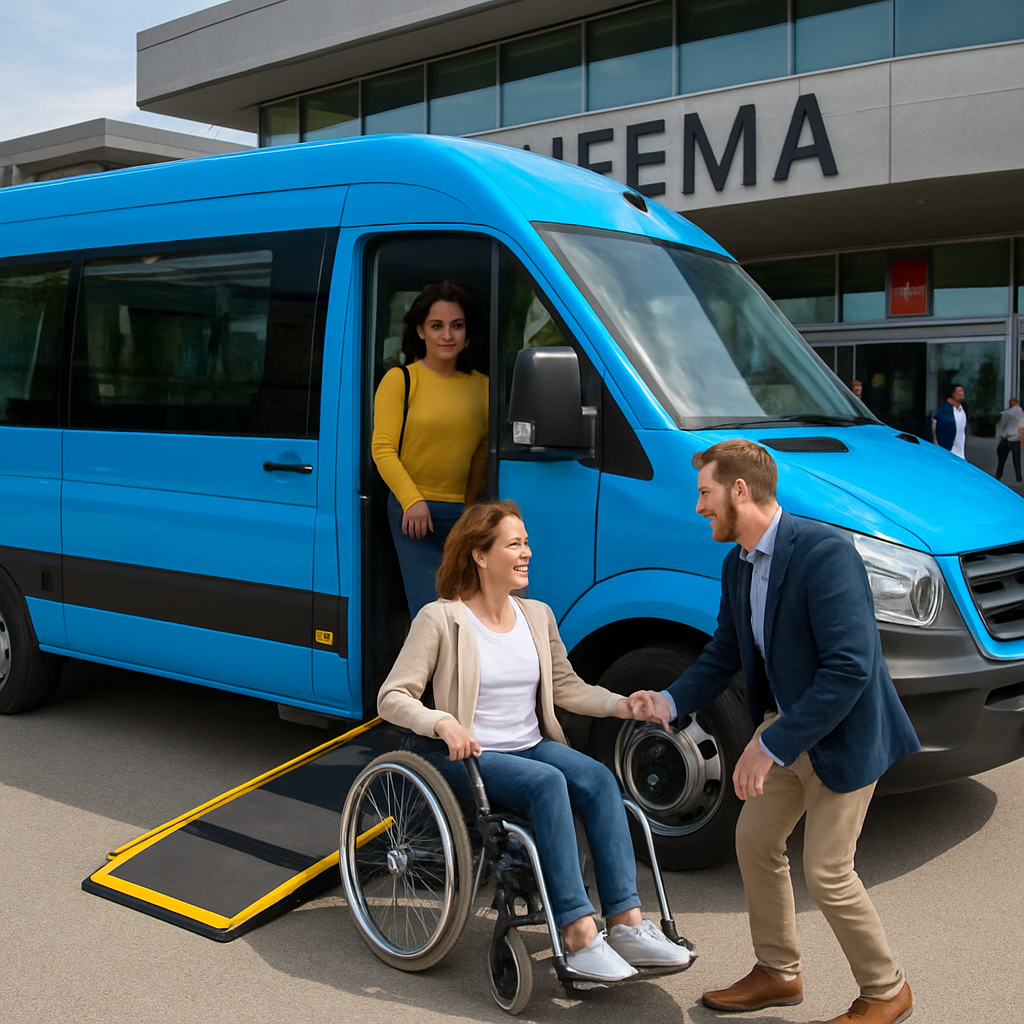
Because Spain’s “Ley de igualdad de oportunidades” mandates that public transport serving events must be fully PMR‑compliant, you’ll need at least one coach with a built‑in ramp for every ten guests with reduced mobility.
Torres Bus offers 25‑seat coaches equipped with hydraulic ramps and secure wheelchair tie‑down points, so you can flag those vehicles in your master schedule.
A quick tip: add a “Accessibility” column to the matrix you built in Step 1 and mark the exact pickup spot where a ramp can be deployed safely—usually the hotel’s ground‑floor lobby or a side street with curb cut.
Don’t assume the driver will magically know how to operate the ramp; schedule a 10‑minute demo during the pre‑event walk‑through.
What about on‑board amenities for PMR guests?
A few extra seat belts, a low‑step aisle, and a small luggage shelf at waist height make a huge difference for someone carrying a suitcase and a walking aid.
If you have VIPs who travel with equipment, request a “cargo‑secure” strap system—Torres Bus can fit it to the ceiling rails of the coach.
Now that permits, insurance, and accessibility are covered, you can lock them into a single checklist.
Checklist for Step 5:
- Submit “Uso del espacio público” permit request 3 days before the first shuttle.
- Obtain IFEMA “Evento Temporal” permit with insurance certificate attached.
- Confirm insurance coverage ≥ €5 million and request fleet‑wide endorsement.
- Identify PMR‑required guests and assign ramp‑equipped coaches.
- Add “Accessibility” notes to the route matrix and schedule a ramp demo.
Keep a digital copy of every permit on your phone and a printed copy in the driver’s folder; security guards love to see the official stamp before they open a gate.
And if a last‑minute road closure hits the loading dock, the permit still guarantees you priority access, so you can reroute without losing the buffer you built earlier.
Finally, breathe easy knowing you’ve checked the boxes that most planners miss.
When the morning bell rings, you’ll see the driver flash the permit, the insurance card, and the ramp ready for the first guest, and everything will just flow.
Step 6: Manage on‑site coordination and communication
The morning of the IFEMA show is a blur of coffee, last‑minute emails, and the hum of engines pulling up to the loading dock. If you’ve followed the previous steps, you already have permits, vehicles, and routes nailed down – now you just need to make sure everything actually runs together like a well‑rehearsed dance.
So, how do you keep the whole operation from turning into a chaotic chorus of “Where’s my bus?” and “We’re stuck in traffic”? The answer is simple: create a live coordination hub, give your driver a real‑time briefing, and keep your guests informed with clear, friendly messages.
Set up a live coordination hub
Think of the hub as your command center for the day. It can be as low‑tech as a shared Google Sheet on a tablet, or as fancy as a dedicated Slack channel if your team already uses one. The key is that everyone – you, the driver, the venue contact, and any on‑site assistants – can see the same information at the same moment.
- Sheet columns: Vehicle ID, Driver name, Pickup address, Planned departure, Current status (e.g., “en route”, “arrived”, “delayed”).
- Color‑code: Green = on time, Yellow = buffer used, Red = issue.
- Update rule: Any change gets logged immediately, and the person who makes the change tags the rest of the team.
Because the hub lives online, you can pull up the same view from your phone while you’re walking the exhibition floor. If a security guard at IFEMA asks for the “Evento Temporal” permit, you can open the file, point to the scanned copy, and confirm everything’s in order without hunting through a folder.
Does having a live hub sound like extra work? In practice it saves minutes – and headaches – the moment a traffic jam pops up.
Keep the driver in the loop
The driver is your most valuable on‑site ally. Give them a concise briefing the night before, then do a quick 5‑minute “good morning” call 30 minutes before the first pickup. During that call, confirm three things: the exact curb side for each hotel, any PMR ramp setup needed, and the backup route if the M‑30 snarls.
While the bus is on the road, use the hub to ping the driver with status updates. A simple “you’re 5 min behind schedule, move to A‑42” can keep the whole chain moving. If the driver hits a road closure, they can drop a note in the sheet, you see the red flag, and you instantly switch the second shuttle’s departure by five minutes – all without a frantic phone tag.
Remember, drivers appreciate clear, polite language. “Hey Carlos, the ramp at Hotel Villa Magna needs a side‑street approach – can you confirm?” works better than a vague “check the ramp”.
Communicate with attendees on the ground
Guests love knowing exactly where to stand and when. Send a brief reminder email or WhatsApp note a few hours before the first shuttle. Include three elements: the bus color and logo (Torres Bus uses bright blue with “IFEMA Shuttle”), the meeting point (e.g., “Lobby near the main elevators”), and a friendly cue (“look for the driver waving a hello sign”).
Post a small printed sign at each pick‑up spot with the same info. It may feel “extra”, but on a busy morning those visual cues cut down the “which bus is mine?” moments dramatically.
If a guest texts you saying they’re running late, reply with a quick “no problem, the next coach leaves at 10:05 – we’ll hold the door for you”. That tiny reassurance turns a potential complaint into a smile.
Troubleshoot on the fly
Even the best plan meets hiccups. Here are three quick‑fire actions you can take the moment something goes off‑track:
- Traffic jam: Activate the backup route in the hub, alert the driver, and inform any affected guests with a short “we’re taking the A‑42, expect a 5‑minute shift”.
- Vehicle issue: Keep a spare 12‑seat minibus on standby (Torres Bus can provide one at short notice). Swap the troubled bus, update the sheet, and let the driver know the new vehicle ID.
- Permit snag: If security asks for a missing stamp, pull up the scanned permit on your phone, show it, and note the request in the hub so the next checkpoint is prepared.
Having these “what‑if” moves written down means you don’t waste time thinking on the spot – you just follow the checklist.
Finally, close the day with a quick debrief. Ask the driver what went well, note any delays, and update the hub with lessons learned. Those notes become the foundation for Step 7, where you’ll review performance and tweak the process for the next IFEMA event.
By treating on‑site coordination like a live conversation rather than a static plan, you turn potential chaos into a smooth, confident experience for everyone involved – and that’s the secret sauce of mastering “How to organize group transportation in Madrid for IFEMA trade shows”.
Conclusion
By now you’ve seen how a simple spreadsheet can become the backbone of a smooth IFEMA shuttle day, and how a 10‑minute buffer can turn a traffic nightmare into a manageable detour.
So, what’s the biggest takeaway? Treat every piece of the puzzle – permits, vehicle size, driver briefings – as a conversation, not a checklist you file away.
When the driver waves the bright‑blue Torres Bus at the hotel lobby and you hear that “all set?” in their voice, you’ve earned the confidence that keeps guests smiling even after a long flight.
Remember to capture the day’s lessons in your hub: note any unexpected roadwork, flag which backup route saved you minutes, and update the matrix for the next show. Those tiny edits compound into a rock‑solid process.
And don’t forget the human side – a quick text to a late‑arriving attendee, a friendly “welcome” at the entrance, or a coffee cart on board can turn a logistical chore into a memorable touchpoint.
Ready to put it all together? Pull your spreadsheet, confirm the vehicle roster with Torres Bus, run a final hub check this evening, and sleep easy knowing you’ve turned potential chaos into a seamless ride.
FAQ
What’s the first step when planning group transportation for an IFEMA trade show?
Start by pulling together every arrival detail you have – flight times, hotel check‑in windows, any VIP or accessibility needs. Dump that info into a simple spreadsheet and group guests by similar time slots. That matrix becomes your north‑star; you’ll see where clusters overlap and where you can bundle rides without cramming anyone onto a tiny van. It’s the foundation for every later decision.
How do I choose the right bus size for different hotel clusters?
Look at the headcount in each cluster and match it to the vehicle brackets Torres Bus offers: 7‑seat vans for ultra‑small groups, 16‑seat micro‑buses for 7‑15 guests, 25‑seat coaches for 16‑30, and 50‑seat coaches for larger blocks. Add a quick check for luggage volume and any wheelchair ramps. If a coach ends up half‑empty, consider merging a nearby cluster that shares a pickup window – you’ll save money and keep the ride comfortable.
What should I look for in a reliable bus provider for IFEMA?
Experience matters, so aim for a company with at least 30 years navigating Madrid traffic and the IFEMA loading zones. Family‑owned firms like Torres Bus tend to care about reputation, offering transparent per‑vehicle pricing and modern, climate‑controlled fleets. Verify that drivers are licensed, multilingual, and used to handling last‑minute changes. A quick reference call to two recent clients can reveal whether the provider really respects that 10‑minute buffer you built.
How can I build a buffer into the shuttle schedule to avoid traffic delays?
Insert a 10‑minute cushion between each departure slot in your route matrix. That little gap absorbs unexpected jams on the M‑30 or a delayed driver check‑in. Keep a live coordination sheet on your phone so you can shift the next bus by a few minutes in real time. When the first shuttle hits a jam, the buffer protects the downstream pickups and keeps guests smiling.
What permits and insurance do I need for shuttle buses at IFEMA?
Madrid requires a «Uso del espacio público» permit for any vehicle stopping on a public curb longer than five minutes. Request it three business days ahead and keep a digital copy on your phone. IFEMA also asks for an «Evento Temporal» permit plus proof of liability coverage – aim for at least €5 million, which Torres Bus provides on request. Having those documents ready means security won’t make you wait at the gate.
How can I keep attendees informed and the day running smoothly?
Send a short reminder a few hours before the first pickup: include the bright‑blue bus colour, exact curb location, and a friendly cue like «look for the driver waving a hello sign.» Post a tiny sign at each hotel lobby and use a shared Google Sheet to track real‑time status – green for on‑time, yellow if the buffer is in use, red for issues. Quick replies to late‑arrival texts (“no problem, we’ll hold the door”) turn potential complaints into goodwill.