
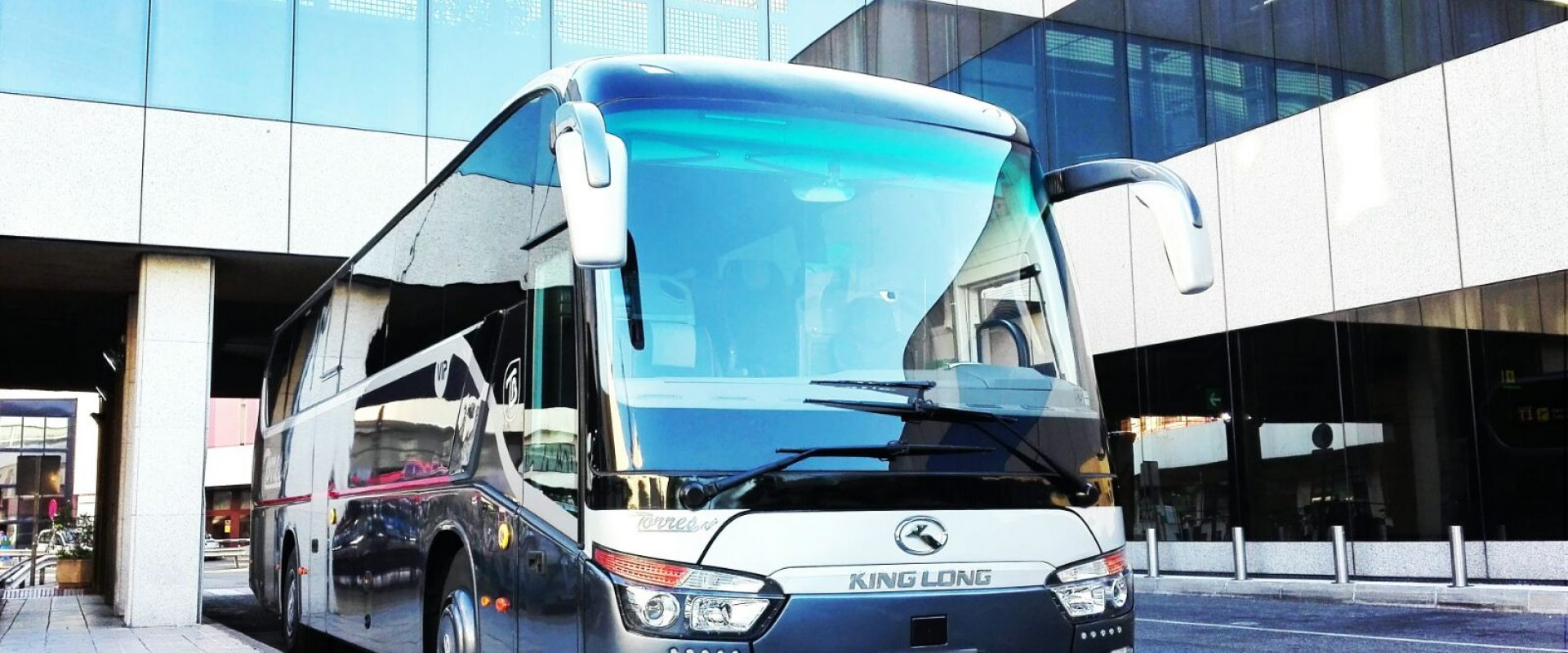

Picture this: you’ve just booked a venue in Madrid for a corporate retreat, a wedding, or a school field trip, and now you stare at the seating chart wondering whether a sleek minibus or a spacious coach will get everyone there comfortably.
Does the idea of squeezing fifteen guests into a cramped van make you cringe? Or are you worried a massive coach will feel empty and wasteful for a smaller group? Those little doubts are exactly why figuring out how to choose between a minibus and coach for your group in Madrid matters.
First, think about the size of your party. A minibus shines for groups of 7‑15 people – perfect for a boutique wedding party, a handful of executives, or a family reunion traveling from Barajas airport to the hotel. A coach, on the other hand, comfortably seats 30‑70 passengers, ideal for large corporate events, school outings to Toledo, or a music festival crew.
Second, consider the journey itself. If you’re navigating narrow streets of the historic centre or need frequent stops, the agility of a minibus saves time and parking hassle. For longer trips across the country or day‑long sightseeing tours, a coach offers extra legroom, onboard amenities, and space for luggage or equipment.
And don’t forget the vibe you want to create. A minibus can feel intimate – you can chat, play a playlist, and even bring a pet for a family trip. A coach delivers a professional, hotel‑like atmosphere, with climate control and sometimes Wi‑Fi, which many corporate clients appreciate.
In our experience at Torres Bus, we often start the conversation by asking three simple questions: how many seats do you really need, what stops are planned, and what level of comfort your guests expect. That quick checklist usually points us to the right vehicle without over‑paying.
So, before you book, sketch out your group size, route, and desired experience. The answer will become clear, and you’ll avoid the common pitfall of choosing a vehicle that is either too big or too small.
Ready to make the right call? Let’s dive into the details that will help you decide with confidence.
TL;DR
Choosing between a minibus and a coach in Madrid boils down to three quick questions: how many seats you truly need, how often you’ll stop, and the comfort level your group expects.
Answer those, and you’ll instantly see whether a nimble minibus or a spacious coach delivers the right balance of agility, price and passenger experience for weddings, corporate trips or school outings.
Step 1: Assess Your Group’s Size and Travel Needs
First thing’s first – how many people are actually hopping on the bus? It sounds simple, but we’ve seen planners panic over a minibus that ends up with just five seats occupied, or a coach that feels like a hollowed‑out auditorium. Take a moment to write down every name on the guest list, then add a couple of “just‑in‑case” slots for last‑minute RSVPs or extra luggage.
Once you have a headcount, think about the composition of that crowd. Are you moving a handful of executives who’ll need space for laptops and a quick coffee break? Or a school group that’ll be lugging backpacks and maybe a few sports kits? Different passenger profiles change the comfort equation – a coach gives you more legroom and storage, while a minibus feels cozier for a tight‑knit crew.
Next, map the journey. Short hops around the historic centre of Madrid? A minibus can weave through those narrow streets and park closer to the venue. Planning a day‑long excursion to Toledo or a multi‑stop corporate roadshow? You’ll want the onboard amenities a coach provides – think Wi‑Fi, charging points, and a bathroom.
Here’s a quick checklist you can print out (or jot on your phone):
- Exact passenger count (including drivers)
- Special needs – wheelchair access, pet travel, equipment
- Trip length and number of stops
- Desired onboard comforts (Wi‑Fi, climate control, restrooms)
Got that list? Great. Now let’s talk numbers. If you’re between 7 and 15 seats, a minibus usually hits the sweet spot – it’s cost‑effective and feels personal. Anything above 20, and the coach starts to make sense, especially when you factor in luggage space and the ability to split the group into smaller discussion pods.
But don’t forget the “soft” factors. Do you want the group to mingle freely, perhaps sharing a playlist or a quick toast? A minibus lets everyone chat as if they’re in a living‑room. Need a more formal atmosphere, maybe for a corporate briefing? A coach’s layout encourages a quieter, more professional vibe.
And speaking of vibe, imagine you’re arranging a wedding transport. The bride might want a romantic, intimate ride for the bridal party – a minibus does that beautifully. Meanwhile, the reception guests arriving from the airport could appreciate a spacious coach so they can relax after a long flight.
When you start juggling these variables, the decision becomes clearer. In our experience at Torres Bus, we often run a quick “size‑vs‑comfort” matrix with clients – it’s a painless way to visualise the trade‑offs.
Need a visual aid? Check out this short video that walks you through a typical sizing exercise for Madrid group travel.
Now, a couple of resources that might help you fine‑tune the details. If you’re printing custom itineraries or want a sleek brochure for your guests, JiffyPrintOnline offers quick printing services that work well for on‑the‑go event planners. For events that feature live music – perhaps a Cuban salsa night in a Madrid venue – you can discover fresh talent on Amá Artistas, a hub for Cuban singers performing across Europe. And if your group includes international guests who need language support, LangaVibe provides on‑demand translation services that integrate smoothly with travel itineraries.
Finally, give yourself a moment to picture the day of travel. Picture the bus pulling up, the driver greeting each passenger by name, the luggage being stowed efficiently, and everyone settling into the right amount of space. When that mental image feels right, you’ve probably landed on the perfect vehicle.
Take the checklist, run the matrix, and you’ll walk away with a confident answer – no more second‑guessing, no wasted seats, and a smooth ride for every member of your group.

Step 2: Compare Capacity, Comfort, and Amenities
Now that you’ve nailed the headcount, it’s time to look beyond numbers and ask yourself what the ride should actually feel like.
Seat count vs legroom
A minibus that seats 7‑15 people usually offers plush, airline‑style seats that hug you just enough to feel cozy but not cramped. Because the cabin is shorter, you’ll notice the legroom sooner – think 30‑35 cm extra compared to a standard coach seat.
A coach with 30‑70 seats spreads those seats over a longer chassis, so even though each seat might be a bit narrower, the overall legroom per passenger stays similar or slightly better on the upper deck of a double‑deck model. The trade‑off? You’ll walk a few more steps to reach the rear rows.
Amenities that matter
If your group needs Wi‑Fi for a live presentation, a restroom for a day‑long tour, or a wheelchair ramp for a school field trip, the coach usually has those built‑in. Most of our 30‑seat coaches come with USB charging points, climate control zones, and a small pantry.
Mini‑buses can still be equipped with Wi‑Fi and power sockets, but you won’t find an onboard bathroom unless you request a custom retrofit. That’s fine for airport transfers or a short wedding shuttle, where stops are frequent and the journey lasts under two hours.
Luggage and gear space
Picture a family heading to a seaside resort with suitcases, surfboards, and a stroller. In a minibus you get a single under‑floor compartment that fits maybe two large bags per passenger. Anything bigger quickly eats up the cabin floor.
A coach, on the other hand, offers multiple luggage racks, side compartments, and sometimes a rear cargo door. That extra volume is a lifesaver for school trips laden with backpacks or film crews hauling lighting kits.
Comfort for the journey length
For a quick 30‑minute airport pick‑up, the intimacy of a minibus lets you chat with guests, serve a welcome coffee, or even let a pet sit beside you. The ride feels personal, and you’re back on the ground faster.
When you’re heading to Toledo for a full‑day sightseeing tour, the coach’s reclining seats, air‑conditioning, and optional entertainment screens keep everyone refreshed for hours. The extra space also means you can set up a small “meeting zone” for corporate briefings without crowding the aisle.
So, how do you decide which combination of capacity, comfort, and amenities fits your Madrid adventure?
| Feature | Minibus (7‑15 seats) | Coach (30‑70 seats) |
|---|---|---|
| Typical seat layout | Single row, airline‑style, easy boarding | Two‑aisle, optional double‑deck, more rows |
| Amenities | Wi‑Fi optional, no restroom, limited power sockets | Wi‑Fi, restroom, USB ports, climate zones |
| Luggage capacity | One under‑floor bin, ~2 bags per passenger | Multiple racks, side compartments, large cargo door |
| Best trip length | Up to 2 hours, frequent stops | 2 hours + , long‑haul comfort |
Take a moment to match each row with your own checklist. If Wi‑Fi and a bathroom are non‑negotiable, the coach wins. If you’re shuttling a wedding party from the airport to the venue and want a sleek, personal vibe, the minibus is the way to go.
Remember, the “right” vehicle isn’t just about the seat count – it’s about the experience you want to deliver. Align capacity with comfort, and you’ll avoid the dreaded “too cramped” or “half‑empty” feeling that ruins any group trip.
When you’ve settled on the option that ticks most of your boxes, give us a call. We’ll walk you through the exact configuration, confirm any extra amenities, and lock in a price that respects your budget.
Step 3: Evaluate Cost, Fuel Efficiency, and Budget
Okay, now that you know whether you need a minibus or a coach, the next question that keeps most planners up at night is: how much will it actually cost?
1. Sketch Your Budget Up Front
Start by writing down the maximum amount you’re willing to spend per passenger. For a corporate retreat you might have a per‑head allowance of €80, while a wedding couple may be comfortable with €120 each because they want a bit more luxury.
Don’t forget hidden items: driver’s meals, overnight allowances, tolls on the A‑6 highway, and city parking fees around Plaza de Cibeles. Those line items can add €20‑€40 per day if you forget them.
2. Compare Rental Rates – Minibus vs. Coach
In Madrid the price gap between a 9‑seat minibus and a 30‑seat coach isn’t as huge as you might think. According to the Rent‑Autobus price guide, a four‑hour hire with 100 km included costs €300‑€550 for an 8‑seat minibus, while the same time slot for a 30‑seat coach sits at €400‑€750.
What does that mean in real terms? If you have a 12‑person corporate team, a minibus at €425 (mid‑range) works out to roughly €35 per head. A coach, even at the low end of €400, spreads over 30 seats and drops to €13 per head – but you’re paying for empty seats you’ll never fill.
For a 40‑person school field trip, the coach becomes the clear winner: the 35‑60‑seat coach costs €550‑€840 for an eight‑hour day, translating to about €14‑€20 per student, while trying to stretch a minibus would require two vehicles and double the driver cost.
3. Factor Fuel Efficiency and Extra Kilometers
Fuel consumption is another piece of the puzzle. A modern 12‑seat minibus typically drinks around 9‑10 L/100 km, whereas a 50‑seat coach averages 28‑30 L/100 km. On paper the coach looks thirstier, but because you’re moving more people, the fuel cost per passenger actually drops.
If your itinerary includes extra mileage – say a detour to El Escorial after a city tour – the per‑kilometre surcharge listed by Rent‑Autobus is €1.50‑€3.00 for both vehicle types. Multiply that by 50 km and you add €75‑€150 to the bill, regardless of size. That’s why you should always request a mileage estimate up front and negotiate a flat rate if possible.
4. Run the Numbers with a Simple Checklist
Grab a spreadsheet and fill in these rows:
- Vehicle type (minibus vs. coach)
- Base rental fee (from price guide)
- Estimated hours + extra hour fees (€40‑€60 per hour)
- Planned kilometers + extra km surcharge
- Driver meal & overnight costs
- Parking / tolls
- Total cost
- Cost per passenger (total ÷ headcount)
When you compare the two columns, the lower “cost per passenger” usually tells you which option respects your budget while still delivering the comfort you need.
5. Real‑World Quick Wins
Imagine you’re organizing a three‑day corporate roadshow with 18 executives traveling between Madrid, Toledo, and Segovia. You could book a 16‑seat minibus for the first day (€615 for 8 h) and then switch to a 30‑seat coach for the longer second day (€650). By splitting the hire, you save about €35 total and avoid paying for unused seats on the longer leg.
Or picture a wedding party of 22 guests needing airport pickup, venue drop‑off, and a late‑night return. A single 30‑seat coach at €550 for the day covers everything, while two minibuses would cost roughly €425 × 2 = €850 plus extra driver fees – a clear budget blowout.
6. Pro Tip from the Field
Ask the provider for a “fuel‑saver package.” Some operators in Madrid offer a hybrid or low‑emission coach that reduces the litre‑per‑100 km rate by up to 15 %. The extra €50‑€80 per day often pays for itself in lower fuel surcharges, especially on trips that exceed 200 km.
Finally, never sign a contract until you’ve seen a detailed breakdown that matches your checklist. A transparent quote protects you from surprise fees and gives you the confidence to say, “Yes, this is the right vehicle for my budget and my group.”
Step 4: Review Licensing, Accessibility, and Extra Services
Before you sign anything, take a breath and ask yourself: does this vehicle meet every legal and comfort requirement for your group? In Madrid, the rules around driver licences, vehicle permits, and accessibility are pretty strict – and they’re there to keep you and your passengers safe.
First, verify the driver’s licence class. A standard B licence covers minibuses up to 9 seats, but anything larger (10‑30 seats) needs a C1 licence. Ask the operator for a copy of the driver’s licence and the vehicle’s ITV (Inspección Técnica de Vehículos) certificate. Those two documents are your proof that the bus can legally hit the road.
Second, look at the insurance policy. A reputable company will carry a full‑cover civil liability policy that includes passenger injury and third‑party damage. Request a PDF of the policy and check that the coverage amount meets Spanish law (minimum €1 million for passenger transport). If the operator can’t produce this, walk away – it’s not worth the risk.
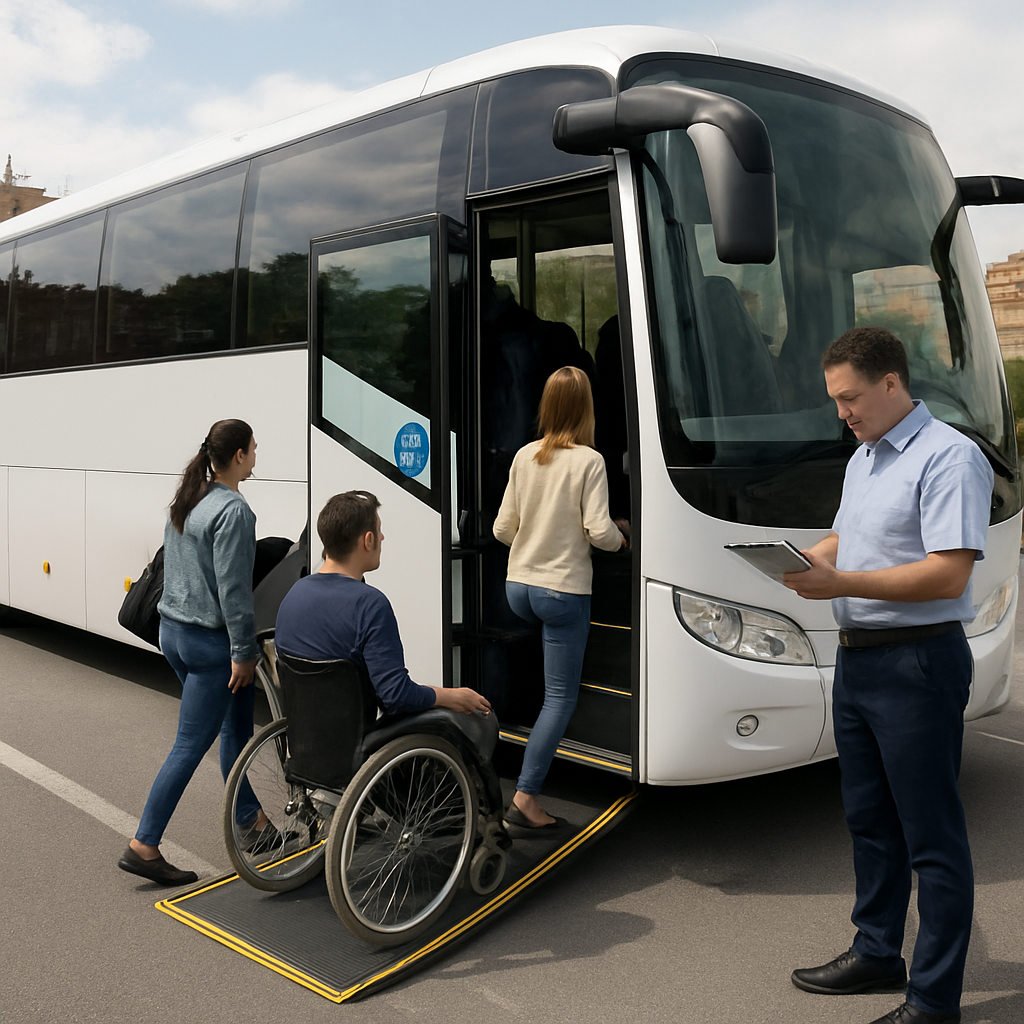
Accessibility is often the make‑or‑break factor for school trips, pilgrimages, or corporate events that include guests with reduced mobility. In Madrid, any vehicle that advertises “PMR‑compatible” must have a ramp or lift, a wheelchair‑secured area, and enough headroom. The ramp should deploy automatically and be rated for at least 250 kg. If you’re moving a group of 20‑plus, a coach with a side‑mount ramp is usually smoother than a minibus with a rear‑hinge lift.
Imagine you’re organising a three‑day conference for a tech firm, and two senior executives use a wheelchair. You’ve booked a 30‑seat coach, but the driver shows up with a minibus that only has a rear‑step. Suddenly you’re scrambling for a replacement, and the whole schedule slips. In our experience, double‑checking the PMR certification before the contract saves you hours of panic.
Here’s a quick way to verify accessibility: ask for a photo of the ramp in action, confirm the width (minimum 80 cm), and request the vehicle’s floor‑plan showing the wheelchair space. Most operators are happy to share these details because they know it’s a decisive selling point.
Extra services can turn a plain ride into a premium experience. Wi‑Fi is now a baseline expectation for corporate shuttles, while a restroom is a must for tours lasting more than two hours. Some clients also ask for on‑board catering – think coffee service for a morning airport transfer or a light snack bar for a school field trip.
Take a wedding party that lands at Barajas at 10 am, needs a champagne toast en route to the ceremony, and wants a late‑night return. A coach equipped with a mini‑bar and climate‑control zones lets the bride’s family relax, sip, and stay comfortable while the photographer sets up. Those little touches often justify the €50‑€80 extra per day you see on the quote.
Checklist before you sign:
- Driver’s licence class matches vehicle size.
- Current ITV certificate and valid road tax.
- Full‑coverage passenger liability insurance (≥ €1 million).
- PMR certification – ramp type, width, and secured space.
- List of extra services (Wi‑Fi, restroom, catering, AV equipment).
- Clear cost breakdown for each add‑on and any mileage surcharges.
- Cancellation policy and penalties.
If you need a deeper dive into how the different bus services stack up, our guide How to Choose the Best Bus Rental Madrid Services for Your Group Travel Needs walks you through the key questions and compares the options side‑by‑side.
Don’t forget the paperwork that lives outside the vehicle. For events that involve printed itineraries, name tags, or safety briefings, a reliable printing partner can streamline the process. We often recommend JiffyPrintOnline for custom itineraries and boarding passes – they’re quick, affordable, and their templates are perfect for group travel documents.
Once you’ve ticked every box, ask the operator for a single‑page summary that lists licence numbers, insurance limits, and any extra services you’ve agreed on. A clear, signed document protects you from surprise fees and gives you peace of mind on the day of travel.
Bottom line: licensing, accessibility, and extra services aren’t optional add‑ons – they’re the foundation of a smooth, risk‑free journey. By following this checklist, you’ll keep your budget intact, meet legal requirements, and deliver an experience that feels thoughtful and professional.
Step 5: Book, Confirm, and Prepare for Your Trip
Get a crystal‑clear quote
Once you’ve nailed down whether to go with a minibus or a coach, the first thing you should do is ask for a written quote that breaks down every line item – base rental, driver allowance, fuel surcharge, mileage, and any extra services like Wi‑Fi or a restroom.
Why does this matter? Because a vague “€500 total” can hide a €50 per‑hour overtime fee that pops up later.
Verify licences and insurance
Ask the operator to email you a one‑page summary that lists the vehicle’s licence plate, ITV certificate number, and the driver’s licence class (B for minibuses up to 9 seats, C1 for larger coaches).
Then double‑check that the insurance coverage meets the Spanish minimum of €1 million for passenger liability. A quick glance at the PDF can save you a legal headache on the road.
Lock in the amenities you need
Do you need a wheelchair‑compatible ramp, on‑board charging ports, or a mini‑bar for a wedding toast? Write those requests down and get them confirmed in the contract.
In our experience, a coach with a built‑in restroom and Wi‑Fi becomes indispensable on a full‑day tour, while a minibus with a single power socket is usually enough for a quick airport shuttle.
Deposit, payment schedule, and cancellation policy
Most Madrid operators ask for a 30 % deposit to secure the vehicle. Make sure the invoice spells out when the remaining balance is due – usually 48 hours before departure.
Read the cancellation clause carefully. A non‑refundable deposit can be a surprise if your event is postponed.
Confirm driver details
Ask for the driver’s name, photo, and contact number. A friendly, English‑speaking driver can make a huge difference for corporate groups or international guests.
It doesn’t hurt to request a brief “meet‑and‑greet” call a day before you travel – that way you know who’s at the wheel and you can share any last‑minute itinerary tweaks.
Gather travel documents
Print out the vehicle summary, driver licence, and insurance PDF and keep them in a folder that you can hand to the driver on the day.
If you’re transporting students or seniors, bring a copy of any medical or mobility documentation they’ve provided – the driver will need it to set up the ramp correctly.
Create a trip‑day checklist
Bullet‑point the essentials: vehicle registration, driver contact, passenger list, stop‑by‑stop schedule, and any on‑board catering orders. Put this list on your phone and on paper.
Having a checklist turns the booking process from “I hope I didn’t forget something” into “I’ve got everything covered.”
Communicate with your group
Send a short email or WhatsApp message to participants that includes the pickup time, meeting point, and a photo of the bus or minibus.
People love a visual cue – it cuts down on confusion and makes the whole experience feel more professional.
Day‑of final steps
Arrive at the pickup spot 15 minutes early, greet the driver, and do a quick walk‑through of the interior. Check seat counts, luggage racks, and that the wheelchair ramp functions smoothly.
Finally, confirm the route with the driver – even a small change in traffic patterns can add 20‑30 minutes, and you’ll thank yourself for the heads‑up.
Following these steps turns the vague anxiety of “how to choose between a minibus and coach for your group in Madrid” into a smooth, confidence‑filled journey from start to finish.
Conclusion
So, after walking through size, comfort, cost and legal checks, you’ve got a pretty clear picture of how to choose between a minibus and coach for your group in Madrid.
Remember the simple rule: if you’re moving fewer than 15 people, need quick city hops and maybe a pet in the back, the minibus wins. If you’re hauling 20‑plus guests, luggage, or want onboard amenities like a restroom or Wi‑Fi, the coach pays off.
What’s the next step? Grab that checklist you built in Step 5, match it against the vehicle you’ve eyed, and give the driver a quick call to confirm licence class, insurance and any accessibility gear.
In our experience, a short “hello” email with the passenger list and special‑needs notes saves everyone from last‑minute scrambling.
And don’t forget to lock in your deposit early – Madrid traffic can surprise you, and a secured booking guarantees the right vehicle on the day.
Finally, take a breath, picture the smile on your guests when the bus pulls up, and trust that you’ve made the right call.
Ready to turn the plan into reality? Reach out to Torres Bus and let us fine‑tune the details so your journey runs smoothly from the first mile to the last.
FAQ
What factors should I consider when deciding between a minibus and a coach for my group in Madrid?
Look at three things: how many people are traveling, how far and how often you’ll stop, and which onboard comforts matter. A minibus feels cosy for 7‑15 passengers, squeezes through narrow Madrid streets and is cheaper to run, while a coach gives you space for 30‑70 seats, a restroom, climate zones and Wi‑Fi for longer routes. Match those needs to your itinerary and the right vehicle pops up.
How many seats make a minibus the right choice versus a coach?
In practice, if your head‑count stays under about 15 seats you’ll usually save time and money with a minibus. Once you hit 16‑30 people the extra legroom and luggage bays of a small coach become worthwhile, and for 31 plus guests a full‑size coach prevents the dreaded “empty‑seat” penalty and gives you room for gear or wheelchair lifts. Use the checklist you built in Step 1 to confirm the exact number.
Is Wi‑Fi or a restroom essential for short trips in Madrid?
For a quick airport shuttle or a two‑hour city hop, you probably don’t need a bathroom – a few power sockets and maybe a portable hotspot will do. But if the journey stretches beyond two hours, especially on a highway to Toledo or Segovia, passengers appreciate a restroom and stable Wi‑Fi so they can work or relax. Think of the trip length first, then add amenities that won’t feel like overkill.
What about accessibility – can a minibus handle wheelchair users?
Spain’s accessibility law requires any vehicle advertised as PMR‑compatible to have a ramp that supports at least 250 kg and a secured wheelchair zone. Most of our 30‑seat coaches meet that, while minibuses can be fitted with a rear‑hinge lift but often lack the width for larger chairs. If you have guests with reduced mobility, double‑check the ramp type and ask for a photo before you sign – it saves a day‑of scramble.
How does price per passenger change with group size?
A minibus might cost €300‑€550 for a half‑day, which sounds cheap until you spread it over 12 passengers – that’s roughly €30‑€45 each. A 30‑seat coach can be €400‑€750 for the same slot, but when you divide by 25‑30 people the per‑head price drops to €13‑€30. The trick is to calculate “cost per passenger” instead of total bill; the lower figure usually wins for budget‑sensitive events.
What paperwork should I verify before confirming the hire?
Before you hand over a deposit, ask for three documents: the driver’s licence class (B for up to 9 seats, C1 for larger vehicles), the current ITV (technical inspection) certificate, and a copy of the civil‑liability insurance showing at least €1 million coverage. Keep those PDFs in a folder on your phone and verify the expiry dates on the day of the trip. A quick glance now avoids legal hiccups later.
Can I combine a minibus and a coach for multi‑day events?
Yes – many planners start with a minibuss for the airport run and then switch to a coach for a full‑day sightseeing tour. The key is to book both legs with the same operator so the driver knows your schedule and you don’t pay separate admin fees. Ask for a “combined‑booking” discount; we often shave 5‑10 % off the total when the two vehicles are linked.