
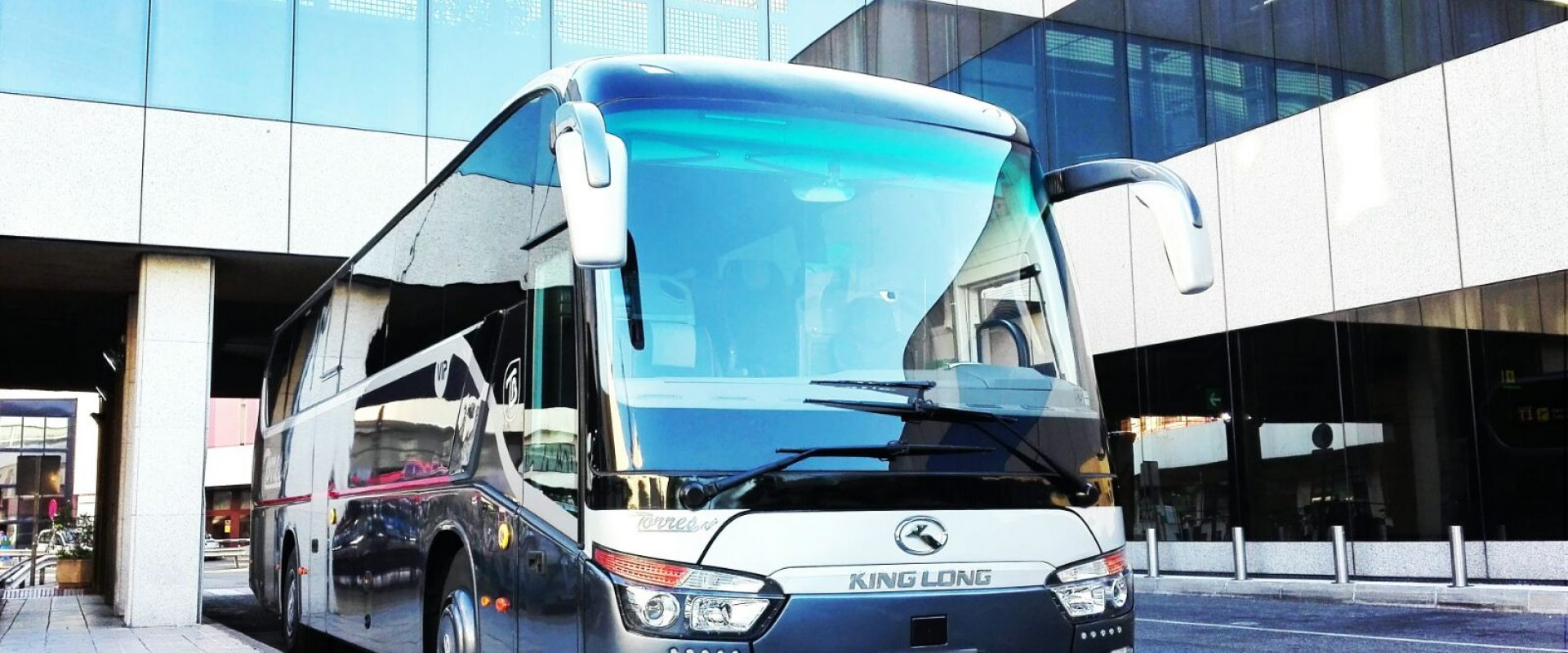
Ever stared at a minibus brochure and wondered how many seats in a minibus actually fit your group?
You’re not alone—whether you’re planning a wedding shuttle, a corporate roadshow, or a weekend trip to Toledo, the right capacity can be the difference between smooth sailing and a cramped scramble.
Think about the moment when the driver opens the door, and you see a line of empty seats waiting for friends, colleagues, or family. That visual tells you instantly whether the vehicle will feel like a cozy lounge or a sardine can.
Most minibuses in Madrid range from 7‑seat luxury vans perfect for VIP airport transfers, up to 25‑seat coaches that handle school excursions or sports teams. If you need something in between, 12‑ and 16‑seat models are the sweet spot for medium‑sized groups.
So, how do you decide which size is right? Start by counting the total number of passengers, then add a couple of extra seats for luggage, equipment, or that occasional last‑minute guest.
Here’s a quick mental checklist: • Total people + 1 or 2 for gear. • Comfort level – do you want elbow room or can you squeeze in? • Route length – longer trips deserve more space.
Imagine you’re organizing a corporate off‑site for 18 staff members. A 20‑seat minibus gives you room to spread out, store presentation materials, and maybe even fit a coffee trolley. On the other hand, a 16‑seat vehicle would feel cramped and could turn a productive day into an uncomfortable ride.
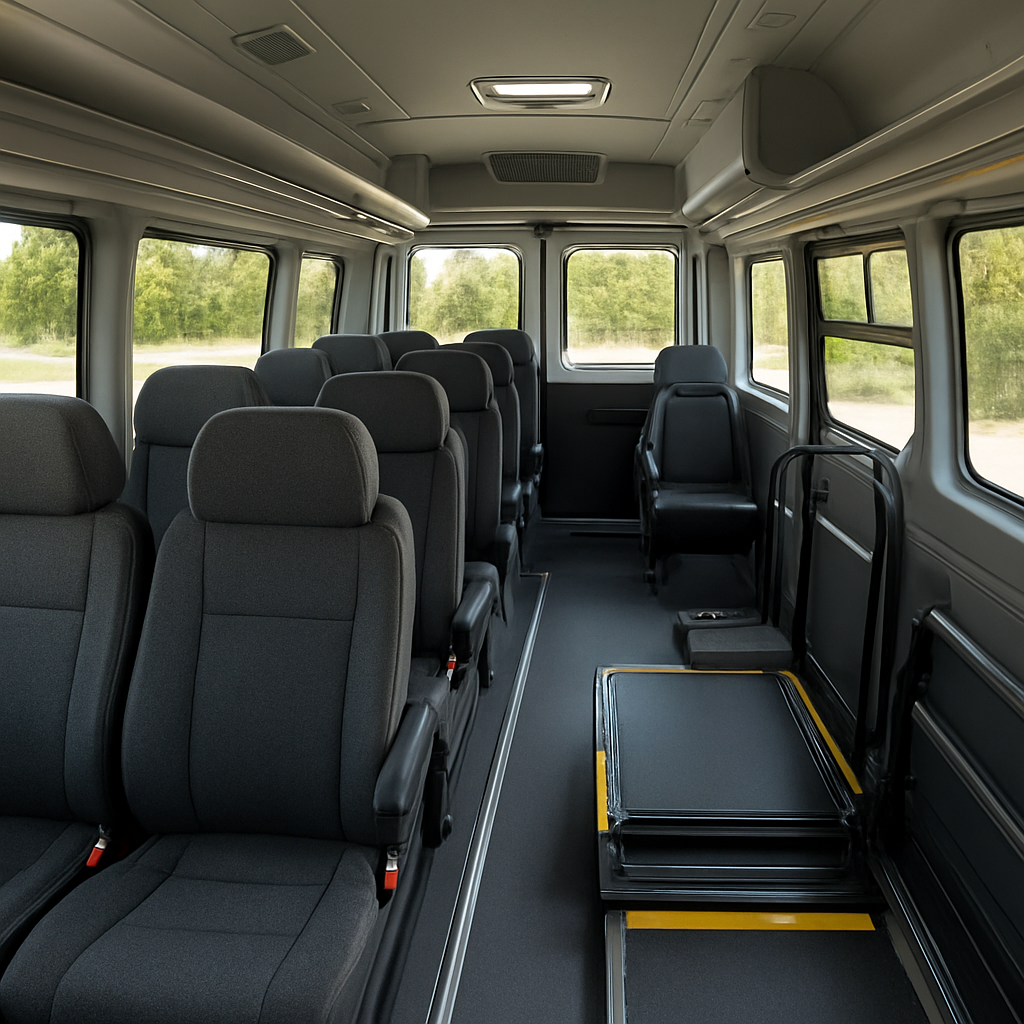
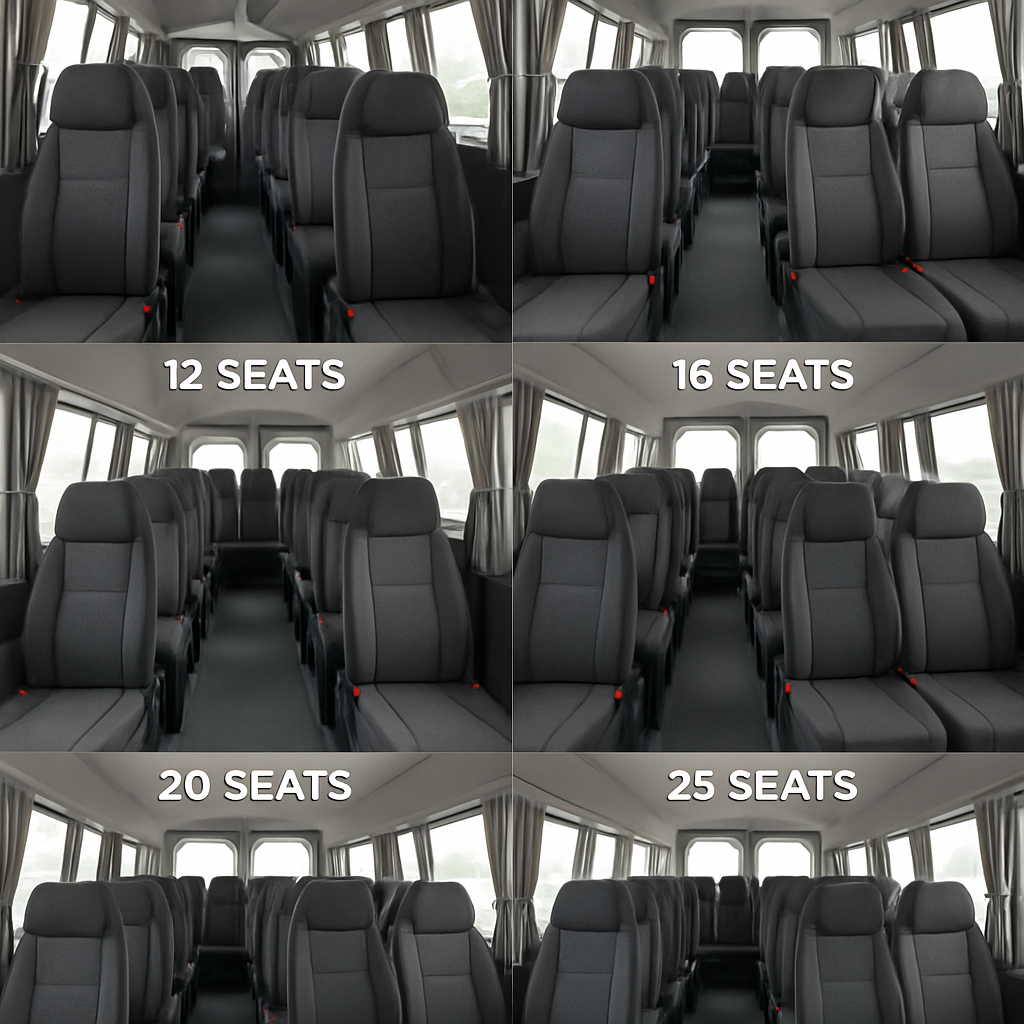
And what about accessibility? Torres Bus offers PMR‑adapted minibuses, so if you have a guest with reduced mobility, you’ll need a vehicle with a ramp and at least one wheelchair‑friendly seat, which usually starts at the 12‑seat tier.
Bottom line: matching the seat count to your specific needs saves money, keeps everyone happy, and ensures you arrive on time.
Ready to pick the perfect size? Let’s dive deeper into the options and see which minibus fits your plan like a glove.
TL;DR
Choosing the right minibus seat count means counting passengers, adding space for luggage, and matching comfort to trip length, so you avoid cramped rides and overspending.
Use our quick checklist—people + 1‑2, consider accessibility, and pick a model like a 20‑seat coach for larger groups—to keep everyone happy and on schedule.
Understanding Minibus Capacity Ranges
When you ask yourself how many seats in a minibus you’re really trying to map comfort, cargo, and the vibe of the whole trip. Think about that first moment the driver lifts the door and you see a row of empty chairs – does it feel like a lounge or a sardine can?
In Madrid the market typically splits into three sweet spots: the compact 7‑9 seat vans for airport shuttles, the mid‑size 12‑16 seat models that are perfect for school outings or wedding guests, and the larger 20‑25 seat coaches that handle corporate roadshows or sports teams. Each bucket brings its own set of trade‑offs.
7‑9 Seats: The Agile Mini
These are the go‑to for quick airport runs or a handful of VIPs. Because the cabin is small you get a tighter turning radius – ideal for narrow city streets. The downside? Luggage space is limited, so you’ll need a separate car for bulky suitcases.
One trick is to count every piece of baggage as a “ghost passenger.” If you have six people and three big suitcases, you’re effectively at nine seats. That’s where the 20 seater minibus hire Coaches Hire Spain – Madrid page can give you a feel for when you might want to step up to a slightly bigger vehicle without overpaying.
12‑16 Seats: The Sweet Spot
Most event planners land here because it balances space and price. A 14‑seat minibus usually includes a small luggage rack, a few USB ports, and sometimes a rear‑facing TV – great for a family reunion or a corporate training day.
Ask yourself: Will anyone need a wheelchair? If so, you’ll want a PMR‑adapted version, which often starts at the 12‑seat tier. The extra width of the aisle makes a ramp installation smoother, and you avoid the awkward squeeze of trying to fit a wheelchair into a 7‑seat van.
20‑25 Seats: The Group‑Mover
When you’re moving 18‑22 people, a 20‑seat coach feels like a moving conference room. There’s enough legroom for a laptop, a small fridge for coffee, and even a space for a portable speaker if you’re planning a post‑trip celebration.
But bigger isn’t always better. If your route includes winding mountain roads near Segovia, a larger vehicle might struggle with tight bends. That’s when an electric‑assisted minibus can shine – smoother acceleration and less stress on the engine.
Speaking of electric, you might want to explore eco‑friendly options. Selene, the AI‑powered EV assistant can help you map out charging stations along your route and compare the carbon footprint of a diesel 20‑seat coach versus a battery‑electric model.
Another piece of the puzzle for event planners is entertainment. If you’re coordinating a wedding or a corporate gala, you’ll need more than just seats – you need a vibe. Pairing your transport plan with a music booking service can save you headaches later. Learn how to hire Cuban musicians for your event and you’ll have the perfect soundtrack from the moment the bus pulls up.
Now, let’s bring it all together with a quick checklist:
- Count passengers + 1‑2 for luggage.
- Identify any accessibility needs.
- Match trip length to vehicle comfort level.
- Consider electric vs. diesel based on route and sustainability goals.
And remember, the right capacity isn’t just about numbers – it’s about the experience you create for every rider.
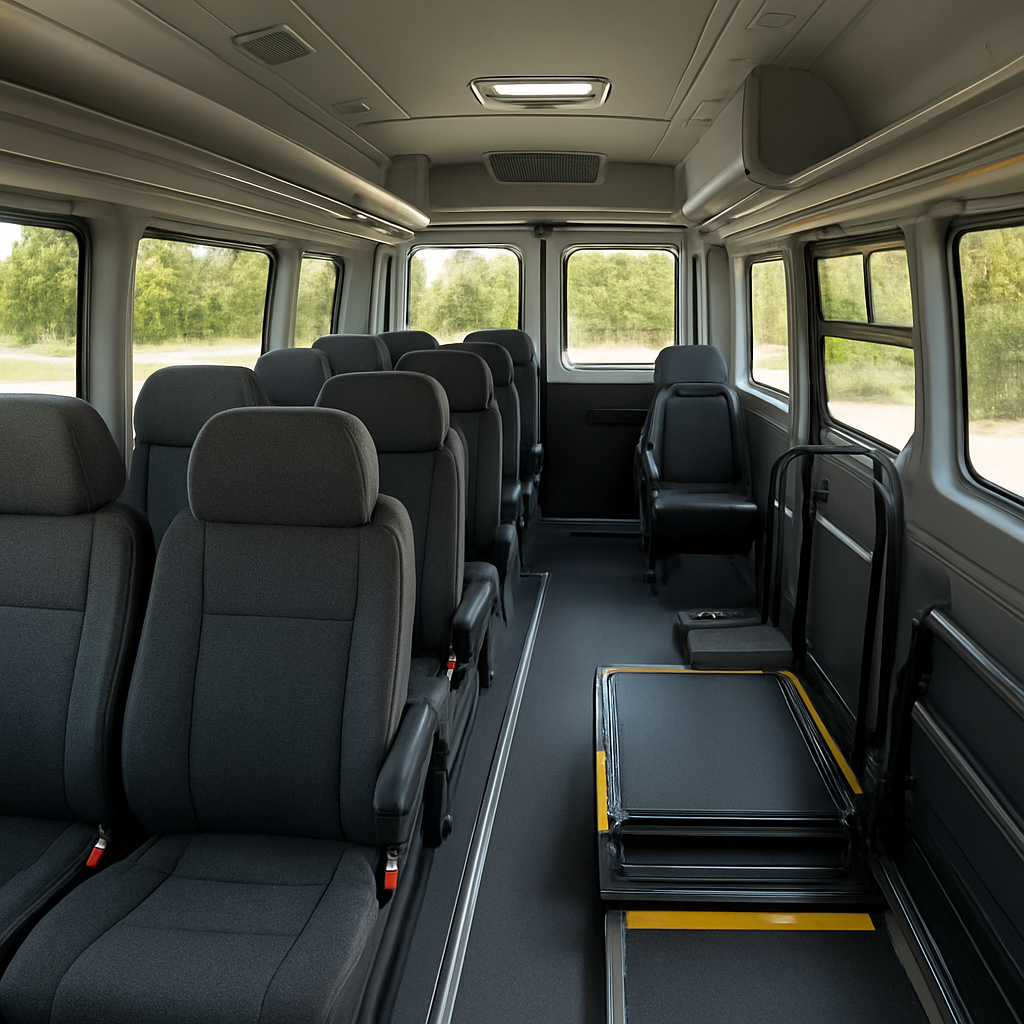
Below is a short video that walks you through the typical interior layouts for each capacity range, so you can visualise the space before you book.
Take a moment to picture your group settling into the seats, the hum of the engine, and the city skyline drifting by. That mental image will guide you to the perfect size.
Factors Influencing Seat Count Selection
When you get to the part where you actually have to pick a vehicle, the decision isn’t just about the headline number “how many seats in a minibus”. It’s a blend of practical constraints, comfort preferences, and even a few hidden variables that only show up once you start sketching the itinerary.
First, think about who’s actually climbing in. A corporate roadshow with 18 attendees plus a presenter and a couple of laptops looks very different from a wedding shuttle that also has grandparents, a stroller, and a few gift boxes. Adding just two extra “gear” seats can push you from a 16‑seat van into the comfortable 20‑seat range.
Second, the length of the trip changes the equation dramatically. A half‑hour airport transfer can tolerate a tighter seat pitch – you’ll probably be fine with a 12‑seat van even if you’re hauling two suitcases per person. But a five‑hour sightseeing tour across Toledo and Segovia? Suddenly you need extra legroom, maybe a small luggage rack, and a few empty seats for a coffee trolley. That’s when the 17‑20 seat band becomes the sweet spot.
Third, don’t forget accessibility. If your guest list includes someone who uses a wheelchair, you’ll need a PMR‑adapted minibus with a ramp and at least one dedicated wheelchair space. Those vehicles usually start at the 12‑seat tier, and you can’t simply add more seats without compromising the ramp clearance. In practice, that means you either book a 12‑seat accessible model and add a second vehicle for the rest of the group, or you move up to a 20‑seat accessible coach that already has the extra space built in.
Fourth, budget and sustainability often walk hand‑in‑hand. A 12‑seat van will usually cost less per kilometre than a 20‑seat coach, but if you end up needing a second vehicle to cover luggage or extra passengers, the total price can flip. On the other side, electric models—now available in both 12‑ and 20‑seat sizes—can shave a good chunk off fuel costs and boost your green credentials, especially for corporate clients who track carbon footprints.
If you’re still wondering how all these pieces fit together, the short video below walks through a real‑world booking scenario – from counting heads to picking the right model and even checking the electric range for a day‑long tour.
Notice how the planner adds two extra seats for luggage and then chooses a 20‑seat electric coach because the itinerary includes a 150‑km loop with several scenic stops. That little buffer is what keeps the day from turning into a scramble for space.
Here’s a quick reference that sums up the three biggest factors you should weigh before you lock in a seat count.
| Factor | What to consider | Impact on seat count |
|---|---|---|
| Passenger load | Number of people + 1‑2 for gear | Pushes you toward the next size tier |
| Trip length | Longer journeys need more legroom | Favors larger‑seat‑pitch models (often higher seat counts) |
| Accessibility needs | Wheelchair ramp, PMR‑adapted vehicle | Starts at 12‑seat tier, may limit max seats |
A practical tip: run a “seat‑test” on a napkin. Sketch a simple floor plan, draw circles for each passenger, and then shade any area you’d need for luggage, a wheelchair ramp, or a coffee cart. If the drawing feels cramped, bump up to the next size tier – it’s cheaper to add a seat than to pay for a last‑minute extra vehicle.
Finally, keep the season and weather in mind. Summer tours often mean people will bring cooler bags and maybe a portable fan, which adds a few more cubic meters of cargo. Winter trips might require blankets or ski gear, pushing you toward a higher‑capacity model with larger storage compartments.
So, to answer the big question “how many seats in a minibus should I book?”, walk through these three lenses – passenger load, trip length, and special requirements – then match them against your budget and sustainability goals. The result is a seat count that feels just right, not a number you guessed.
Choosing the Right Minibus for Different Scenarios
So you’ve figured out the headcount, added a seat or two for luggage, and now you’re staring at a list of minibus sizes. The next question is less about numbers and more about the story behind those numbers – what kind of day are you actually planning?
1. Short‑haul shuttles and airport runs
If the trip is under an hour – say a hotel‑to‑airport transfer or a quick city‑center hop – you can get away with tighter seat pitch. A 7‑ to 12‑seat van gives you enough room for a couple of suitcases without feeling cramped. Most riders will be in and out, so comfort is nice but not mission‑critical. Think of it like a premium taxi: you want a smooth ride, not a lounge.
Tip: run the “napkin test” – draw a rectangle the size of the vehicle floor, sketch circles for each passenger, and see if you still have a foot of aisle width. If the aisle looks squeezed, bump up one size tier.
2. Day‑long sightseeing tours
When you’re taking a group on a full‑day tour of Toledo, Segovia, or the Royal Palace, legroom becomes a game‑changer. People will be getting in and out of the vehicle, checking maps, maybe even napping between stops. A 16‑ to 20‑seat coach with a slightly higher seat pitch (about 18‑inch) keeps everyone comfortable and reduces the need for frequent bathroom breaks.
Real‑world pricing examples show that a 20‑passenger minibus for a multi‑day itinerary can run around $4,000 for three days, which works out to roughly $250 per person – a sweet spot for corporate outings that need both space and a professional look (GOGO Charters pricing guide).
3. Events that need extra gear
Weddings, concerts, or sports team trips often come with extra baggage: a coffee cart, a sound system, or a few extra bags of equipment. In these cases, the cargo area matters as much as the seats. A 20‑seat model that includes a rear luggage rack or a small cargo compartment can spare you a second vehicle.
Remember, the typical minibus seating range sits between 9 and 24 seats (Farnborough Cars seating guide), so you have flexibility. If you need room for a wheelchair ramp, start at the 12‑seat tier and add a couple of regular seats to keep the passenger count balanced.
4. Accessibility‑first trips
When a guest requires a wheelchair, the vehicle must have a ramp and at least one dedicated wheelchair space. Those PMR‑adapted minibuses usually start at 12 seats, but you might quickly find yourself needing a 16‑ or 20‑seat coach to accommodate both the ramp and the rest of the party without feeling cramped.
Ask the provider if the ramp folds away when not in use – that can free up a few extra inches of floor space for luggage.
5. Budget versus sustainability
It’s tempting to grab the cheapest option, but the hidden cost of a second vehicle (driver fees, fuel, insurance) often outweighs the savings. A single 20‑seat electric minibus can be more economical than two 12‑seat diesel vans, especially for longer routes where fuel adds up.
Look for models that offer a decent electric range for a full day of touring; many newer fleets can cover 150‑200 km on a single charge, which is usually enough for a Madrid‑to‑Toledo round‑trip and back.
6. Quick decision checklist
- What’s the primary purpose? (shuttle, tour, event)
- How many passengers plus gear?
- Do you need wheelchair access?
- What’s the trip length?
- Is sustainability a factor?
Answer those five questions, compare the answers against the size bands above, and you’ll land on the right minibus without second‑guessing.
Bottom line: the “right” number of seats isn’t a static figure; it’s a moving target shaped by the scenario you’re planning. By matching the vehicle to the trip’s purpose, you’ll keep your group comfortable, your budget in check, and your day running smoothly.
Common Minibus Sizes and Their Typical Uses
When you ask yourself, «how many seats in a minibus» actually make sense for my group,» the answer usually lands in a few size buckets. Each bucket brings its own vibe, luggage capacity, and ideal scenarios. Below is a quick listicle that walks you through the most common sizes you’ll see on Torres Bus’s fleet and the real‑world situations where they shine.
7‑12 Seats – The Intimate Shuttle
This tier is perfect for airport drops, VIP transfers, or a small family outing. Think of a 7‑seat luxury van that feels more like a high‑end taxi than a bus. You get a driver‑side partition, optional Wi‑Fi, and just enough room for a couple of suitcases.
Real‑world tip: A wedding planner once booked a 10‑seat van for the bride’s bridal party. The limited seats forced the crew to stagger arrivals, which actually kept traffic to a minimum and gave the bride a calm pre‑ceremony window.
Actionable step: List every passenger, then add 1‑2 extra seats for luggage. If the total stays under 12, you’re in this sweet spot.
13‑16 Seats – The Workhorse
These models are the go‑to for school field trips, day‑long city tours, or corporate training sessions. A 14‑seat coach usually includes a modest luggage rack and a little extra legroom – enough for a coffee trolley without crowding the aisle.
Example: A tech startup organized a 1‑day hackathon in Toledo. By choosing a 15‑seat minibus, they could fit 12 developers, a projector, and a snack cart, all while keeping the vibe relaxed.
Actionable step: Sketch a simple floor plan on a napkin. Draw circles for each person and a rectangle for gear. If the drawing feels cramped, bump up to the next tier.
17‑20 Seats – The Medium‑Sized Marvel
This is the most versatile band. It covers sports teams, conference delegates, and weekend getaways with a few suitcases each. A 20‑seat coach often offers a higher seat pitch (around 18‑inch) and a dedicated rear cargo area.
Real‑world data: In New York, operators list a 20‑passenger minibus as the “perfect medium‑size” for small groups exploring the city according to a US charter provider. The same logic applies in Madrid – you get room to breathe without paying for a 25‑seat beast.
Actionable step: Add a “gear buffer” of 2 seats for bags, equipment, or a wheelchair ramp. If you end up with 18‑20 seats, you’re in the optimal range.
21‑25 Seats – The Large Group Solution
When you’re moving a church congregation, a corporate roadshow, or a multi‑day excursion, size matters. A 22‑seat minibus gives you a full luggage rack, space for a portable speaker system, and still enough elbow room for a comfortable ride.
Story: An event planner coordinated a 24‑seat bus for a music festival crew. The extra seats meant the crew could bring instruments, a small PA, and still have a seat for the lead singer’s backup vocalist – no second vehicle needed.
Actionable step: Verify the vehicle’s door width and aisle clearance if you plan to load bulky items. A quick call to the provider can confirm those specs.
26‑30 Seats – The Mini‑Coach
These are less common in Madrid but show up for larger school trips or sports tournaments. The key advantage is a single vehicle that keeps everyone on the same schedule, cutting down on coordination headaches.
Pro tip: If you anticipate a long journey (over 3 hours), prioritize models with a higher seat pitch and a climate‑controlled cabin to keep passengers comfortable.
Actionable step: Request a test‑drive or virtual tour of the interior before you sign. Seeing the actual layout helps you gauge whether the space feels airy or cramped.
Putting it all together, the trick is to match your headcount, gear, and trip length to the right size band. Start with the smallest tier that meets your needs, then add a seat or two as a buffer. That way you avoid the hidden cost of a second bus and keep the experience pleasant for everyone.
Remember, the goal isn’t just to fill seats – it’s to create a smooth, enjoyable ride that matches the vibe of your event.
Regulations and Safety Standards for Minibus Seating
What the law actually says about seat numbers
When you ask yourself “how many seats in a minibus” you’re really asking: does this vehicle meet the legal definition of a minibus, and are those seats approved for passengers?
In Spain, a minibus is any road vehicle designed to carry between 9 and 25 people, including the driver. The vehicle must be homologated – that’s the fancy way of saying it passed a government safety test and carries a European Certificate of Conformity.
But the rules don’t stop at the certificate. Every seat has to meet minimum width, head‑rest height, and strength requirements set by the EU’s Directive 2006/26/EC. If a seat can’t handle a 150‑kg load, it simply can’t be sold for a minibus.
Seat‑belt and restraint mandates
Since 2014 the EU has required all fixed seats in minibuses to be equipped with three‑point seat belts. That means every adult passenger – and any child over three years old – should be buckled up, just like in a car.
What happens if a passenger refuses? The driver is obligated to refuse transport until the belt is fastened. It’s not a suggestion; it’s a legal duty that protects both the rider and the operator from liability.
And for those short‑haul shuttles that sometimes skip the belt check? You’ll still get fined if an inspection finds any seat without a working restraint.
Children, car seats and the special case of minibuses
Kids under three years old must be in an approved child car seat, even on a minibus. The UK’s guidance makes this clear: a child aged three or older can travel without a dedicated child seat if an adult belt is available, but younger kids need the proper child‑seat installation according to UK government guidance on child car seats. In Spain the same principle applies – the driver must ensure a suitable restraint is provided, and the company must have the seats on hand.
Because minibuses often have a higher floor, many operators offer removable booster seats that lock into the existing seat belt. If you’re planning a school trip, ask the provider whether those boosters are part of the package.
Accessibility and the PMR‑adapted fleet
When a passenger uses a wheelchair, the vehicle needs a ramp or lift, plus at least one dedicated wheelchair space that complies with EN 12183. The space must be at least 80 cm wide and 120 cm long, with secure anchoring points.
In practice, that means most PMR‑adapted minibuses start at the 12‑seat tier. You can’t just cram a ramp onto a 7‑seat van and expect it to pass inspection – the whole chassis has to be engineered for that load.
So, before you book, verify that the operator has a valid accessibility certificate and that the driver has completed the specific training for transporting reduced‑mobility passengers.
How Torres Bus keeps you safe and compliant
Torres Bus runs a modern fleet that’s fully homologated for the 7‑to‑25 seat range. Every vehicle gets a yearly technical inspection, and the seats are re‑checked for wear, belt integrity, and proper anchorage.
Our drivers receive a mandatory safety briefing that covers seat‑belt enforcement, child‑seat installation, and the correct procedure for wheelchair ramps. They also carry a copy of the vehicle’s compliance certificate, so you can see the paperwork if you like.
What’s the takeaway? Knowing “how many seats in a minibus” is only half the story. The other half is making sure those seats meet the legal standards for size, restraints, child safety, and accessibility. When you partner with a reputable operator like Torres Bus, you get both the right seat count and the peace of mind that every passenger is protected by law and best‑practice safety measures.
FAQ
How do I figure out the right number of seats for my group?
Start by listing every person who will step onto the bus – drivers, guides, and even that ‘maybe‑later’ guest. Add one or two extra seats for luggage, equipment, or a wheelchair ramp if you need one. Then glance at your itinerary: a short airport hop can tolerate tighter spacing, but a half‑day tour deserves a little legroom. When the total lands in the next size tier, you’ve got a comfortable buffer.
What’s the legal definition of a minibus in Spain?
In Spain a minibus is any road vehicle built to carry between nine and twenty‑five passengers, driver included. That means the vehicle must be homologated – it’s passed a government safety test and carries a European Certificate of Conformity. Every seat also has to meet EU standards for width, head‑rest height, and load‑bearing capacity, so you know the seats are up to the job.
Do all seats need three‑point seat belts?
Yes. Since 2014 EU law requires every fixed seat in a minibus to have a three‑point belt, and the driver must refuse transport to anyone who won’t buckle up. It’s not a suggestion; it’s a legal duty that protects both the passenger and the operator from liability. So when you book, ask to see the belts – they should be easy to reach and work smoothly.
How should I handle children and car seats?
Kids under three must be in an approved child‑seat, even on a minibus. For children three and older you can use the vehicle’s built‑in seat belt, but many operators also provide removable booster seats that lock into the existing belt. If you’re planning a school outing, confirm that the fleet offers these boosters and that the driver knows how to install them correctly.
What if one of my guests uses a wheelchair?
You’ll need a PMR‑adapted vehicle with a ramp or lift and at least one dedicated wheelchair space that meets EN 12183 dimensions (about 80 cm wide by 120 cm long). Those adapted minibuses usually start at the 12‑seat tier, because the chassis has to be engineered to carry the extra load. Ask the provider for a valid accessibility certificate and proof that the driver’s trained for reduced‑mobility transport.
Is a larger bus always more expensive?
Not necessarily. A 12‑seat van might seem cheaper per kilometre, but if you end up needing a second vehicle for luggage or extra passengers, the total cost can jump. Conversely, a single 20‑seat coach can be more economical than two 12‑seat vans, especially on longer routes where fuel adds up. Compare total kilometre cost, driver fees, and any extra charges before you decide.
How can I double‑check that the minibus meets safety standards?
Ask the operator for the latest technical inspection report and the European Certificate of Conformity. A reputable company like Torres Bus keeps a copy of the compliance certificate on board for you to review. You can also request a quick walkthrough of the interior – check seat‑belt condition, child‑seat availability, and that the ramp folds away neatly when not in use.
Conclusion
After we’ve walked through capacity ranges, factors, and real‑world scenarios, the question boils down to one simple thing: how many seats in a minibus will actually make your trip feel smooth, not cramped.
Think about your group size, the gear you’re hauling, and how long you’ll be on the road. If it’s a corporate off‑site for 18 people, a 20‑seat coach gives you breathing room for laptops and a coffee cart. If it’s a quick airport shuttle for five guests, a 7‑ or 12‑seat van keeps costs low and the ride cozy.
Don’t forget accessibility – a wheelchair ramp starts you at the 12‑seat tier, and that extra space often saves you from scrambling for a second vehicle.
So, what’s the next step? Grab a napkin, sketch your passenger list plus one or two “gear” seats, then match that total to the nearest size band. A tiny buffer is better than a last‑minute scramble.
When you’re ready, reach out to Torres Bus. Our family‑run fleet blends comfort, safety, and flexibility, so you can focus on the event, not the logistics.
Remember, the right seat count isn’t a guess – it’s a quick calculation that pays off in comfort, budget, and peace of mind.
And if anything changes, you can always adjust the vehicle size without penalty – flexibility is part of our service promise.
Happy planning!