
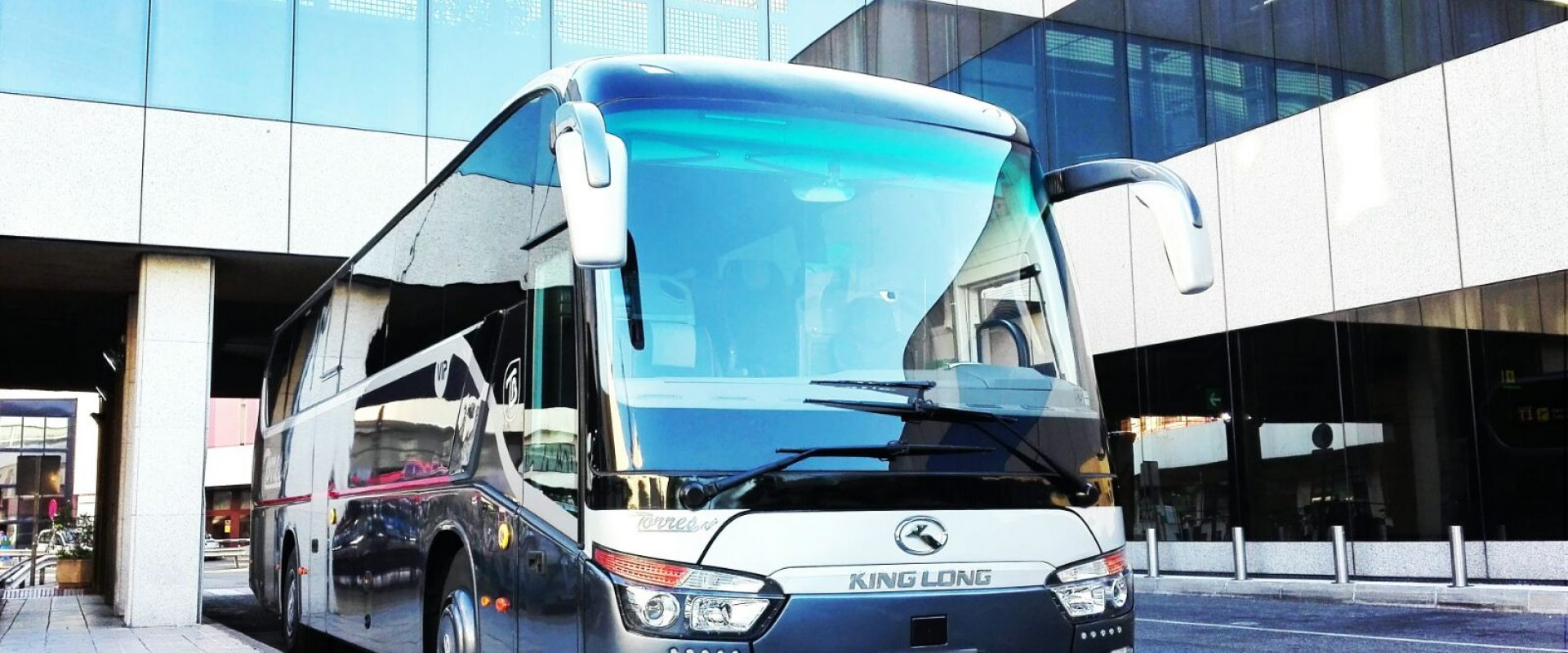

Imagine you’re juggling a wedding party of 60 guests, a corporate retreat, and a last‑minute airport transfer—all in the same week. The thought of coordinating buses, drivers, and schedules can feel like trying to solve a Rubik’s cube blindfolded.
That’s exactly why many event planners in Madrid turn to alquiler de autobus con conductor madrid services. With a professional driver handling navigation, parking, and timing, you can focus on the details that truly matter—like the perfect playlist for the ride or making sure the bride’s veil stays pristine.
In our experience at Torres Bus, we’ve seen three common pitfalls. First, under‑estimating the time it takes to load luggage at Barajas Airport; a 20‑minute delay can ripple into missed meetings. Second, forgetting accessibility needs—our PMR‑adapted minibuses ensure guests with reduced mobility aren’t left behind. Third, overlooking the importance of a clear itinerary for the driver, which prevents confusion on routes to historic sites like Toledo or Segovia.
Here’s a quick checklist you can run through right now: • Confirm the number of seats versus the passenger list (add a buffer of two‑three seats). • Verify that the driver speaks both Spanish and English if you have international guests. • Ask for a written schedule that includes pick‑up, estimated travel time, and contingency breaks.
If you’re still unsure which vehicle fits your event, take a look at our guide on How to Choose the Right alquiler autocar con conductor Madrid for Any Occasion. It walks you through size options from a 7‑seat van for a small family tour to a 70‑seat coach for a music festival crew.
A real‑world example: a tech conference in 2023 booked three coaches through us for daily shuttles between the hotel and the IFEMA exhibition center. By syncing the driver’s GPS with the conference app, attendees received live updates, cutting average wait times by 15 % and earning the organizer a glowing post‑event survey.
So, what’s the next step? Grab your guest list, sketch a rough timeline, and reach out to a trusted provider—preferably one that can tailor the service to your exact route, capacity, and accessibility needs. A few minutes of planning now will save you hours of scrambling later, and your guests will thank you for a smooth, stress‑free ride.
TL;DR
If you’re juggling weddings, corporate shuttles, or sightseeing tours in Madrid, renting an alquiler de autobus con conductor madrid saves you time, stress, and fees.
Our 30‑year experience shows a clear itinerary, bilingual driver, and a seat buffer prevent delays, so your guests arrive happy and on schedule every time.
Step 1: Define Your Transport Needs
Picture this: you’ve just gotten the final headcount for a wedding reception in the Retiro, and the numbers are dancing between 55 and 63 guests. Your brain starts juggling seat counts, luggage space, and the dreaded «what if someone needs a wheelchair?» It’s a classic moment where the stress of logistics threatens to steal the joy.
That’s exactly why the first thing you should do is write down the concrete transport requirements before you even think about a bus quote. It sounds simple, but in practice it saves you hours of back‑and‑forth with drivers and prevents that last‑minute scramble.
1. Count heads, not just seats
Start with a spreadsheet or even a quick notes app. List every attendee, their pickup location, and any special needs – think mobility aids, extra luggage, or even a pet traveling with a family. Add a buffer of two‑three seats; a bus that looks perfect on paper can feel cramped if someone brings an extra suitcase.
In our experience at Torres Bus, a wedding client once added a surprise live‑band with a drum kit at the last minute. Because they’d built a seat‑buffer, we slipped the extra gear onto the roof rack without reshuffling the entire manifest.
2. Map the route and timing
Next, sketch a rough timeline. When does the first guest need to be at the airport? When does the ceremony start? How much wiggle‑room do you want for traffic on the M‑30? Write those times down next to each pickup point.
Tip: add a 10‑minute cushion for each stop. It feels like overkill, but traffic in Madrid can turn a 20‑minute drive into a 45‑minute ordeal, especially during rush hour.
3. Choose the right vehicle class
Now that you know how many seats you truly need, match that to a vehicle type. A 12‑seat van works great for a small corporate off‑site, while a 50‑seat coach is the sweet spot for a university field trip to Segovia.
Ask yourself: do you need a low‑floor model for easy wheelchair access? Do you want a luxury interior for a VIP client? Torres Bus offers both, so you can pick the level of comfort that fits the event’s vibe.
And here’s a quick visual cheat‑sheet you can copy‑paste into your planning doc:
- 7‑12 seats: small groups, airport shuttles, city tours.
- 16‑25 seats: weddings with tight guest lists, corporate breakout sessions.
- 30‑50 seats: large conferences, school trips, festival crews.
- 60‑70 seats: concerts, sports team travel, multi‑day tours.
Once you’ve matched the numbers, you’ll have a clear ask when you contact a provider – no vague «we need a bus» emails.
4. Factor in language and driver skills
If you’re ferrying international guests, a bilingual driver isn’t a nice‑to‑have, it’s a must. Note that requirement next to the vehicle choice. A driver who can greet guests in English and Spanish keeps the mood upbeat and prevents confusion at each stop.
In a recent tech summit, our driver used a simple phrasebook to announce each stop in both languages, and attendees told us it made the whole shuttle feel “professional and welcoming.”
5. Write it down, then share it
Take everything you’ve gathered – headcount, route, timing, vehicle class, driver language – and turn it into a one‑page brief. Send that brief to your chosen bus company and ask for a written itinerary that mirrors your timeline.
Having that document means you can cross‑check the driver’s plan on the day of the event. If anything looks off, you’ll catch it early, not when the bus is already pulling up at the venue.
Below is a short video that walks through a sample brief template. It shows how a simple table can keep everyone on the same page.
Now that you have a solid foundation, you’re ready to move on to the next step: finding the right provider and getting a quote that respects your budget.

Step 2: Evaluate Service Options and Pricing
Now that you’ve nailed down how many people are hopping on, it’s time to look at the actual service offers. This is where the magic (or the nightmare) happens – you’ll compare a 30‑seat coach, a 16‑seat minibus, maybe even a luxury van, and see which one gives you the right balance of comfort, flexibility, and cost.
Map the features you really need
Start with a quick brain dump: do you need a bilingual driver? A wheelchair‑accessible ramp? On‑board Wi‑Fi for a corporate workshop? Write each requirement on its own line. When you line‑up quotes, you’ll instantly spot who’s throwing in extras and who’s charging you for the basics.
For example, a wedding planner in Madrid once asked for a 30‑seat coach with a glass‑pane roof so guests could enjoy the sunset on the way to the venue. The provider who quoted a higher price actually included a complimentary champagne service and a driver who spoke both Spanish and English. The lower‑priced option didn’t mention any language support, which later caused a miscommunication at the drop‑off point.
Break down the price components
Don’t just look at the headline figure. Most alquiler de autobus con conductor madrid quotes are built from several pieces:
- Base daily rate (covers vehicle and driver)
- Kilometre allowance (or per‑km surcharge)
- Fuel policy (full‑to‑full, pre‑pay, or “fuel‑included”)
- Night or weekend surcharge
- Extra wait time or overtime fees
- Optional add‑ons – Wi‑Fi, on‑board audio, wheelchair lift
Write these into a spreadsheet so you can compare apples‑to‑apples. A 16‑seat minibus might look cheaper at €500 per day, but if the provider adds a €2 per km charge and you’re travelling 150 km, the total jumps to €800 – more than a 30‑seat coach that includes unlimited kilometres.
Ask the right questions
When you call a provider, sprinkle in a few specific queries. Here are a handful that have saved us countless headaches:
- What’s the exact kilometre limit and the overage rate?
- Do you charge for the driver’s standby time between trips?
- Is there a minimum booking window for airport transfers?
- How do you handle unexpected traffic delays – is there a grace period?
- Are insurance and liability coverage included in the price?
One corporate client was surprised to learn that their quote didn’t include insurance for passenger equipment. After a quick follow‑up, the provider added a €50 daily insurance line and the client felt fully covered.
Look for transparent pricing sheets
A reputable provider will have a clear rate table on their website or will send you a PDF that breaks down every charge. If the document is vague or missing key details, treat it as a red flag. Transparency usually signals that the company knows the industry well and respects your budget.
In our experience at Coaches and minibus Torres Bus, we always give clients a full cost breakdown before they sign anything. It’s a small step that avoids surprise invoices later on.
Factor in hidden costs
Think about the little things that can add up:
- Cleaning fees for spills or heavy luggage
- Extra driver meals on long‑day events
- Parking permits in historic city centres
- Late‑night return charges for airport runs after 10 pm
A recent school trip to Toledo ran into a €120 parking permit fee because the organizer hadn’t checked the historic zone regulations. Knowing that ahead of time allowed them to request the fee be included in the quote.
Run a quick cost‑benefit test
Take the two or three offers that meet your feature checklist and calculate the total cost for the exact itinerary you’ve mapped out. Then ask yourself:
- Which option gives the best comfort level for the price?
- Does the driver’s language skill match my guests’ needs?
- Are there any “nice‑to‑have” extras that could become “must‑have” on the day of the event?
Often the cheapest quote isn’t the smartest one – a slightly higher rate that includes a bilingual driver and unlimited kilometres can save you both time and stress.
Make the decision and lock it in
Once you’ve crunched the numbers, send a short confirmation email that repeats the agreed‑upon services, rates, and any special conditions (like a 15‑minute buffer for airport security). Keep that email as your contract – it’s easier to reference than a verbal agreement.
And there you have it: a systematic way to evaluate service options and pricing without getting lost in a sea of numbers. By breaking the process into features, price components, and concrete questions, you’ll walk away confident that the alquiler de autobus con conductor madrid you choose is the right fit for your event’s budget and vibe.
Step 3: Verify Licenses, Insurance and Driver Credentials
Alright, you’ve got the size, the route and the price sorted – now it’s time to make sure the people behind the wheel and the paperwork on the bus are legit. Skipping this step is like sending your guests on a roller‑coaster without checking the safety harness.
Why it matters
Imagine a wedding party arriving at the cathedral and the driver can’t show a valid commercial licence. Suddenly the ceremony is delayed, the photographer is waiting, and the mood goes from “I do” to “oh no.” A solid licence, insurance and driver credentials keep your event on schedule and protect you from costly liability.
Step‑by‑step checklist
1. Ask for the company’s operating licence. In Spain, any bus offering “alquiler de autobus con conductor madrid” must hold a licencia de transporte de viajeros issued by the Directorate‑General for Traffic. Request a copy and verify the registration number matches the fleet you’re being shown.
2. Confirm vehicle registration and technical inspection. Every coach needs a current ITV (Inspección Técnica de Vehículos) sticker. A quick photo of the sticker and the registration plate should be enough to cross‑check on the DGT website.
3. Check insurance coverage. You want at least a “responsabilidad civil” policy that covers passengers, third‑party damage and cargo (think wedding gifts or camera gear). Ask for the policy number, the insurer’s name and the coverage limits. For corporate shuttles, a “cobertura total” that includes accident benefits for drivers is a smart add‑on.
4. Verify the driver’s professional licence. Spain requires a “carta de conducir” of class D for vehicles over 3.5 tonnes, plus a “capacidad de transporte de viajeros” endorsement. The driver should also hold a “certificado de aptitud psicofísica” – basically a health check that proves they’re fit for long hauls.
5. Look for language and training credentials. If you’ve asked for a bilingual driver, ask them to show a language certification or at least a brief résumé that lists previous VIP or corporate assignments. Many providers keep a “curso de atención al cliente” certificate, which is a nice indicator of professionalism.
Real‑world examples
We once helped a tech conference in 2022 that booked three coaches for daily airport transfers. The first provider sent a driver whose licence had expired two months earlier. Because we caught it early, we switched to a backup company and avoided a potential €5,000 penalty for non‑compliance.
A wedding planner in 2023 needed a wheelchair‑accessible coach. The company she chose could produce a valid PMR‑adapted vehicle registration and a full insurance certificate that covered “accidentes de pasajeros con movilidad reducida.” The peace of mind let the couple focus on the vows, not the paperwork.
For a school trip to Toledo, the coordinator asked for proof that the driver had completed a “curso de seguridad vial para transporte escolar.” The provider’s documentation satisfied the local education authority, so the trip got the green light without extra bureaucracy.
Quick tip: use a quality management reference
If you’re unsure what a robust documentation package looks like, take a look at how Autos Noroeste structures its quality policy – they list licences, insurance and driver certifications as core pillars of their service here. While they focus on cars, the same principles apply to bus operators.
Final checklist you can copy‑paste
| Item | What to Check | Typical Requirement / Tip |
|---|---|---|
| Operating licence | Licence number, validity, matching fleet | Must be a “licencia de transporte de viajeros” from DGT |
| Insurance | Policy document, coverage limits, insurer | At least €1 million civil liability; add cargo cover if needed |
| Driver credentials | Class D licence, health certificate, language proof | Current “carta de conducir” class D + psychophysical test; bilingual if required |
Take a moment now to request these three documents from any provider you’re considering. A quick email with “Could you please send me the operating licence, insurance certificate and driver’s licence copy?” can save you a day of back‑and‑forth later.
When everything checks out, you can lock in the contract knowing you’ve covered safety, legality and the comfort of your guests. It’s a small step that makes the whole transport plan feel rock‑solid.
Step 4: Choose the Right Vehicle Size and Amenities
Okay, you’ve nailed the numbers and the paperwork – now it’s time to pick the actual bus that will carry your guests. It sounds simple, but the right size and the right comforts can be the difference between a smooth ride and a cramped, stressful scramble.
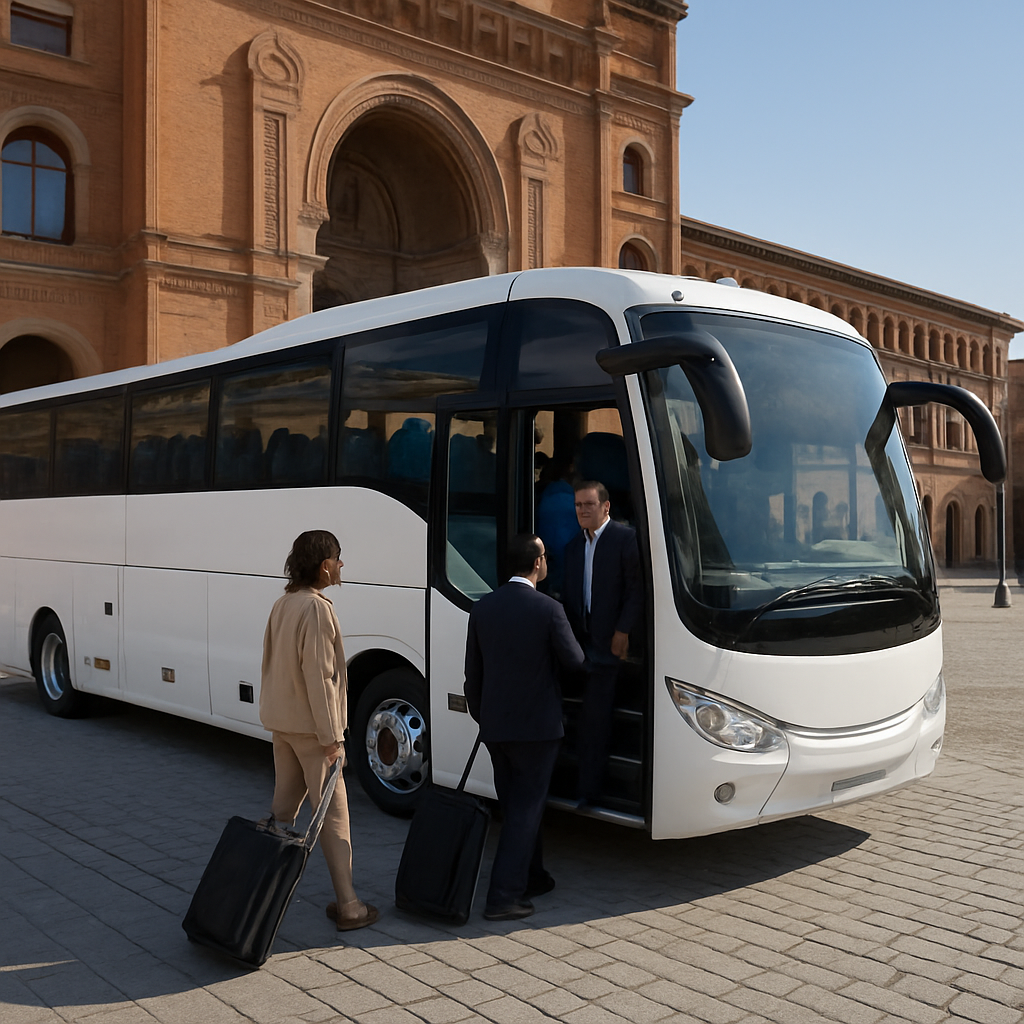
First, ask yourself: how many people are really stepping onto the vehicle? Not just the headcount you wrote down, but also any extra crew, equipment, or oversized luggage. Add those two‑or‑three buffer seats we talked about earlier, and you’ve got a solid target.
Match capacity to your guest list
A 7‑seat van feels cozy for a bridal party, while a 30‑seat coach is the sweet spot for a corporate off‑site. If you’re shuffling 60‑plus attendees between a hotel and an exhibition hall, you’ll want a 50‑ or 70‑seat coach – otherwise you’ll end up with a convoy of half‑empty minibuses.
Here’s a quick mental test: picture the boarding process. Can the driver open the doors on both sides? Is there enough headroom for taller guests? If you can see a bottleneck forming in your mind, you probably need a larger vehicle.
Think beyond seats – amenities that matter
Comfort isn’t just about legroom. Think about Wi‑Fi for the executive team, climate control for a summer wedding, or a built‑in PA system for a tour guide’s commentary. Even something as small as USB charging ports can turn a grumpy passenger into a happy one.
Many providers bundle extras like bottled water, on‑board restrooms, or even a mini‑bar. When you’re comparing quotes, ask for a detailed amenities list so you can compare apples‑to‑apples. Private driver services often highlight these perks, and the same logic applies to bus rentals – the more you know what’s included, the fewer surprises later.
Do you need accessibility features? A PMR‑adapted ramp, wheelchair‑secure straps, or lowered floor height can be a make‑or‑break factor for guests with reduced mobility.
Create a quick vehicle‑amenity checklist
- Seat count + buffer (2‑3 extra)
- Wheelchair ramp or lift (if needed)
- Air conditioning / heating
- Wi‑Fi and USB charging ports
- On‑board restroom (for long trips)
- Audio system for announcements or music
- Refreshments (water, coffee, mini‑bar)
- Driver language skills (Spanish/English)
Take this list, paste it into an email, and send it to every quote you receive. A provider that can tick most of those boxes without a hidden surcharge is usually the safest bet.
Another practical tip: ask the driver to do a short walk‑through before the day of the event. That way you can confirm the luggage compartment height, test the Wi‑Fi signal, and make sure the PA system works with your presentation laptop.
So, what’s the next move? Compare the capacity you need with the amenities that will keep your guests comfortable, then lock in the coach that checks the most boxes. In our experience at Torres Bus, a brief “amenities audit” saved clients an average of €150 by avoiding last‑minute upgrades.
When you’ve got the perfect size and the right comforts, you can breathe easy knowing the transport piece of your event is solid. The rest of the plan – routes, timing, driver credentials – will fall into place.
Step 5: Plan Logistics for Airport, Weddings, and Corporate Events
Okay, you’ve got the right bus size and the paperwork sorted – now it’s time to turn that plan into a smooth‑running day. Whether you’re shuttling guests from Barajas, whisking a bridal party to the venue, or moving a corporate crew between hotels, the devil is in the details.
Map out every touchpoint
Start by writing down each stop, the exact address, and the expected arrival window. For an airport transfer, add a 15‑minute buffer for security lines and luggage handling. For a wedding, note the ceremony start time, the reception opening, and any photo‑ops that need a quick hop on the bus. For a corporate event, include the registration desk, breakout rooms, and any off‑site meetings.
Put this into a simple table – columns for location, time window, responsible contact, and any special instructions (like “keep doors open for stroller” or “play soft background music”). When you share the sheet with the driver, everyone knows the rhythm.
Communicate the driver’s role
The driver isn’t just a chauffeur; they’re the moving anchor of your schedule. Give them a printed itinerary the night before, and walk through it together on the day of the event. Ask them to confirm the Wi‑Fi password, test the PA system, and double‑check the onboard restroom if you have a long leg.
Ask the driver to keep a mobile line open with your point‑person on‑site. A quick “we’re 5 minutes early” text can save a lot of nervous waiting.
Build in realistic buffers
It’s tempting to pack everything back‑to‑back, but traffic in Madrid can surprise you. Add a 10‑minute buffer between any two stops that cross the city centre, and a 20‑minute cushion for the airport run – especially if you’re dealing with international flights.
When a buffer is triggered, have a plan: either use it for a short coffee break, let guests stretch, or simply inform the next venue that you’ll be a few minutes later. Transparency keeps stress low.
Coordinate on‑board amenities
Think about what each group actually needs. For wedding guests, a small cooler with water and a few sparkling drinks can keep the mood festive. For corporate travelers, make sure the Wi‑Fi is stable and that there are enough USB ports for laptops.
If you’re moving a VIP crew, consider a discreet “quiet zone” – a row of seats where you can keep confidential conversations out of earshot. The same bus can serve multiple purposes if you plan the layout ahead.
Plan passenger flow
Picture the boarding process. For a wedding, you’ll likely have families arriving together – assign a seat row per family so they stay together. For a corporate shuttle, group people by department or session to avoid chaos at the drop‑off.
Use signage or a simple “seat map” on a tablet to guide guests. A quick “please line up here” instruction reduces bottlenecks and keeps the driver from waiting.
Contingency checklist
Even the best‑planned day hits a snag. Write down three backup actions: a spare driver’s contact, an alternative route (e.g., via M‑30 if the A‑2 is jammed), and a quick‑call list of venue contacts. Keep this list in the driver’s pocket and another copy on your phone.
Also, confirm parking permits for historic zones if you’re stopping near a cathedral or museum. A forgotten permit can mean a €100 fine and a delayed departure.
Final walk‑through
Do a short “dry run” 24‑hours before the event. Have the driver pull up at the first pick‑up point, test the doors, the Wi‑Fi, and the climate control. If anything feels off, you still have time to adjust.
When the day arrives, follow your itinerary, trust the buffers you built, and stay in touch with the driver. You’ll find that the logistics that once felt like a tangled mess become a well‑orchestrated flow – and your guests will barely notice the moving piece behind the scenes.
Step 6: Review Contracts, Payment Terms and Cancellation Policies
Why the fine print matters
You’ve already picked the right bus size, checked the driver’s licence, and mapped the itinerary. Now the real safety net is the contract. A solid agreement protects you, the guests, and the provider if anything goes sideways.
Think about that moment when a wedding venue changes the start time by 30 minutes. Without a clear clause, you could end up paying extra overtime or, worse, scrambling for a last‑minute replacement.
Key contract elements to verify
1. Scope of service. The document should list exactly what you’re getting: vehicle type, seat count, any special amenities (Wi‑Fi, wheelchair lift, on‑board refreshment). If you asked for a bilingual driver, that must be spelled out.
2. Timing and buffers. Look for pick‑up and drop‑off windows, plus any agreed‑upon buffers. In our experience, a 15‑minute buffer for airport security saves you from costly standby charges.
3. Payment schedule. Most providers ask for a deposit (often 30 %). Make sure the due dates, accepted payment methods, and any late‑payment penalties are crystal clear.
4. Overtime and extra‑stop fees. If the driver has to wait beyond the agreed window, how is that billed? A flat hourly rate is easier to track than a vague “extra time” clause.
5. Insurance and liability. The contract should state the civil liability coverage amount (minimum €1 million in Spain) and who is responsible for passenger belongings.
6. Cancellation policy. This is where you avoid surprise fees. Note the cut‑off dates, any refundable deposit percentages, and how changes are communicated (email, phone, portal).
Real‑world example: a corporate roadshow
A tech firm booked three coaches for a week‑long roadshow across Spain. Mid‑week, the client needed to cancel one day because a speaker fell ill. Because the contract had a 48‑hour cancellation window with a 50 % refund on the deposit, the company only lost half of the prepaid amount instead of the full fee. Without that clause, they would have been on the hook for the entire day’s cost.
Another example: a wedding planner in 2024 asked for a PMR‑adapted bus. The contract didn’t specify wheelchair‑ramp dimensions, so the provider sent a vehicle that was technically “accessible” but the ramp was too steep for the bride’s mother’s wheelchair. The planner had to negotiate a last‑minute swap, costing extra time and a €150 surcharge. A precise amenity description would have avoided that headache.
Actionable checklist before you sign
- Print the contract and highlight every term that mentions vehicle type, driver language, and amenities.
- Match each highlighted item to your original brief – any gaps? Ask for an amendment.
- Confirm the deposit amount, due date, and acceptable payment methods (bank transfer, credit card, etc.).
- Check the cancellation timeline: is it 24 hours, 48 hours, or something else? Note the refundable percentage.
- Verify insurance coverage limits and ask for a copy of the policy.
- Ask for a clause that covers unexpected traffic delays – some providers offer a grace period of up to 15 minutes without extra charge.
Tip: embed safety tech language
Even if you’re not buying a new bus, many operators now retrofit older vehicles with active safety systems that protect pedestrians and cyclists. Mentioning that you expect such technology in the contract can give you extra peace of mind. For a recent Madrid initiative, EMT added a Mobileye Fisheye system to its fleet, showing how safety upgrades become standard practice (see the project details).
Negotiating smarter terms
If a clause feels one‑sided, propose a revision. For example, instead of “any cancellation incurs a full fee,” suggest “cancellations within 48 hours are 50 % refundable, beyond that full fee.” Most providers are willing to tweak language when you explain why it matters for your event’s budget.
Don’t forget to ask for a digital copy of the signed agreement. Having a PDF stored in your project folder makes it easy to reference during the event and prevents disputes later.
Final sanity check
Before you hit “send” on the signed PDF, read the entire document out loud. If a sentence makes you pause or raises a question, flag it. A quick call to the provider’s account manager to confirm the points you’ve highlighted can save you a day of back‑and‑forth on the event day.
Remember, a well‑crafted contract is your safety net. It turns a potentially chaotic situation into a manageable one, letting you focus on the music, the speeches, or the next slide in your corporate presentation.
Conclusion
So, after scrolling through all those checklists, you might be wondering if the whole process of alquiler de autobus con conductor madrid is worth the effort.
The good news is that each step you’ve just followed – from defining headcount and special needs, to comparing transparent price sheets, to double‑checking licences and insurance – builds a safety net that turns a potential nightmare into a smooth ride.
What really makes the difference is keeping everything in one place – a simple spreadsheet or project folder with the vehicle brief, the driver’s credentials, the signed contract PDF, and a list of emergency contacts.
When the day arrives, just follow the itinerary you built, trust the buffers you added, and let the driver handle the road – you’ll be free to greet guests, give that opening speech, or simply enjoy the view.
If any detail feels fuzzy, give yourself a quick 5‑minute audit now – pull up the contract, confirm the cancellation clause, and double‑check the insurance minimum of €1 million. A tiny sanity check now saves a costly surprise later.
Ready to lock in the perfect alquiler de autobus con conductor madrid for your event? Give us a shout, and we’ll tailor a quote that matches your budget, timeline, and any special touches you’ve imagined.
FAQ
What exactly is included in an alquiler de autobus con conductor madrid?
When you sign up for an alquiler de autobus con conductor madrid you get a fully licensed driver, the vehicle you selected (from a 7‑seat van up to a 70‑seat coach), fuel for the agreed mileage, basic insurance covering passengers and third‑party damage, and any standard amenities listed in the quote such as air‑conditioning, Wi‑Fi or a restroom. Anything beyond that – extra kilometres, premium refreshments or a custom sound system – will appear as a separate line item.
How do I verify that the driver has the proper licences and insurance?
The first thing to do is ask the provider for a copy of their operating licence (licencia de transporte de viajeros) and the driver’s class‑D licence with the psychophysical health certificate. Cross‑check the licence number on the DGT website and request a photo of the vehicle’s ITV sticker. Ask for the civil‑liability policy document and confirm it covers at least €1 million per passenger. Keep all PDFs in a dedicated folder so you can pull them up quickly on the day.
Can I request a bilingual driver or special amenities for a wedding?
Yes – you can tailor the service to fit a wedding or any VIP event. When you request a quote, simply note that you need a bilingual driver (Spanish/English) and list any extra comforts such as a mini‑bar, champagne service, or a discreet “quiet zone” for the bride’s family. Most operators, including us, will confirm these requests in writing and flag any additional cost before the contract is signed, so there are no surprise charges on the day.
What are the typical pricing components and how can I avoid hidden fees?
Typical pricing breaks down into a base daily rate, a kilometre allowance (or per‑km surcharge), fuel policy, night or weekend premiums, and any optional extras like Wi‑Fi, wheelchair lifts or onboard catering. To keep hidden fees at bay, ask for a transparent price sheet that lists each component and the exact over‑age rates. Compare at least three quotes side‑by‑side, and calculate the total cost for your exact itinerary – that way you see whether a lower headline price hides expensive kilometre fees.
How far in advance should I book a bus for a corporate event in Madrid?
For most corporate gatherings you’ll want to lock in the bus at least three to four weeks ahead, especially if you need a specific vehicle size or a bilingual driver. Larger groups or peak‑season events (spring weddings, summer conferences) can fill up faster, so a six‑week lead time is safer. Once you have a confirmed quote, put a 30 % deposit down and ask for a written confirmation of the vehicle, driver and any agreed‑upon buffers.
What happens if my event schedule changes at the last minute?
If your schedule shifts, the first step is to check the cancellation clause in the contract – most providers allow a 48‑hour notice for a partial refund. Communicate the change to the driver as soon as possible and confirm whether the new pick‑up time incurs overtime or extra kilometre charges. In many cases, a small buffer you built into the original itinerary can absorb a 15‑minute delay without any extra cost, so always build those buffers in.
Are there any accessibility options for guests with reduced mobility?
Yes – many operators in Madrid offer PMR‑adapted buses with ramps, lowered floors and secure wheelchair straps. When you request an alquiler de autobus con conductor madrid, specify the exact mobility needs (wheelchair width, lift height) and ask for photos of the ramp mechanism. Verify that the vehicle’s ITV sticker is up‑to‑date and that the driver has training in assisting passengers with reduced mobility. These checks guarantee a safe, comfortable ride for every guest.