
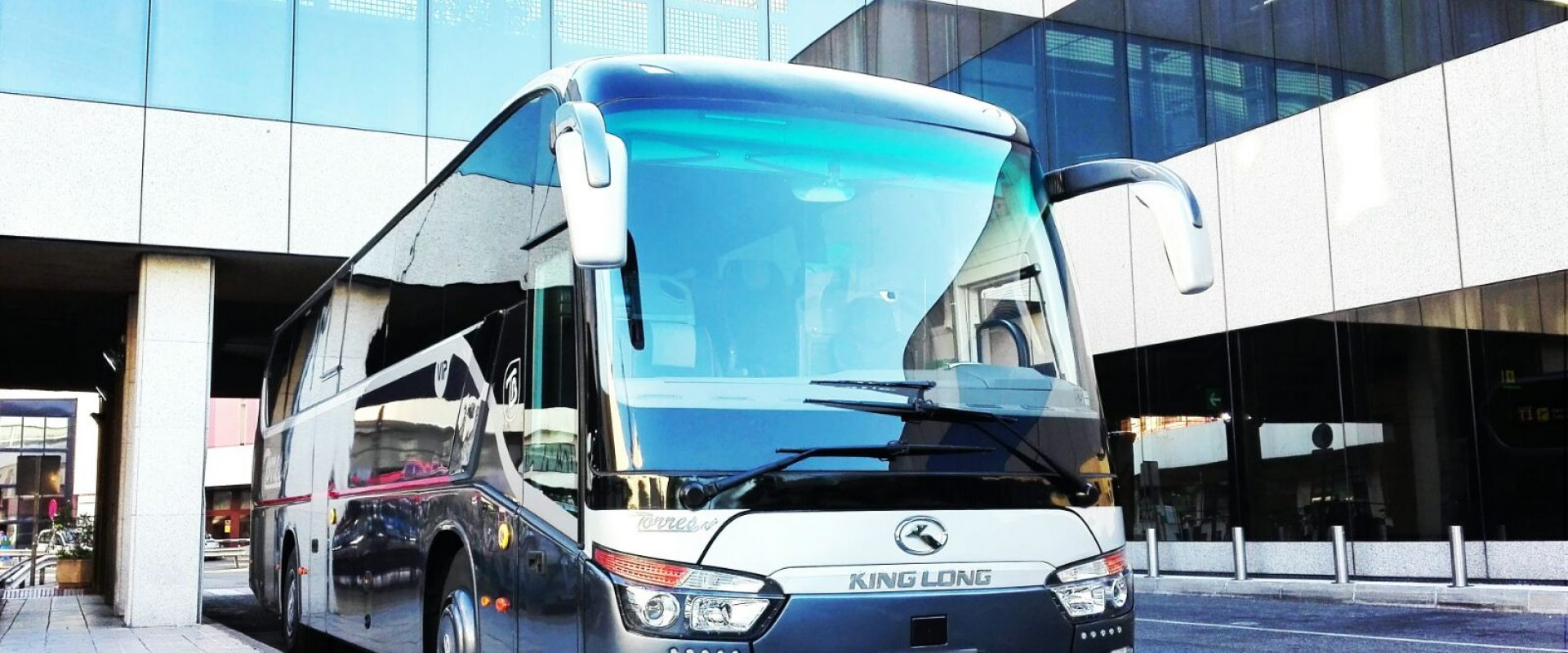
Imagine the buzz of a locker room, the roar of fans, and the clock ticking down to the big match – and then you realize you still need to get the whole squad, coaches, and gear from the hotel to the stadium on time.
Does the thought of coordinating dozens of rides, juggling luggage, and worrying about traffic give you a headache?
That’s exactly why sports team bus rental madrid is a game‑changer for any club, from youth academies to professional squads.
With a single, comfortable coach, you can move everyone together, keep the team spirit high, and avoid the chaos of multiple taxis or cramped cars.
Think about the last time you tried to line up several vans – the missed connections, the grumbling players. Now picture a modern bus, climate‑controlled, with a friendly driver who knows the fastest routes to Santiago Bernabéu or Wanda Metropolitano.
And it’s not just about getting from point A to B. A well‑equipped bus becomes a rolling meeting room where the coach can review tactics, the physio can check equipment, and the kids can unwind with a snack before the game.
So, what should you look for when you start searching for the right provider?
You’ll want a fleet that matches your team size – whether it’s a 12‑seat minibus for a junior squad or a 50‑seat coach for a senior league. Reliability, punctuality, and safety are non‑negotiable, and a company that offers flexible booking and on‑demand support makes all the difference.
At Torres Bus, the family‑owned firm with over three decades of experience, you’ll find exactly that – personalized service, modern vehicles, and drivers who treat your team like their own.
Ready to ditch the transport stress and focus on the game? Let’s dive into how to choose the perfect sports team bus rental madrid and make every journey as smooth as a perfect pass.
TL;DR
Looking for hassle‑free travel? A sports team bus rental madrid gives you one modern, climate‑controlled coach, a punctual driver, and space for tactics, gear, and snacks—so every match day runs smooth. Choose Torres Bus for safety, flexibility, and a ride that feels like a winning pass to your team every time.
Step 1: Determine Your Team’s Transport Needs
Picture this: the squad just finished a grueling training session, the coach is still tweaking the lineup, and you realize you still need to figure out how everyone gets from the hotel to the stadium without a single missed bus.
First thing we do is ask ourselves – how many bodies are we moving? A junior U‑15 side might only need a 12‑seat minibus, while a senior squad with staff, physios, equipment trucks and a few parents could easily fill a 45‑seat coach.
Count the seats, not just the players
Make a quick spreadsheet: list every player, coach, medical staff, media rep and any extra gear you plan to bring. Then add a few “just in case” seats for last‑minute injuries or a surprise scout. It sounds simple, but that extra cushion can save you from a chaotic scramble at the loading dock.
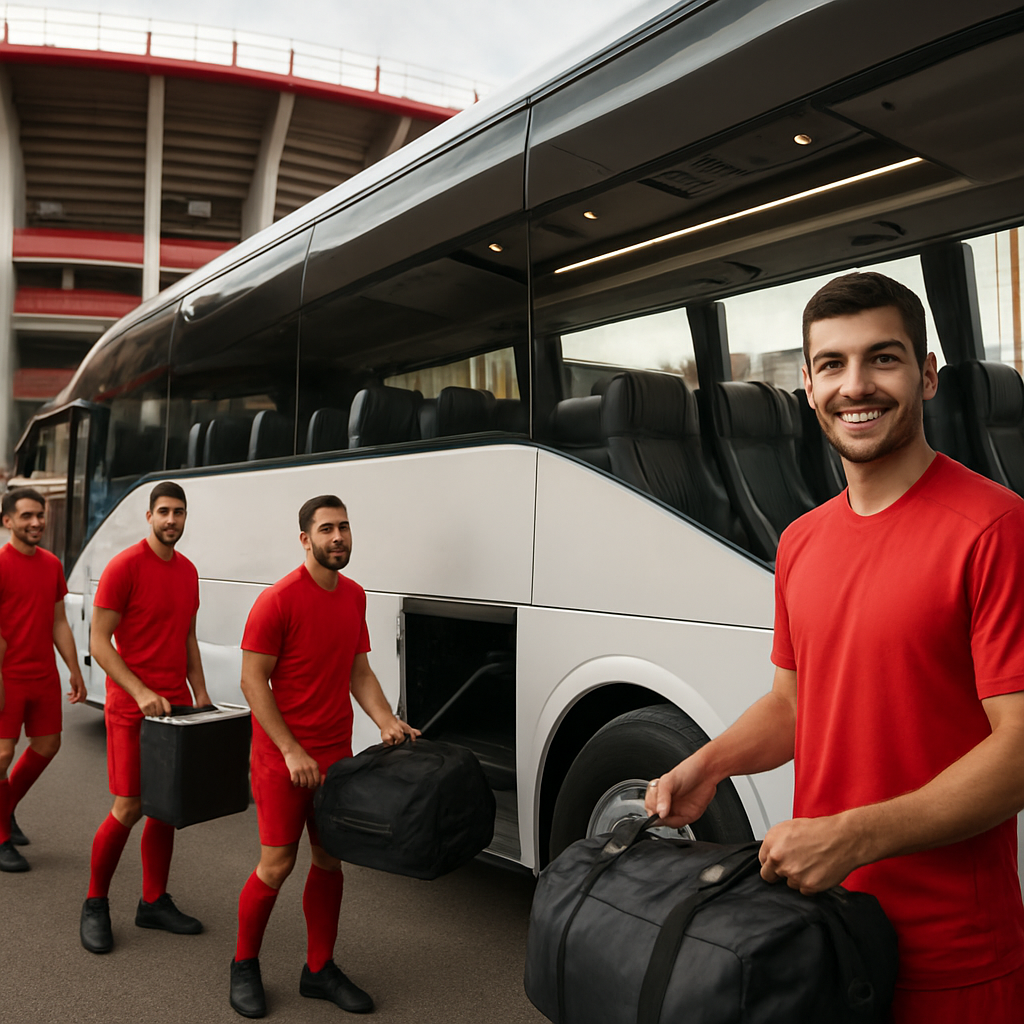
And don’t forget the gear. A football kit bag can weigh as much as a small suitcase, and a physiotherapy trolley needs its own space. Write down the cubic metres of equipment – jerseys, cones, portable goals – and match that against the bus’s luggage compartment specs.
Timing is everything
Next, map out the timeline. When does the team need to be at the stadium? How early do you want the bus to arrive for warm‑up drills? Factor in traffic patterns around Madrid, especially during match days when the A‑5 and M‑30 can turn into a parking lot.
Here’s a tip: use an AI‑powered route planner like Roadtrip AI to simulate different departure times and see how much you can shave off the journey. Even a five‑minute buffer can make the difference between a relaxed pre‑match stretch and a rushed sprint to the locker room.
Comfort and crew considerations
Think about the experience on board. A climate‑controlled coach keeps players focused, while a driver who knows the best lanes reduces fatigue. If your team travels long distances – say from a hotel in the outskirts to the Bernabéu – a restroom on board becomes a real win.
Also, consider who will be using the bus as a mobile briefing room. Does your coach need a flip‑down screen? Does the physio want a small fridge for ice packs? Jot those down now so you can ask the provider whether their fleet supports those extras.
Sometimes you’ll need a little tech help to keep everything organized. Platforms like Assistaix let you share the itinerary, seat assignments and gear list with the whole staff in one place, so nobody forgets the extra water bottles.
Now that you’ve got a headcount, a timeline and a comfort checklist, it’s time to translate those numbers into a bus size. Most providers, including Torres Bus, offer a simple size guide: 12‑16 seats for a minibus, 30‑40 seats for a midsize coach, and 45‑70 seats for a full‑size charter.
Match your spreadsheet to that guide. If you’re sitting between two categories, lean up – it’s better to have a few empty seats than to be squeezed in and risk missing a tactical discussion.
Finally, put a price range on your shortlist. Ask each company for a per‑hour rate, mileage fees and any extra charges for things like on‑board Wi‑Fi or a dedicated driver for the whole tournament. Write those numbers next to your seat and gear calculations, then you’ll see which option gives you the most bang for your buck.
When you’ve ticked off every box – seats, gear space, timing, comfort, tech and cost – you’ll have a crystal‑clear picture of exactly what transport solution your team needs. From there, booking the perfect sports team bus rental madrid becomes a simple, confidence‑filled click.
Step 2: Choose the Right Bus Size and Configuration
Now that you’ve nailed down how many people and pieces of gear you’ll be moving, the next question is simple: how big should the bus be? It’s easy to imagine a tiny minibus crammed with jerseys or a massive coach that eats up parking space, but the sweet spot is a vehicle that feels roomy without being wasteful.
Ever stepped onto a bus and instantly regretted the lack of elbow room? That uneasy feeling is a red flag – it means you’ve picked the wrong size. Let’s walk through the quick mental checklist that turns that regret into confidence.
1. Count heads, then add a buffer
Start with a solid headcount: players, coaches, physios, kit managers, maybe a parent or two. Once you have that number, add one or two extra seats for unexpected guests or a last‑minute injury replacement. A good rule of thumb is to keep the occupancy rate under 85 % for comfort.
2. Match capacity to luggage volume
Every player brings at least two duffel bags, boots, and a water bottle. Add the kit manager’s boxes, the physio’s cooler, and any media equipment. If you’re unsure, think of each large bag as roughly the size of a small suitcase – you’ll need about 0.15 m³ of cargo space per bag. A 25‑seat mid‑size coach typically offers 12–15 m³ of storage, while a 50‑seat luxury coach can handle 25 m³ or more.
Here’s a quick way to visualise it:
- 7‑seat van – best for a youth squad of 6‑7 players plus a coach.
- 16‑seat minibuses – ideal for 12‑15 players with minimal gear.
- 25‑seat mid‑size coach – perfect for 20‑30 passengers and a few equipment boxes.
- 50‑plus‑seat luxury coach – built for senior squads, full medical teams, and on‑board video screens.
3. Choose the right interior layout
Most Madrid providers, including Torres Bus, let you pick between high‑back seats with extra legroom, bench‑style rows, or a mixed configuration with a small lounge area at the back. If your physio wants a refrigerated compartment for ice packs, ask for a coach with a built‑in cooler. For a youth team that likes to chat and listen to music, a few rows of reclining seats can turn the ride into a mobile locker‑room.
Don’t forget accessibility. If you have a player who uses a wheelchair, request a PMR‑adapted vehicle with a lift and secure tie‑down points. This avoids the last‑minute scramble at the stadium entrance.
4. Climate control and on‑board tech matter
Madrid’s March mornings can be chilly, while a July afternoon can feel like an oven. A bus with dual‑zone HVAC lets you keep the bench‑warmth at a comfortable 22 °C for the squad and a cooler spot for the equipment. Many coaches also offer Wi‑Fi and a small monitor – perfect for reviewing tactics on the way to the match.
According to charter bus guidelines, choosing a vehicle with the appropriate passenger‑to‑cargo ratio improves fuel efficiency and reduces wear on the suspension, which translates into smoother rides and lower costs for the club.
After the video, take a moment to walk around the bus (or request a virtual tour). Look at the overhead luggage racks – do they line up with the number of bags you’ve counted? Check the seat spacing; you’ll want at least 78 cm between backs for a comfortable stretch. If you spot any mismatch, note it and ask the provider for a different configuration before you sign the contract.
5. Actionable checklist
Copy and paste this into your next planning email:
- Final headcount (include +2 buffer)
- Total luggage volume (estimate bags × 0.15 m³)
- Required amenities (cooler, Wi‑Fi, wheelchair lift)
- Preferred seat layout (high‑back, bench, lounge)
- Climate control needs (dual‑zone, heating)
Send the list to Torres Bus at least 48 hours before the match, get a written confirmation of the bus model, and you’ll walk onto the locker room knowing the ride will be as smooth as a perfect pass.
Step 3: Compare Pricing, Services, and Amenities
Now that you know how many heads and how much gear you’re moving, it’s time to stare at the numbers. Does the quote feel like a bargain or a hidden tax? Let’s break it down so you can see exactly what you’re paying for and why.
Break down the price sheet
Most Madrid providers, including Torres Bus, list a base hourly rate, a mileage charge, and a few optional add‑ons. Write each line into a simple spreadsheet and add a column for “must‑have” versus “nice‑to‑have.” That way you can spot a $150 Wi‑Fi surcharge that you never intended to use.
Tip: ask for a flat‑rate package that bundles fuel, driver overtime, and any tolls. A flat rate removes surprise fees when traffic snarls on the A‑2 after a big match.
Match services to your team’s needs
Think about the day‑of‑game routine. Does the physio need a refrigerated compartment for ice packs? Does the coach want a portable monitor for last‑minute video analysis? Write those services down and ask the provider if they’re included or cost extra.
Real‑world example: a youth squad in Alcobendas asked for a small cooler. The operator quoted €30 extra per trip, but when the team switched to a coach with a built‑in cooler, they saved €150 over a 10‑match season.
Score the amenities that matter
Comfort isn’t just about seat width. Look for dual‑zone climate control (players love a cool rear, coaches need a warmer front), USB charging ports for tablets, and onboard Wi‑Fi if you plan to stream tactics.
Here’s a quick checklist you can copy‑paste into your next email to Torres Bus:
- Base hourly rate (incl. driver)
- Mileage allowance (or flat distance fee)
- Fuel surcharge policy
- Included amenities: HVAC, Wi‑Fi, USB, cooler
- Optional add‑ons and their costs
And don’t forget the little things: a speaker system for warm‑up music, extra luggage racks, or a wheelchair lift if you have a PMR‑adapted player.
Compare side‑by‑side
To make the comparison painless, pop the key data into a table. Seeing the numbers next to each other helps you spot the best value without endless back‑and‑forth emails.
| Feature | What to Look For | Typical Option / Cost |
|---|---|---|
| Base Rate | Hourly vs. flat‑day rate | €80/h or €650/day |
| Mileage | Included km vs. per‑km charge | 150 km included, €0.30/km extra |
| Amenities | Climate control, Wi‑Fi, USB, cooler | All‑included in premium coach; €20 Wi‑Fi add‑on |
Use the table to ask the provider: “If I go with the flat‑day rate, does that cover the 180 km round‑trip to Santiago Bernabéu and back?” Most will confirm or give a clear surcharge figure.
Actionable steps
- Request a detailed quote that breaks down hourly, mileage, and each optional amenity.
- Plug the numbers into the table above; flag any line you don’t understand.
- Call the driver or sales rep and ask for a real‑world scenario: “If we need an extra stop for a kit manager’s equipment, what’s the cost?”
- Compare at least two providers – even if Torres Bus is your favorite, a quick check can reveal a hidden discount.
- Seal the deal with a written confirmation that lists every included feature and the final total.
Remember, the cheapest headline price can become the most expensive when you add Wi‑Fi, a cooler, or overtime fees. By dissecting the quote, matching services to your exact needs, and using the comparison table, you’ll walk onto the locker room knowing you got the best bang for your buck.
For a broader perspective on why transparent pricing matters, GOGO Charters highlights the value of clear, itemised quotes and 24/7 support, a practice you can demand from any Madrid provider.
Step 4: Book and Confirm Your Rental
Alright, the checklist is done, the bus size is nailed, and the price sheet is crystal clear – now it’s time to actually lock the wheels in place. Booking a sports team bus rental madrid can feel like a mini‑contract negotiation, but if you follow a few simple moves you’ll avoid the dreaded “last‑minute scramble” that haunts many coaches.
1. Pick the right contact channel
Most providers, including Torres Bus, let you reserve either by phone, email, or an online form. I always start with a quick call. Hearing the driver’s voice gives you a sense of professionalism and you can ask spontaneous “what‑if” questions that don’t fit nicely on a form.
Ask them to repeat the exact vehicle model (e.g., “2023 Mercedes‑Sprinter 25‑seat with onboard cooler”) and the license plate if possible. That tiny detail can save you from a surprise when the bus arrives.
2. Write a confirmation email that reads like a checklist
After the call, fire off an email that mirrors the conversation point‑by‑point. Something like:
- Vehicle: 25‑seat mid‑size coach, model year 2023, dual‑zone HVAC.
- Pick‑up: Hotel Plaza, 07:00 am, date — 23 May.
- Drop‑off: Santiago Bernabéu, 09:30 am, same day.
- Extras: built‑in cooler, Wi‑Fi, wheelchair lift (if needed).
- Price: €650 flat‑day rate, all‑inclusive, no hidden mileage charge.
Copy the email to the team manager and the coach so everyone has the same reference. When the provider replies with a signed PDF, compare it line‑by‑line with your list.
3. Verify payment terms and deadlines
Do you pay a 30 % deposit now and the balance on the day, or is the full amount required up front? Write the due dates clearly in your email and set calendar reminders. I’ve seen a club lose a bus because the deposit slipped past the 48‑hour deadline – a tiny oversight that cost them a €300 re‑booking fee.
If you’re using a corporate credit card, ask the provider to send an invoice that includes the company tax ID. That way the expense shows up correctly in your accounting software.
4. Get a written “on‑the‑day” plan
Ask the driver or dispatch manager to confirm the exact route they’ll take, especially if you have a tight window before kickoff. A good practice is to request a short text message the morning of the match: “Bus is at the hotel, doors open at 07:05.” That tiny ping removes any doubt.
Real‑world example: a youth academy in Alcobendas asked for a live‑track link on the day of a regional final. The driver shared a Google Maps link, and the coach could see traffic build up on the M‑30 and decide to take the A‑2 bypass, shaving off 12 minutes.
5. Double‑check the final details 24 hours before
Pull up your original checklist, the provider’s PDF, and the email thread. Verify three things:
- Headcount matches the driver’s seat‑allocation sheet.
- All requested amenities (Wi‑Fi, cooler, wheelchair lift) are listed.
- Pick‑up and drop‑off addresses are spelled correctly.
If anything looks off, call the provider immediately. A quick “Hey, I see the cooler isn’t listed – can we add it?” is far easier than discovering it at the stadium entrance.
6. Keep a backup plan ready
No one wants to think about a bus breaking down, but a one‑line backup note can save the day. Write down the phone number of a second local operator (you don’t have to book them, just have the contact). If the primary bus can’t make it, you’ll have a “Plan B” that you can share with the team in seconds.
Most Madrid operators are part of a network, so they’ll often suggest a sister company at no extra cost – just ask.
Actionable checklist for the booking day
- Call the provider, confirm vehicle model and licence.
- Send a detailed confirmation email and attach the provider’s PDF.
- Set payment reminders for deposit and final balance.
- Request a morning‑of‑day text with exact pick‑up time.
- Do a 24‑hour cross‑check of headcount, amenities, addresses.
- Write down a backup operator’s contact.
When you tick all these boxes, you’ll walk onto the locker room knowing the bus is not just booked – it’s guaranteed. And that peace of mind? It’s the real MVP of any match‑day logistics.
Step 5: Prepare for the Journey and Ensure Safety
Do a pre‑trip vehicle walk‑through
Before the big day, ask the driver to meet you at the depot for a short walk‑around. Check that the licence plate matches the contract, that the fire extinguisher is visible, and that the first‑aid kit isn’t just a decorative box.
Take a minute to sit in the driver’s seat and make sure the mirrors move smoothly – you’ll thank yourself when you need to adjust for a sudden lane change on the M‑30.
Confirm safety equipment and accessibility
Does your squad include a player who uses a wheelchair? Verify that the bus has a PMR lift, secure tie‑down points, and enough space for a wheelchair‑compatible seat. If you’re traveling with a cooler full of ice packs, ask whether the built‑in refrigeration unit is plugged in and operating.
Most teams overlook the simple “are the seat belts functional?” question. A quick tug on each belt will reveal any worn‑out latch before you’re stuck on the highway.
Create a pre‑departure checklist
Copy and paste this list into a note on your phone, then tick each item the night before:
- Vehicle model, year, and licence plate confirmed with driver.
- Fire extinguisher, first‑aid kit, and functional seat belts inspected.
- Accessibility features (lift, wheelchair tie‑downs) verified.
- Refrigeration or any optional equipment turned on and tested.
- Emergency contact numbers (driver, backup operator, Torres Bus dispatch) saved.
When you see every box checked, you can breathe easy knowing the bus won’t surprise you at the stadium gate.
Run a communication drill
On match day, send a quick group text at least an hour before departure: “Bus will be at Hotel Plaza at 07:00, driver’s name is Carlos, phone +34 600 123 456.”
Ask the driver to confirm the exact pick‑up time with you, and request a short “I’m on the way” ping when the bus pulls into the hotel driveway. That tiny ping eliminates the classic “we’re waiting outside but the bus never showed” panic.
Plan for route contingencies
Madrid traffic can flip from smooth to gridlock in a matter of minutes, especially after a big match. Talk to the driver about an alternative A‑2 bypass or the M‑40 ring road, and write down the backup route in your notes.
If you have a tight kickoff, set a reminder to check a live‑traffic app 30 minutes before you leave. A quick glance can tell you whether to tell the driver to take the side streets around Chamartín instead of the main avenue.
Safety briefing for the team
Gather the players, coaches, and staff for a 2‑minute safety huddle right before boarding. Remind everyone to keep aisles clear, store bags in the overhead racks, and stay seated while the bus is moving.
Point out the emergency exit locations and explain that the driver will pull over only for genuine emergencies – not for a quick snack break.
Final 24‑hour sanity check
Exactly a day before the match, pull up the original booking PDF, your email confirmation, and the checklist you created. Verify three things: headcount matches the driver’s seat‑allocation sheet, all requested amenities (cooler, Wi‑Fi, wheelchair lift) are listed, and the pick‑up/drop‑off addresses are spelled correctly.
If anything feels off, pick up the phone now. A quick “Hey, I don’t see the cooler on the contract – can we add it?” is far easier than scrambling at the stadium entrance.
Actionable takeaway
Print or screenshot this mini‑checklist, stick it on the locker‑room whiteboard, and assign one person to own the “safety call” on match day. When every box is ticked, you’ll step onto the field knowing the bus isn’t just booked – it’s guaranteed safe, ready, and waiting for you.
Step 6: Review After the Trip and Gather Feedback
The bus pulls away from the stadium, the locker‑room door swings shut, and the buzz of the match fades into the hum of traffic. That’s the perfect moment to hit pause and ask yourself: did everything go smoothly, or were there hidden hiccups you barely noticed?
Why a post‑trip debrief matters
Even the most polished sports team bus rental madrid experience can hide a tiny snag – a broken seat belt, a missed stop, or a Wi‑Fi glitch that left the coach’s video review stuck. Those little things add up, especially when you repeat the trip week after week. A quick review helps you lock down what worked and prevent the same slip‑up on the next match.
Think about the Real Madrid bus incident in Liverpool last year. A shattered window turned a routine arrival into a security headache and a PR nightmare for the club according to CNN. That story shows why teams now obsess over post‑trip feedback – a single oversight can damage reputation and safety.
Step‑by‑step feedback loop
1. Gather the crew within 30 minutes. Send a quick group chat (WhatsApp works wonders) asking everyone to drop one sentence about the ride. «Seats were comfy,» «Cooler didn’t work,» or «Driver took the best route.» Short, honest, and instant.
2. Use a simple rating sheet. A Google Form with three columns – Comfort, Timing, Extras – lets you collect numeric scores (1‑5) and optional comments. Keep it under five questions; anyone will fill it out on the bus or in the locker room.
3. Compare notes with the driver. The driver knows the traffic flow, any detours, and whether the vehicle behaved oddly. A 5‑minute coffee‑break chat can surface issues like a squeaky door or a malfunctioning USB port.
4. Document incidents. If something broke or a safety concern popped up, log it in a shared spreadsheet. Include date, location, description, and whether the provider fixed it. This becomes your evidence if you need to negotiate a refund or a service upgrade.
5. Close the loop with the provider. Send a concise email summarising the scores, highlighting any problems, and asking for confirmation on corrective actions. Example: «The cooler didn’t stay cold on the 23 May trip – could we get a serviced unit for the next match?»
Real‑world examples
At a youth academy in Alcobendas, the coach noticed that the onboard speaker cut out midway through a tactical video. After the debrief, they requested a backup Bluetooth dongle from Torres Bus. The provider supplied one for free, and the next three games ran without a hitch.
Meanwhile, a professional squad in Madrid booked a 50‑seat luxury coach for a Champions League away game. Post‑match, the physio mentioned the ice‑pack cooler was leaking. Torres Bus sent a technician the same afternoon, replaced the unit, and offered a discount on the next rental. The team’s trust in the provider skyrocketed.
Actionable checklist to embed in your routine
- Send a “Trip Review” chat link within 30 minutes of arrival.
- Use a 3‑question Google Form (Comfort, Timing, Extras) with a 1‑5 rating.
- Schedule a 5‑minute driver debrief before the bus leaves the venue.
- Log any incident in a shared spreadsheet (date, issue, resolution).
- Draft a follow‑up email to the bus company summarising findings.
- Update your master checklist for the next trip based on lessons learned.
And remember, you don’t have to reinvent the wheel. How to Choose the Best Bus Rental Madrid Services for Your Group Travel Needs already breaks down the key criteria you’ll want to re‑evaluate after each journey.
Another hidden gem: a quick look at your social‑media mentions after a match can reveal passenger sentiment you missed in the form. If a player tags the bus in an Instagram story saying, «Love the Wi‑Fi on the way to @bernabeu!», you’ve got a positive data point to share with the provider.
Turning feedback into future wins
Once you’ve collected the data, spot patterns. Maybe the driver always takes the A‑2 bypass on rainy days and saves ten minutes – that becomes a standard instruction for future bookings. Or perhaps the USB ports are consistently under‑used, so you can drop that add‑on and save money.
Finally, celebrate the wins. A quick “Great job on the timing, team!” message reinforces good practices and keeps morale high. When players see that every detail – even the bus ride – is being fine‑tuned for them, they feel valued and ready to give their best on the pitch.
Ready to make your post‑trip review a habit? Grab your phone, set a reminder for 30 minutes after every match, and let the feedback loop work its magic.

Looking to amplify your post‑match communications, consider a simple ad‑creation tool that lets you share these success stories with local clubs. Scalio – Create AI Ads in Seconds can help you craft eye‑catching promos that highlight your flawless bus service and attract more teams.
Conclusion
So, you’ve walked through every step of planning a sports team bus rental madrid – from counting heads to reviewing the trip after the final whistle.
If any part of that felt overwhelming, remember the simple truth: a well‑matched bus is just another member of the squad, showing up on time, comfortable, and ready to support the game.
That’s why we always recommend a quick three‑point sanity check before you lock the doors: verify the headcount, confirm the must‑have amenities (like a cooler for the physio’s ice packs), and get a written confirmation from Torres Bus with the exact vehicle model.
When the day arrives, a brief “who’s driving, where we’re stopping?” text to the team wipes out any last‑minute confusion and lets the coach focus on tactics, not traffic.
After the match, spend just five minutes gathering quick feedback – a thumbs‑up or a note about a missing USB port – and feed that into your next booking. Small tweaks add up to smoother rides and happier players.
So, what’s the next move? Grab your phone, set a reminder for 30 minutes after the final whistle, and let the feedback loop do the heavy lifting. With Torres Bus on your side, the journey becomes as reliable as a well‑practised set‑piece.
FAQ
How do I figure out the right bus size for my sports team in Madrid?
First, lock in the exact headcount – players, coaches, physios, even a parent or two. Then add a buffer of one or two seats for surprise injuries or late arrivals. Next, estimate luggage: each kit box is roughly the size of a small suitcase, so count the total volume. Aim for under 85 % occupancy; that way nobody feels squashed and the driver can handle the load comfortably.
What amenities should I ask for for a youth team versus a professional squad?
A youth side usually just needs a reliable Wi‑Fi hotspot, a few USB ports for tablets, and maybe a small cooler for water bottles. A pro team will want a built‑in refrigeration unit for ice packs, dual‑zone climate control, an onboard monitor for video analysis, and accessibility features like a PMR lift if needed. Ask the provider to list each add‑on in the quote so you can compare side‑by‑side.
How can I keep the cost of a sports team bus rental Madrid under control?
Start by requesting a flat‑day rate that bundles fuel, mileage, and driver overtime – it eliminates surprise per‑kilometre charges. Pull quotes from at least two operators and line them up in a simple table; flag any “optional” fees such as Wi‑Fi or extra stops. Booking a week or two in advance often nets a discount, and confirming the exact vehicle model early avoids last‑minute upgrades that bump the price.
What’s the safest way to confirm my booking and avoid last‑minute surprises?
After you speak with the driver, send a confirmation email that mirrors the conversation point‑by‑point: vehicle model, year, licence plate, pick‑up address, time, and all requested amenities. Attach the provider’s PDF contract and ask for a signed copy. Mark payment milestones – deposit and final balance – in your calendar, and request a short “bus is here” text the morning of the match.
Are there any safety checks I should do before the bus arrives on match day?
Yes. When the driver meets you at the depot, do a quick walk‑around: verify the licence plate, check that the fire extinguisher and first‑aid kit are visible, and tug each seat belt to confirm it latches. Test any optional equipment – the cooler, Wi‑Fi router, or wheelchair lift – and make sure the driver shows you the emergency exit locations.
How should I collect feedback after each trip to improve future rentals?
Send a group chat message within 30 minutes of arrival asking everyone for one‑sentence comments – “seat comfort,” “cooler worked,” or “route was slow.” Follow up with a three‑question Google Form (Comfort, Timing, Extras) that rates each item 1‑5. Schedule a five‑minute debrief with the driver, log any incidents in a shared spreadsheet, and email the provider a concise summary with suggested fixes.
What if traffic or unexpected delays hit the route to the stadium?
Talk to the driver ahead of time about an alternative A‑2 bypass or the M‑40 ring road, and write the backup route in your notes. On match day, set a reminder to check a live‑traffic app 30 minutes before departure; if congestion spikes, give the driver the pre‑planned detour. Having that extra five‑minute buffer in your schedule usually saves you from a rushed kickoff.