
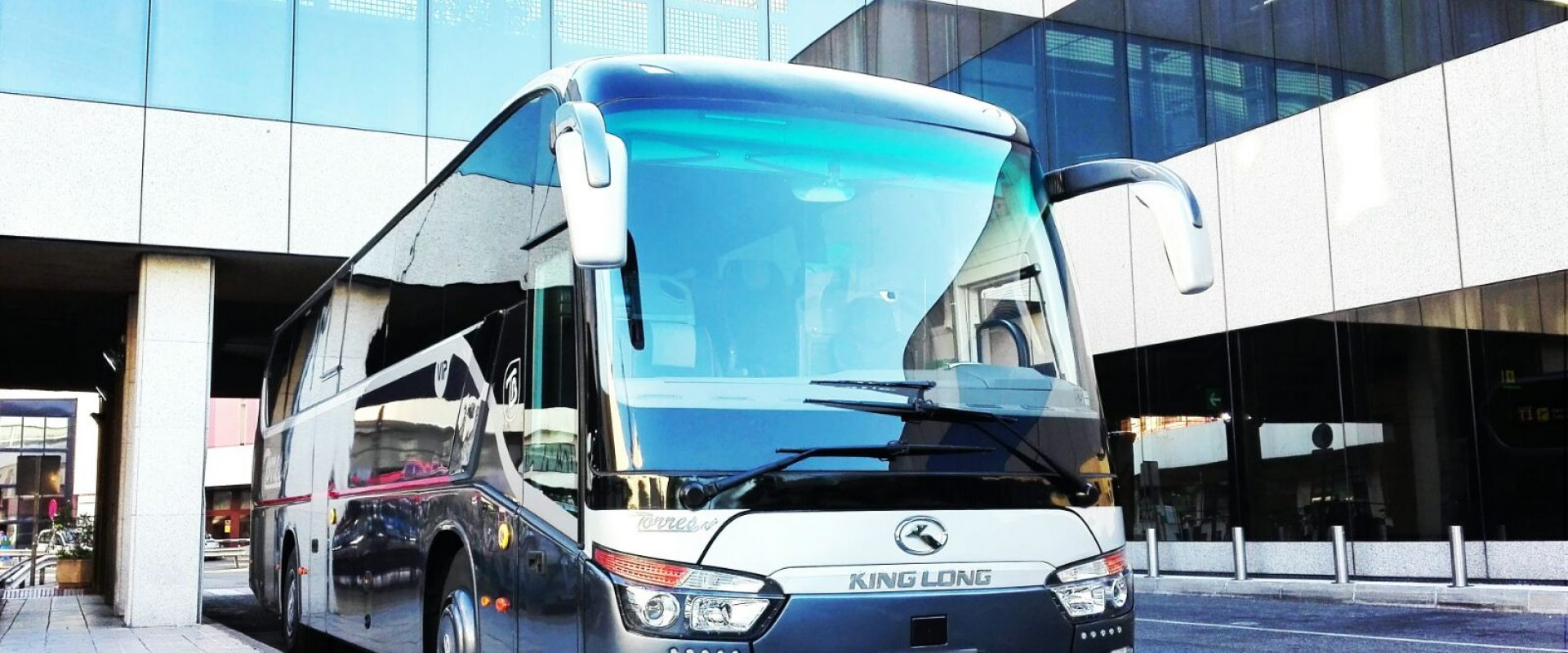
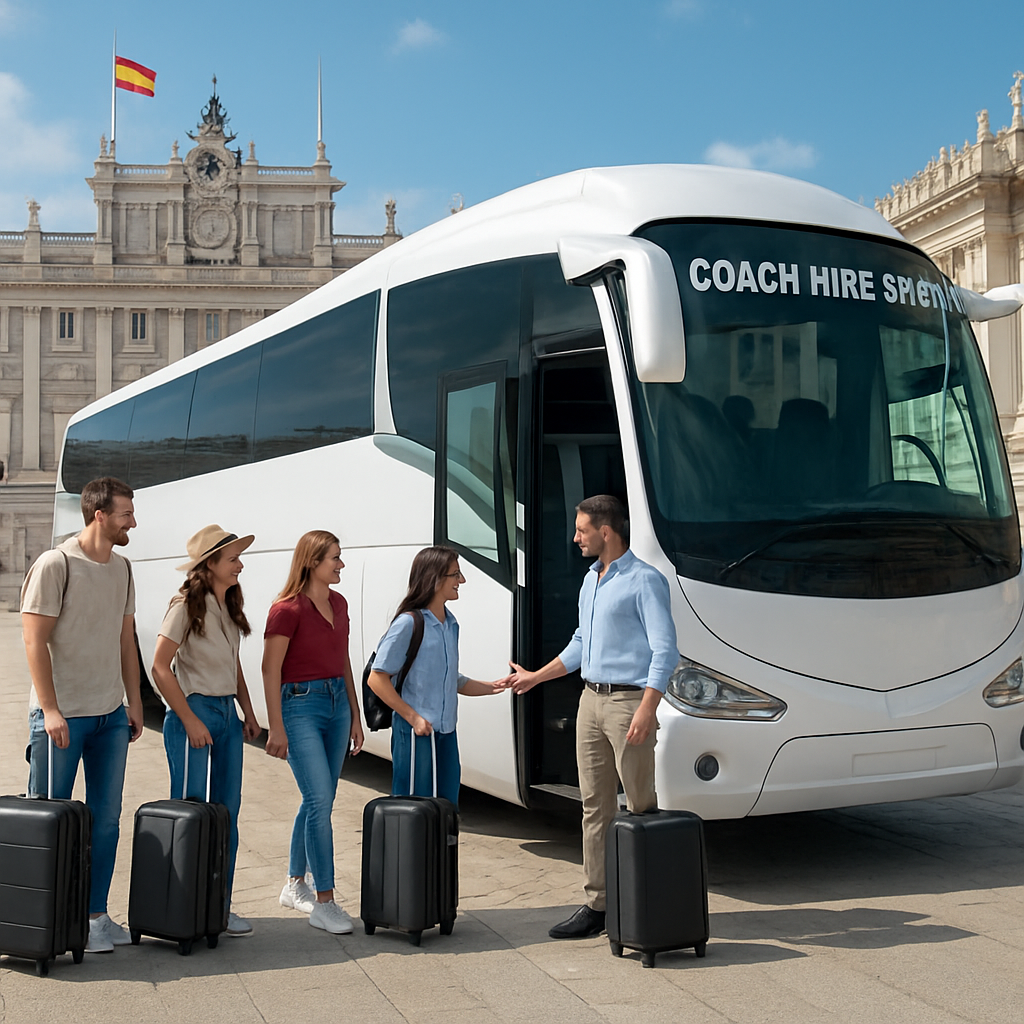
Picture this: you’ve just landed at Barajas, the sun is setting over Madrid, and a group of friends or colleagues is waiting for you, bags in hand, eyes scanning for that sleek, silver vehicle you booked.
Does that feeling of relief—knowing the ride will be comfortable, on time, and ready for a night out or a business meeting—sound familiar? That’s the magic we aim for with coach hire spain.
In our experience, the biggest headache isn’t finding a bus at all; it’s sorting out capacity, accessibility, and that extra touch that makes a trip feel premium rather than just a ride.
Think about the last time you tried to coordinate transport for a wedding party or a corporate off‑site. You probably spent hours comparing sizes, checking insurance, and worrying about last‑minute delays.
Here’s what I mean: a 12‑seat minibus might seem perfect until you remember the grandparents need space for a wheelchair, or the catering team needs room for a cooler. That’s where a tailored solution saves the day.
And when you choose a provider that knows the local routes, the best parking spots near historic sites, and how to handle rush‑hour traffic in Madrid, you’re not just hiring a vehicle—you’re gaining a partner who smooths out the logistics.
So, what’s the first step? Start by listing the exact number of passengers, any special mobility needs, and the key stops you’ll make. A quick spreadsheet can turn a vague idea into a clear brief.
Quick tip: ask for a detailed itinerary that includes pick‑up times, driver contact, and a contingency plan for unexpected changes. It sounds simple, but it removes the guesswork on the day of travel.
Bottom line: coach hire spain doesn’t have to be a stress‑filled puzzle. With the right questions and a trusted fleet, you can focus on enjoying the journey, whether it’s a sunrise tour of Toledo or a night‑time celebration after a conference.
TL;DR
Coach hire spain turns chaotic group travel into a smooth, worry‑free experience for weddings, corporate events, or sightseeing tours around Madrid, through the city.
Just note passenger numbers, special needs and stops, then a local expert crafts a tailored itinerary and backup plan, letting you effortlessly enjoy the peaceful ride.
Understanding Coach Hire Options in Spain
When you start thinking about a group trip from Madrid, the first question that pops up is usually “what kind of vehicle actually fits our crew?” – and that’s where the whole coach hire spain puzzle begins.
Size matters, but it’s not just about seats
We’ve seen planners try to cram a 12‑seat minibus with a wedding party, only to realize the grandparents need a wheelchair ramp and the catering team needs extra cargo space. In Spain you can pick from sleek 7‑seat luxury vans, mid‑size 16‑seat minibuses, up to full‑sized coaches that seat 50‑70 guests. The rule of thumb? Add a couple of extra seats to your headcount and think about luggage, equipment, or any special gear you’ll be hauling.
Accessibility options you can’t ignore
If anyone in your group has reduced mobility, look for PMR‑adapted coaches. These aren’t just “wheelchair‑friendly”; they often feature lowered floors, secure tie‑down points, and even space for a caregiver. It saves you a last‑minute scramble for a separate vehicle and keeps the itinerary smooth.
And for those who are travelling while expecting a baby, safety takes another level. A quick read on essential safety tips for pregnant travelers reminds us to choose a coach with comfortable seating, climate control, and minimal stops.
How you pay can change the whole experience
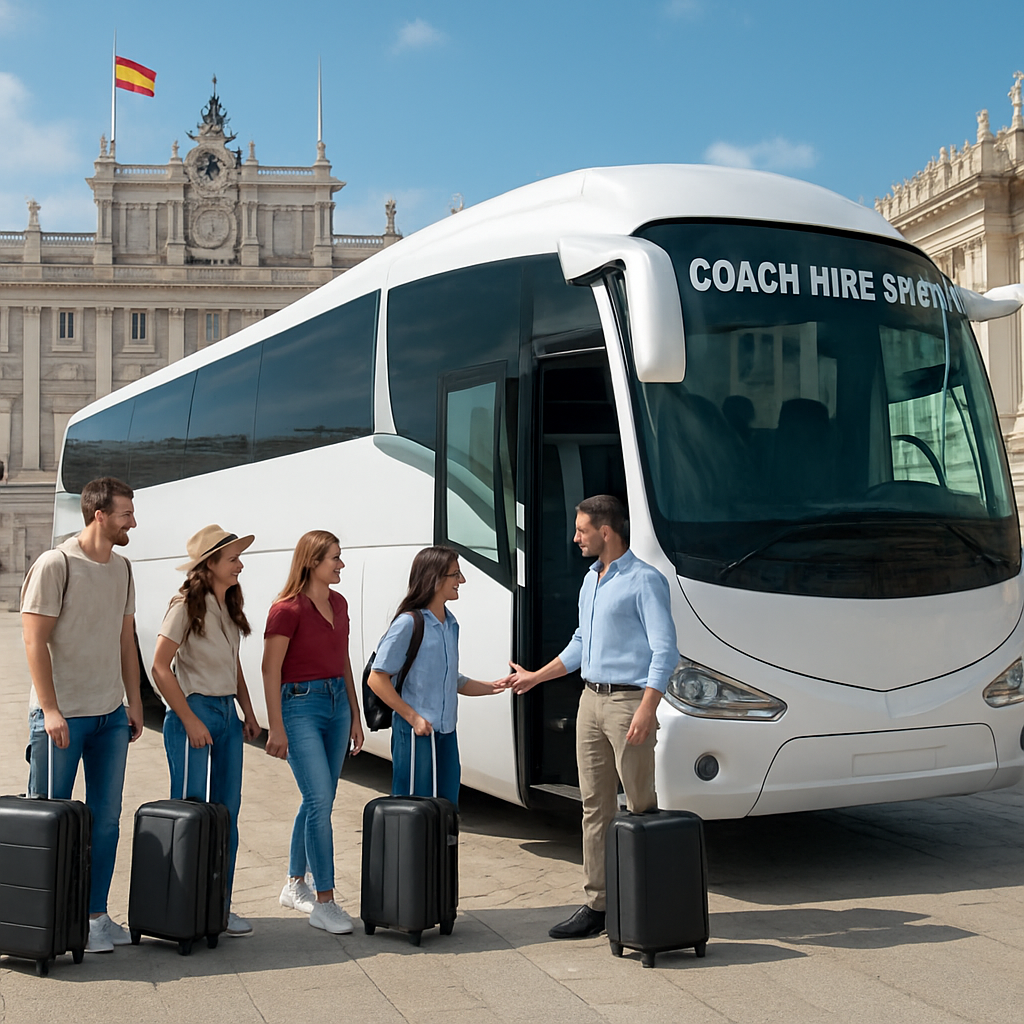
Most coach hire spain companies in Madrid charge a flat day rate that includes driver, fuel, and insurance. Some add mileage fees if you’re heading out to Toledo or the coast. Ask for a detailed quote that breaks down everything – you’ll avoid surprise charges when the driver returns from the highway.
Tip: negotiate a “buffer hour” in the contract. Traffic around Gran Vía can turn a 30‑minute ride into an hour, and a small time cushion keeps your schedule intact without extra cost.
Now that you’ve got a feel for the vehicle types, let’s talk about choosing the right provider. A family‑run fleet like Coaches and minibus Torres Bus knows the local routes, parking restrictions near historic sites, and the best times to avoid rush hour. Their experience means you get a driver who speaks English and Spanish, and who can suggest a quick coffee stop in a hidden plaza if the group needs a break.
Checklist before you book
- Exact passenger count + 10 % extra.
- Any mobility or equipment requirements.
- Preferred pick‑up and drop‑off points.
- Desired departure times and possible traffic hotspots.
- Budget range – include a contingency for fuel or tolls.
Running through this list with your event planner or tour operator will give the coach company a crystal‑clear brief, and they can match you with the perfect bus without endless back‑and‑forth emails.
One often‑overlooked detail is the insurance and safety certification of the fleet. In Spain every coach must carry a VTV (Vehicle Technical Inspection) certificate and have third‑party liability insurance that covers all passengers. Ask the provider to show the latest VTV report and proof of driver training – especially if you’re traveling with children or high‑value equipment. Knowing the paperwork is up‑to‑date gives you peace of mind and lets you enjoy the journey without hidden worries.
Bottom line: understanding the spectrum of coach hire options – from compact minibuses to full‑size coaches, from standard to PMR‑adapted – lets you craft an itinerary that feels effortless. When the right vehicle shows up on time, you can focus on the real reason you’re travelling – whether that’s celebrating love, sealing a deal, or simply soaking up Spanish scenery.
Choosing the Right Coach Size and Features
When you sit down with the spreadsheet you’ve built, the first thing you’ll notice is that the numbers alone don’t tell the whole story. A 30‑seat coach might look perfect on paper, but does it have the right layout for a wedding party that wants a small dance floor on board? Does a minibus give your senior guests easy access without a steep step? That’s why we compare not just seats, but the features that actually make a trip feel smooth.
Size vs. Space: What’s the sweet spot?
Minibuses (7‑16 seats) are great for intimate groups. Think of a boutique wine‑tasting tour for 12 friends – you’ll get a cozy vibe, a rear‑door lift for the elderly, and even a few USB ports for everyone’s phone. In our experience, a 12‑seat minibus can still hold two large suitcases without feeling cramped.
Mid‑size coaches (24‑40 seats) shine on day‑trips. A corporate off‑site in Segovia with 30 employees benefits from a central aisle, a fold‑down table, and Wi‑Fi that keeps the brainstorming session alive. The extra legroom also means you can set up a portable whiteboard without blocking the aisle.
Full‑size coaches (50‑70 seats) are the workhorses for festivals or pilgrimages. A group of 60 pilgrims heading to Santiago de Compostela needs a pantry corner, a restroom on board, and space for a small luggage compartment. The larger vehicle also makes it easier to comply with Spain’s PMR (reduced mobility) regulations because there’s room for a ramp and secure tie‑downs.
Key features to check
Here are the top three features that separate a decent coach from a great one:
- Accessibility: Does the vehicle have a ramp or lift that meets the latest Spanish law? Is the ramp width enough for a standard wheelchair?
- On‑board technology: Wi‑Fi, USB charging, and an audio system for announcements or background music.
- Comfort extras: Climate control, individual reading lights, and optional panoramic windows for sightseeing.
When you’re comparing providers, write these three items down and mark each bus accordingly. It turns a vague feeling into a concrete checklist.
Real‑world example: A wedding shuttle
Imagine you’re planning a wedding with 80 guests, including a few grandparents who use wheelchairs. The bride wants a “luxury lounge” vibe, not a school‑bus feel. Here’s how we’d break it down:
- Start with capacity: 80 guests means you need at least a 70‑seat coach plus a 16‑seat minibus for the wheelchair users and extra luggage.
- Check features: The 70‑seat coach should have a rear‑door lift, climate control, and a small bar area for the welcome drinks.
- Confirm extras: Ask for a customized sound system so the couple’s playlist can play softly during the ride.
Once you have those specs, you can request a quote that separates the base rate from optional extras like the bar setup. That way you avoid surprise fees on the big day.
Actionable steps for your next booking
1. List your must‑haves. Write down every non‑negotiable feature – wheelchair ramp, Wi‑Fi, on‑board restroom.
2. Match size to headcount. Add a 10‑15% buffer to your total passenger count. It feels safer to have a couple of empty seats than to scramble for space at the last minute.
3. Use a comparison table. Fill in the details for at least two providers so you can see side‑by‑side which vehicle offers the best value.
4. Ask for a detailed breakdown. A transparent quote should list fuel, driver accommodation, tolls, and any optional features you’ve requested.
5. Test the tech. If Wi‑Fi is crucial, ask the provider for a speed test report for the routes you’ll travel.
Following these steps turns uncertainty into confidence, and you’ll walk into the booking call knowing exactly what you need.
Quick comparison table
| Vehicle Size | Seating Capacity | Key Features for Events |
|---|---|---|
| Minibus | 7‑16 | Rear‑door lift, USB ports, easy parking in city centres |
| Mid‑size coach | 24‑40 | Wi‑Fi, fold‑down tables, climate control, optional audio system |
| Full‑size coach | 50‑70 | On‑board restroom, pantry area, panoramic windows, PMR‑adapted ramp |
Need a deeper dive? Our Coach Hire Spain: Complete Guide to Renting Buses and Minibuses walks you through every size option, pricing models, and how to lock in the best rates.
And if you’re already thinking about the entertainment side of your event, you might want to check out CÓMO CONTRATAR ARTISTAS CUBANOS EN ESPAÑA for ideas on live music that can be coordinated with your coach schedule.
Finally, a quick tip for safeguarding travel documents: a sturdy, fire‑proof travel bag can protect passports and itineraries during long trips. See Midnight Scriber’s travel‑ready accessories for a simple solution.
How to Book a Coach for Different Purposes (Airport, Weddings, Corporate, Tours)
So you’ve narrowed down the size of the vehicle, but now you’re staring at the booking process and wondering if you’re missing a trick. Trust me, you’re not alone – we’ve helped dozens of event planners, wedding coordinators, and corporate travel managers turn that uncertainty into a smooth, click‑and‑go experience.
1. Start with the purpose, not the vehicle
It’s tempting to say, “I need a 30‑seat coach,” and then scramble for any provider. Flip the script: ask yourself what the ride needs to accomplish.
Is it an airport shuttle that must sync with flight arrivals? A wedding transfer that feels like a red‑carriage entrance? A corporate roadshow that needs on‑board Wi‑Fi for presentations? Or a sightseeing tour that wants a panoramic view and a guide‑friendly layout? When the goal is crystal clear, the right coach size, features, and driver schedule fall into place.
2. Map the timeline – the backbone of every booking
Write down the exact pick‑up and drop‑off times, including buffer minutes for traffic, security checks, or a quick restroom break. For airport transfers, pull the flight number and set a 30‑minute cushion on both sides; airlines love punctuality, and your passengers will notice the difference.
For weddings, add a “photo‑stop” window so the bridal party can snap a few shots before heading to the venue. Corporate teams often need a 15‑minute set‑up period for laptops and a short briefing with the driver. Tours? Sketch a rough itinerary with landmark dwell times – that helps the driver plan the most scenic route.
3. Choose the right features for each scenario
Airport transfers – Look for a coach with a rear‑door lift if you have passengers with luggage or mobility needs, and ask for a driver who knows the Barajas traffic patterns. A quiet cabin and USB ports keep travellers relaxed and charged.
Weddings – Luxury matters. Request climate control, soft lighting, and maybe a small bar set‑up for welcome drinks. A coach with a smooth ride and a decorative interior turns the journey into part of the celebration.
Corporate events – Wi‑Fi is non‑negotiable, and a fold‑down table can double as a mobile conference room. Ask the provider to run a speed test on the routes you’ll take; you’ll thank yourself when the video call doesn’t freeze.
Tour groups – Panoramic windows, a knowledgeable driver‑guide combo, and a restroom on board keep the experience comfortable for several hours of sightseeing.
4. Get a transparent, itemised quote
Never settle for a flat number without seeing the breakdown. A good quote lists fuel, driver accommodation (if it’s an overnight job), tolls, parking fees, and any optional extras you asked for. If a line item feels vague, ask for clarification – a clear invoice saves you from surprise costs on the day of the event.
5. Verify the driver and insurance credentials
Ask for a copy of the driver’s licence, training certificates, and the company’s insurance coverage. In our experience, a provider who’s happy to share this paperwork is usually the one who cares about safety as much as you do.
For corporate roadshows or pilgrimages, you might also want a driver who speaks a little English or French – it smooths communication with international guests.
6. Confirm the booking in writing and set a reminder
Once you’ve agreed on vehicle, features, timeline, and price, get a written contract or email confirmation. Mark the date in your calendar and set a reminder to reconfirm 48 hours before departure. A quick “just checking” call can catch any last‑minute changes, like a delayed flight or a new guest RSVP.
And if you’re a visual learner, the short video below walks through the same steps with on‑screen examples.
After you’ve watched it, take a minute to copy the checklist into a Google Doc or a project‑management board. Tick each item as you go – the sense of progress is oddly satisfying.
Quick checklist you can copy‑paste
- Define the purpose (airport, wedding, corporate, tour).
- Map exact pick‑up/drop‑off times with buffers.
- List must‑have features (lift, Wi‑Fi, restroom, lighting).
- Request a detailed, itemised quote.
- Ask for driver licence, training, and insurance proof.
- Get written confirmation and set a 48‑hour reminder.
Follow these steps and you’ll move from “I hope this works” to “We’ve got this covered.” Whether you’re coordinating a bride’s grand entrance, a multinational team’s off‑site, or a pilgrim’s journey across Spain, a well‑planned coach hire spain experience starts with a solid booking process.
Cost Factors and Getting the Best Deal
When you start looking at the bottom line for coach hire spain, the first thing that hits you is that “price” isn’t a single number – it’s a collection of little pieces that add up.
Base rate vs. mileage vs. extras
Most providers quote a base daily or per‑kilometre rate. The base covers the vehicle, driver’s wage and basic insurance. Then you’ll see mileage fees, fuel surcharges, tolls, parking, and sometimes a night‑time premium. In our experience, the per‑km model looks cheap until you add the inevitable tolls on the A‑2 or the fuel‑price hike in summer.
Seasonality and demand spikes
Think about the Holy Week processions in Seville or the summer music festivals in Valencia. During those weeks, a 30‑seat coach can cost 30‑40 % more than in the off‑season. If your event is flexible, shifting the pick‑up by a day or two can shave a few hundred euros off the bill.
What really matters for event planners
For wedding coordinators, the biggest hidden cost is last‑minute changes. A provider that charges a flat‑day rate usually includes a buffer for a 30‑minute delay, whereas a “hourly” quote can explode if the ceremony runs over.
Corporate roadshows care about onboard Wi‑Fi and power outlets. Some companies bundle those tech extras for free; others list them as €50 per day. Ask for a detailed line‑item breakdown so you can compare apples to apples.
How to negotiate a better deal
Start with a clear checklist: number of seats, required ramps, Wi‑Fi, restroom, and any catering on board. When you hand that to the provider, you force them to price each item instead of hiding it in a lump sum.
Next, request a multi‑day discount. Many family‑run fleets, like Torres Bus, will shave 10‑15 % off the total if you book three days or more in one contract. It’s a simple ask – “Can you give me a block‑booking discount?” – and it usually works.
Don’t forget to ask about “fuel‑equalisation” clauses. Some contracts say “fuel cost as per receipt” which can swing wildly. A fixed‑price fuel surcharge (e.g., €0.12 per km) keeps things predictable.
Tip: Use a price‑comparison table
Put the quotes you receive into a spreadsheet with columns for base rate, mileage, tolls, fuel surcharge, tech extras, and any discounts. Highlight the row with the lowest total – that visual cue often reveals hidden savings you’d otherwise miss.
Another lever to squeeze savings is to bundle ancillary services. If you need a driver for a multi‑day conference, ask whether the same driver can cover all legs – many operators waive the overnight allowance in that case. Likewise, ordering a simple water station instead of a full catering package can cut costs without sacrificing guest comfort.
Finally, read the cancellation policy like you’d read a contract before signing a lease. A 20 % charge up to 48 hours before departure is common, but some providers offer a “free‑change” window if you let them know a week ahead. That flexibility can be priceless when a flight gets delayed.
Bottom line: the cheapest headline price isn’t always the best deal. Look at the whole package, negotiate on the items that matter to you, and lock in a transparent, itemised quote. That way you walk into your event knowing you’ve stretched every euro for maximum comfort and reliability.
Ensuring a Smooth Journey: Tips and Regulations
When you finally lock in a coach hire spain contract, the excitement can turn into anxiety if you haven’t thought through the rules that govern the road. Let’s walk through the must‑know regulations and a handful of practical tips that keep your group moving without a single hiccup.
Know the legal basics before you book
Spain treats coach transport like any other commercial passenger service – the driver needs a professional licence (C1 or D) and the vehicle must carry a valid ITV inspection sticker. In practice that means you’ll see a visible “certificado de inspección” on the windshield; if it’s missing, ask for proof before you sign.
For groups with reduced‑mobility passengers, the law requires a PMR‑adapted vehicle with a ramp that meets the latest Spanish accessibility standards. It’s not just good practice – it’s a legal obligation, and a missing ramp can lead to fines or, worse, an unsafe boarding experience.
And if you’re crossing borders – say from Madrid to Barcelona or into France – remember the EU “Driver’s Card” (Carta de Conducción) must accompany the driver’s licence. It’s a tiny card, but customs officers love to ask for it.
Safety checks before you board
Even the best‑maintained coach can hide a surprise if you skip a quick walk‑around. Here are three things we always inspect:
- Seat belts on every seat – Spanish law mandates them on all seats for vehicles over 9 m. If a belt feels loose, note it and ask for a replacement.
- Emergency exits and hammers – the exits should open outward and the hammers must be within reach of every passenger.
- Fire extinguisher and first‑aid kit – they need a current inspection stamp (usually a yellow tag). A quick glance saves you a headache later.
Ask the driver to demonstrate the “stop‑and‑step” safety briefing. A professional crew will run through the exits, seat‑belt usage, and any onboard Wi‑Fi etiquette. If they skip it, politely request the rundown – it’s part of the service you’re paying for.
Regulatory paperwork you shouldn’t skip
Every coach hire spain agreement should come with a written contract that breaks down the cost, the insurance coverage, and the cancellation policy. Look for these line items:
- Liability insurance: at least €1 million for passenger injury. Verify the insurer’s name and policy number.
- Road tax and tolls: some providers bundle them, others bill later. Knowing this upfront avoids surprise invoices.
- Fuel surcharge clause: a fixed €0.12 per km is common; a “fuel‑equalisation” clause can swing wildly with market prices.
And don’t forget the driver’s work‑time limits. Spanish law caps daily driving at 9 hours, with a mandatory 45‑minute break after 4.5 hours. If your itinerary stretches beyond that, ask for a second driver or a schedule adjustment.
Practical tips for a hiccup‑free day
Now that the paperwork is in order, here are a few on‑the‑ground tricks that have saved our clients countless minutes.
First, set a “buffer window” of at least 15 minutes between the coach arrival and any scheduled activity. Traffic in Madrid can turn a 10‑minute ride into a 30‑minute crawl, especially around the Prado or during rush hour.
Second, share the driver’s mobile number with the whole party – a quick text can confirm the exact pick‑up spot, especially if the group is meeting at a bustling train station.
Third, pack a small “travel kit” for the coach: extra water bottles, a few paper maps (GPS can glitch in tunnels), and a portable power bank. It’s a tiny gesture that makes the journey feel thoughtful.
Finally, keep an eye on any travel advisories that might affect your route. The U.S. State Department publishes up‑to‑date alerts for Spain, covering everything from road protests to extreme weather. A quick glance before you leave can steer you clear of a delayed convoy.U.S. travel advisory for Spain
Putting these regulations and tips into a checklist turns a potential nightmare into a smooth, confidence‑filled ride. You’ll arrive at your venue on time, stay within the law, and keep everyone – from the CEO to the grandparents – comfortable and safe.
Conclusion
By now you’ve seen how a bit of planning turns coach hire spain from a stressful puzzle into a smooth, confidence‑filled experience.
Think about the last time you juggled a wedding shuttle or a corporate roadshow – the nerves, the last‑minute changes, the traffic snarls. When you apply the checklist we’ve built together, those worries melt away and you get to enjoy the ride instead of chasing it.
What really matters is a clear headcount, a buffer window, and a driver who knows the Madrid streets. Add a quick glance at the U.S. travel advisory or a simple travel kit, and you’ve covered the basics that keep everyone safe and happy.
So, what’s the next step? Grab a pen, write down the must‑haves for your upcoming event, match them to the right vehicle size, and reach out to a trusted local partner – someone who can confirm the licence, the insurance and the little extras like USB ports or a rear‑door lift.
When you do, you’ll arrive on time, stay within the law, and give your guests – from CEOs to grandparents – a ride they’ll actually look forward to. Happy travels!
Remember, the right coach turns logistics into memories – let the journey be part of the story.
FAQ
What should I consider when choosing the right coach size for my event in Spain?
First, count every passenger –‑ include kids, grandparents, and anyone who might bring extra luggage. Then add a 10‑15% buffer; a few empty seats are far less stressful than a cramped squeeze at the last minute. Finally, think about the layout you need –‑ a fold‑down table for a corporate workshop, a rear‑door lift for seniors, or a small bar area for a wedding reception.
How can I verify that a coach hire company complies with Spanish safety regulations?
Ask for a copy of the vehicle’s ITV inspection sticker –‑ you’ll see it on the windshield. Request the driver’s professional licence (C1 or D) and a brief safety‑briefing script. In our experience, reputable providers will also hand you a printed insurance certificate showing at least €1 million liability coverage. If anything feels vague, a quick phone call to the local traffic authority can clear it up.
Are there any hidden costs I should watch out for when hiring a coach in Spain?
Yes –‑ mileage fees, tolls, parking charges, and fuel surcharges often appear as line items after the base rate. Some companies also bill a night‑time premium if the driver has to wait after hours. To avoid surprises, ask for an itemised quote that lists each of these extras and confirms whether they’re included or billed later.
What’s the best way to handle last‑minute changes to the itinerary?
Keep a flexible buffer in your schedule –‑ 15‑30 minutes between pick‑up and the next activity gives you room to absorb traffic or a delayed flight. Communicate any change to the driver as soon as you know it; a quick text with the new address or time works better than a late‑night phone call. Many operators also offer a “free‑change” window if you notify them a week ahead.
How do I ensure the coach is accessible for guests with reduced mobility?
Start by confirming the vehicle is PMR‑adapted –‑ it should have a ramp that meets the latest Spanish width standards and secure tie‑down points for a wheelchair. Ask the provider for the exact ramp dimensions and a demonstration of how it operates. A quick walk‑around before the trip lets you verify that the handrails and seat spacing are comfortable for everyone.
Do I need to provide a driver’s accommodation for multi‑day trips?
If the driver is on duty for more than eight hours in a day, Spanish law requires a rest period and, typically, an overnight stay. Some companies include the accommodation in the daily rate; others charge it separately. Clarify this up front and, if possible, ask for the same driver on each leg –‑ they’ll know the route, the group, and the timing, which saves a lot of hassle.
What steps can I take to keep my group comfortable during long journeys?
Pack a small travel kit with water bottles, light snacks, and a few paper maps in case GPS glitches in tunnels. Ask the coach operator about climate control settings and USB charging ports –‑ a cool cabin and charged phones make hours feel like minutes. Finally, schedule a short restroom or stretch break every two to three hours; it keeps everyone refreshed and reduces cabin fatigue.