
You know that feeling when you’re juggling a wedding guest list, and the idea of getting everyone from point A to B starts to feel like a circus act?
That’s exactly why many of us in Madrid turn to alquiler autocar con conductor Madrid – a simple, stress‑free way to keep the group moving without turning into a logistics nightmare.
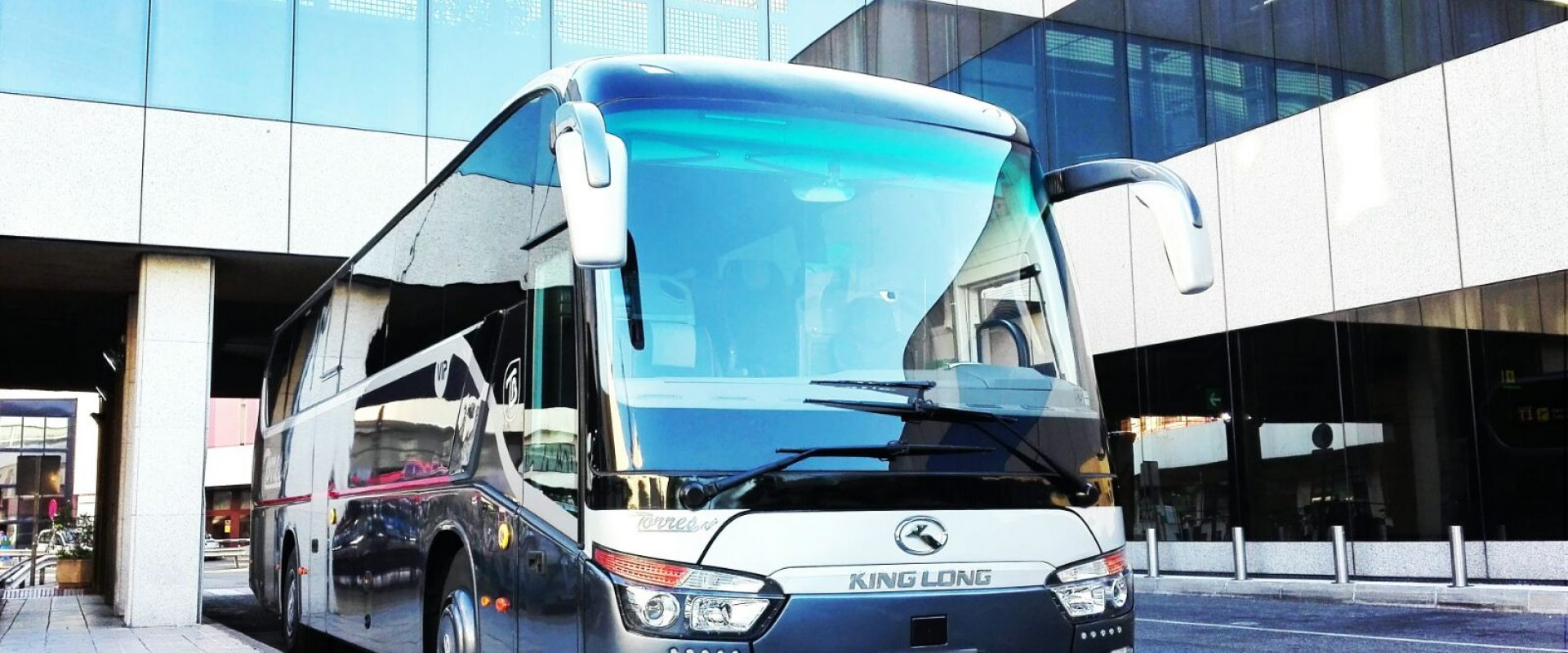
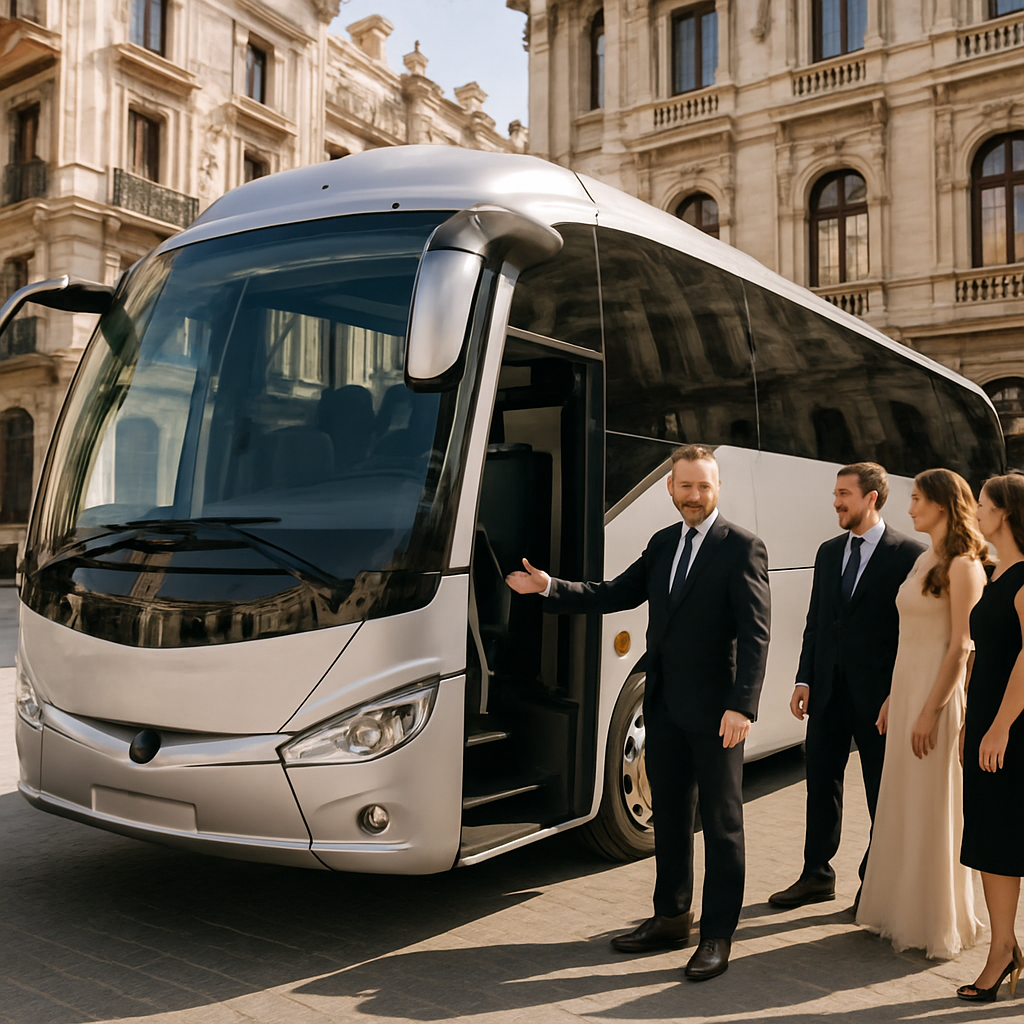
Imagine stepping onto a sleek, climate‑controlled coach, greeted by a professional driver who already knows the best routes, traffic quirks, and the hidden cafés where you can stretch your legs. No need to worry about parking permits or navigating narrow streets; the driver handles it all.
And it’s not just about convenience. With Torres Bus’s 30‑year legacy, you get safety certifications, regular maintenance checks, and vehicles adapted for reduced‑mobility guests, so everyone feels comfortable.
So, what’s the first step? Start by picturing the exact moment you need the bus – maybe it’s the early‑morning airport drop for a team, or the sunset ride to a historic venue outside Madrid.
From there, think about capacity: a 12‑seat minibus for an intimate gathering, a 45‑seat coach for a large corporate conference, or even a luxury van for VIP clients who expect a touch of elegance.
You might wonder, “Is it pricey?” Honestly, the cost often balances out when you factor in fuel, parking fees, and the peace of mind that comes with a seasoned driver. Plus, many providers, including Torres Bus, offer transparent pricing and flexible packages.
Here’s a quick mental checklist: date and time, number of passengers, any special accessibility needs, and preferred pick‑up/drop‑off locations. Jot these down and you’ll have a clear brief to share.
Does that sound doable? Absolutely. With a little planning, you’ll transform a chaotic shuffle into a smooth, enjoyable ride for everyone.
Let’s dive in and explore how you can make the most of alquiler autocar con conductor Madrid for any occasion, from corporate roadshows to unforgettable wedding processions.
TL;DR
Alquiler autocar con conductor Madrid removes the planning chaos, offering safe, comfortable rides for weddings, corporate events, airport transfers, and tours, powered by Torres Bus’s three‑decade expertise.
Just list your date, passenger count, and any special needs, request a quote, and enjoy punctual, stress‑free travel that makes every group outing seamless.
Step 1: Define Your Transport Needs
Picture this: you’ve just nailed the venue, the guest list is set, and the only thing left feels like a moving puzzle—how many people need to get there, and how do you make sure they all arrive on time, comfortable, and maybe even a little impressed?
That moment is where you pause, take a breath, and start mapping the actual transport picture. It’s not just about a date and a number; it’s about the vibe you want to create, the logistics that could trip you up, and the little details that turn “just another ride” into a memorable part of the event.
Assess Your Group Size and Layout
First, write down the exact headcount. Break it into categories: core attendees, staff, equipment, and any guests with reduced mobility. Knowing you need, say, 12 seats for the bridal party, a 45‑seat coach for the main ceremony, and a wheelchair‑accessible minibus for a few senior relatives changes everything.
Torres Bus offers a modern fleet that spans from 7‑seat luxury vans to 70‑seat coaches, so you can match capacity to each sub‑group without overpaying for empty seats. Their fleet description highlights the variety of vehicle sizes and comfort features, which is a handy reference when you’re figuring out how many seats you truly need.
Map Your Timeline and Pick‑up Points
Next, sketch a simple timeline. When does the first guest need to be at the hotel? When does the ceremony start? When is the after‑party? Plot each checkpoint on a quick spreadsheet and add travel buffers for Madrid traffic – especially rush‑hour around Atocha or the airport.
Ask yourself: do you need a single bus making multiple stops, or several smaller vehicles running parallel routes? A single 45‑seat coach might look sleek, but if you have guests arriving from different neighborhoods, two 12‑seat minibuses could save time and avoid crowding.
Identify Special Requirements
Now, dig into the “special” part. Do you have guests who need wheelchair access? Are you transporting delicate equipment for a corporate demo? Is there a VIP who expects a glass of champagne on board? These questions guide you toward adapted minibuses, climate‑controlled cabins, or even a driver who can handle luggage logistics.
For wedding planners, the luxury wedding transport services described by another provider illustrate the level of detail people expect – uniformed drivers, precise passenger organization, and a vehicle that feels like an extension of the ceremony décor.
Budget vs. Value Balance
Once you have a rough vehicle list, compare the cost against the value you gain. A larger coach might have a higher hourly rate, but it could reduce the total number of drivers you need, cut fuel costs, and simplify coordination. On the other hand, a smaller minibus for a niche group can free up budget for décor or catering.
Don’t forget hidden fees: parking permits in historic districts, tolls on the M‑30, or extra driver overtime. Write them down now so the quote you receive from Torres Bus is truly all‑in.
Document Your Brief
Take everything you’ve just uncovered and turn it into a bullet‑point brief:
- Date, start‑time, and end‑time
- Total passengers, broken down by vehicle type
- Pick‑up and drop‑off addresses (include landmarks for easy navigation)
- Accessibility or VIP requests
- Budget ceiling and any cost‑saving preferences
This concise brief is the magic key you’ll hand to the provider, and it guarantees you get a quote that matches exactly what you need – no guesswork, no surprises.
Feeling a little overwhelmed? That’s normal. The good news is you’ve just turned a vague worry into a clear action plan. And if you want a deeper dive into every possible vehicle option and pricing nuance, check out our Comprehensive Guide to alquiler de autobuses en Madrid for Every Occasion. It walks you through each step with real‑world examples, so you can feel confident that your transport will be as smooth as the rest of the event.
Ready to lock in those numbers? Grab a pen, open a new document, and start filling in the checklist above. You’ll be surprised how quickly the “big, scary” transport piece shrinks into a handful of doable items.
Step 2: Compare Service Packages and Prices
Now that you’ve got a clear brief, the next hurdle is making sense of the dozens of package tables that pop up when you ask for quotes. It can feel like you’re reading a different language—hourly rates, per‑kilometre fees, fuel surcharges, driver overtime, and “premium‑service” add‑ons. The trick is to strip the fluff and line up the apples‑to‑apples items that really matter for your event.
Map out what’s included in each offer
Start a simple spreadsheet with columns for:
- Base price (hourly or flat‑rate)
- Number of seats & vehicle type
- Driver’s labour cost (including overtime)
- Fuel & tolls (fixed vs variable)
- Extras: Wi‑Fi, on‑board refreshments, wheelchair ramp, luggage capacity
- Hidden fees: parking permits in historic zones, night surcharge, cleaning
When you paste the numbers from three providers, the differences jump out. For example, Provider A may charge €120 per hour for a 45‑seat coach but includes fuel and tolls, while Provider B lists €100 per hour plus a €0.30/km fuel charge. If you expect a 2‑hour trip of 150 km, Provider B’s total becomes €100 × 2 + 150 × 0.30 = €190, still higher than Provider A’s €240 all‑in. That quick math tells you where the real savings lie.
Real‑world scenario: a wedding shuttle
Imagine you’re coordinating a wedding with 80 guests. You need two 45‑seat coaches for the ceremony and a smaller 12‑seat luxury van for the bridal party. Provider X offers a “Wedding Package” at €1,200 total, covering two coaches, a driver for each, complimentary bottled water, and a decorative “welcome sign” on the coach. Provider Y breaks it down: €500 per coach plus €100 per driver, plus €15 per passenger for refreshments. The total? €500 × 2 + €100 × 2 + 80 × 15 = €1,600. Even though Provider Y looks cheaper per hour, the bundled package from Provider X ends up 25 % cheaper and removes the hassle of adding each extra yourself.
Ask for an itemised quote
Never settle for a lump‑sum figure without a line‑by‑line breakdown. A good provider—like Torres Bus—will email a PDF that spells out every cost centre. If something looks vague (e.g., “service fee”), ask: “Can you tell me exactly what that covers?” The response often reveals a markup you can negotiate out of.
Expert tip: benchmark against industry data
According to the Spanish Association of Bus Operators, the average hourly rate for a 45‑seat coach in the Madrid region sits between €110 and €130, with fuel typically rolled into the price. If a quote falls far outside that band, double‑check the assumptions. Similarly, Eurostat’s passenger‑transport statistics show that fuel surcharges in Spain have averaged 6 % of total costs over the past three years (Eurostat passenger transport data). Use those benchmarks to flag any outlier fees.
Step‑by‑step checklist for comparing packages
- Gather at least three written quotes with itemised pricing.
- Enter every line item into your comparison spreadsheet.
- Calculate the total cost for your exact itinerary (hours, km, stops).
- Identify any “must‑have” extras (wheelchair ramp, Wi‑Fi, driver language).
- Rank the quotes by total cost, then by inclusion of essential extras.
- Call the top two providers to negotiate—mention the competitor’s offer and ask if they can match or improve it.
By the end of this exercise you’ll have a crystal‑clear picture of which package gives you the best value, not just the lowest headline price. And because you’ve already documented your needs, the final contract will read like a checklist you already own—no surprise fees, no last‑minute scrambling.
Ready to put the numbers together? Pull out that notebook, fire up a spreadsheet, and start ticking boxes. You’ll feel the anxiety melt away as the “mystery” of bus pricing turns into a straightforward decision you can own.
Step 3: Evaluate Vehicle Options and Amenities
Okay, you’ve already mapped out your timeline and written a solid brief. Now it’s time to sit down with the fleet list and ask, “Which ride actually feels right for my group?” This is where the magic happens – you match capacity, comfort, and those little extras that turn a plain trip into a memorable experience.
Match the vehicle to the crowd
First, look at the headcount you’ve already broken down. A 45‑seat coach might look impressive, but if you only need 20 guests for a boutique wedding shuttle, you’re paying for empty seats and extra driver costs. On the flip side, trying to cram 70 people into a 12‑seat minibus will create chaos and bruised egos.
Here’s a quick cheat‑sheet:
- 7‑12 seats: luxury vans for VIPs, bridal parties, or senior guests who need a smoother ride.
- 13‑25 seats: minibuses perfect for small corporate teams or school field trips.
- 26‑45 seats: standard coaches for medium‑sized events, airport transfers, or day‑trips to Toledo.
- 46‑70 seats: full‑size coaches for conferences, concerts, or large family reunions.
Does this feel familiar? You’re probably thinking about the exact numbers you wrote down earlier – and that’s exactly the point.
Key amenities that matter (and why)
Once you know the size, scan the amenities column. Not every feature is worth the extra euro, but a few can save headaches later.
Wi‑Fi & charging ports. If you’re moving a tech‑savvy team from a convention center to a hotel, staying connected is non‑negotiable. A coach with built‑in Wi‑Fi can cut down on “Can anyone hear me?” moments during the ride.
Climate control. Madrid can swing from 30 °C summer heat to a chilly winter night. A vehicle with independent zone climate control keeps everyone comfortable – especially older guests who feel the temperature extremes more acutely.
Accessibility. A ramp or lift isn’t just a nice‑to‑have; it’s required by law for passengers with reduced mobility (PMR). According to the Spanish Association of Bus Operators, at least 15 % of public transport contracts now mandate wheelchair‑friendly access.
On‑board refreshments. A small cooler with bottled water or a coffee service can turn a two‑hour trip into a mini‑networking lounge. It’s a tiny perk that often wins client praise.
Do you see how each amenity lines up with a specific need? That’s the secret – you don’t pick features because they sound fancy; you pick them because they solve a problem you already identified.
Real‑world examples
Example 1: A corporate roadshow with 120 attendees across three cities. The planner chose two 45‑seat coaches (instead of one 70‑seat and a minibus) because each coach had a separate Wi‑Fi network, allowing two simultaneous breakout sessions during the ride. The result? No “lost connection” complaints and a smoother schedule.
Example 2: A wedding in the historic center of Madrid. The bride’s family needed a wheelchair‑accessible minibus for her grandparents. By selecting a 12‑seat vehicle with a hydraulic lift, the couple avoided a last‑minute scramble for a separate transport, and the grandparents felt truly included.
Actionable checklist – evaluate like a pro
Grab a pen or open a new tab, then run through these steps:
- List every vehicle type you’re considering.
- Note capacity, fuel‑in‑price (yes, some quotes roll fuel into the hourly rate), and driver overtime rules.
- Mark required amenities: Wi‑Fi, climate control, accessibility, refreshment service.
- Assign a “must‑have” tag to any item that directly solves a need from your brief.
- Score each option on a 1‑5 scale for cost, comfort, and convenience.
- Pick the top two and ask the provider for a side‑by‑side comparison (you can even copy the table below into an email).
Here’s a compact table you can paste into your notes:
| Feature | Option A (45‑seat coach) | Option B (12‑seat luxury van) |
|---|---|---|
| Capacity | 45 passengers | 12 passengers |
| Wi‑Fi | Included | Optional (€30) |
| Accessibility | Ramp (standard) | Lift (extra €50) |
Notice how the table instantly shows where you might need to add a cost or why one vehicle could be a better fit for a specific subgroup.
Expert tip: ask about “all‑in” pricing
When you get a quote, request an itemised breakdown that includes parking permits in historic districts, tolls on the M‑30, and driver overtime after 9 pm. Eurostat’s passenger‑transport data shows that fuel surcharges in Spain typically sit around 6 % of total costs – if a provider’s fuel markup is double that, you have room to negotiate.
Bottom line: evaluate vehicle options the way you’d pick a restaurant – capacity is the seating, amenities are the ambience, and price is the check. By the time you finish this step, you’ll have a clear, confidence‑boosting shortlist ready for the final negotiation.
Step 4: Book the Driver and Confirm Logistics
Now that you’ve narrowed down the perfect vehicle, the next hurdle is turning a quotation into a real, reliable ride. Booking the driver isn’t just about saying “yes” to a price; it’s about locking in safety, punctuality, and those little details that keep the whole day from spiralling into chaos.
Confirm the driver’s qualifications
Ask for the driver’s licence class, years of experience, and any specialised training – especially if you need a PMR‑friendly lift or night‑time overtime. In Spain, a “carta de conductor de categoría D” is mandatory for coaches over 9 tonnes, and most reputable firms will gladly share a copy of the licence on request. The Dirección General de Tráfico explains that a Category D licence covers vehicles with more than nine seats, so double‑check that the driver holds it.
One real‑world example: a corporate roadshow in Madrid booked a driver who had completed the “seguridad vial” refresher course. When a sudden traffic jam hit the M‑30, he rerouted the convoy without missing a single conference start time. That extra credential saved the client €300 in overtime fees.
Lock in the schedule and mileage
Write down the exact pick‑up and drop‑off times, the address of each stop, and the expected kilometres. Remember, many providers charge extra after a certain hour or kilometre threshold, so be crystal clear about “all‑in” versus “per km” pricing.
Tip: create a simple table (you can copy‑paste into an email) that lists each leg of the journey, the estimated travel time, and a buffer of 15‑20 minutes for unforeseen delays. This visual cue helps the driver and the client stay on the same page.
Verify insurance and permits
Ask the provider for proof of unlimited liability insurance and any special permits required for historic zones or airport curfew periods. A quick scan of the policy can reveal whether passengers with reduced mobility are fully covered – a non‑negotiable for many events.
According to the Spanish Association of Bus Operators, over 80 % of professional coaches carry mandatory third‑party coverage that includes passenger injury and cargo loss. If the paperwork looks sketchy, walk away.
Communicate language and service expectations
Do you need a bilingual driver who can announce stops in English and Spanish? Or perhaps a driver who can handle a small welcome toast for a wedding party? Spell it out in writing and get it confirmed in the contract.
For instance, a wedding planner in Madrid asked for a driver who could greet guests in both languages and hand out a printed itinerary. The driver’s extra “personal touch” was mentioned in the post‑event feedback and earned the client a 5‑star review.
Finalize payment terms and cancellation policy
Never rely on a verbal agreement for payment dates or penalties. Insist on a written invoice that breaks down: base rate, fuel surcharge, overtime, tolls, and any optional extras (Wi‑Fi, refreshments, onboard entertainment). Include a clear cancellation clause – most firms allow a free change up to 48 hours before the first pick‑up.
One cautionary tale: a group booked a coach at the last minute, didn’t read the fine print, and was hit with a 30 % cancellation fee when the venue changed its schedule. A solid contract would have prevented that surprise.
Quick checklist before you hit “confirm”
- Driver licence class and years of experience verified.
- All pick‑up/drop‑off times, addresses, and mileage logged.
- Insurance certificate and any required city permits attached.
- Language, onboard service, and accessibility needs documented.
- Itemised price breakdown and agreed‑upon payment schedule.
- Cancellation and amendment policy signed off.
When you tick every box, you move from “maybe” to “definitely booked” – and that peace of mind is priceless.
Need a concrete example of how to phrase your email? Here’s a quick template you can copy‑paste:
Subject: Confirmation – alquiler autocar con conductor Madrid for [Event] on [Date]

Dear [Provider],

Thank you for the quote. Please confirm the following:
- Driver: [Name], licence D, 8 years experience, bilingual (ES/EN)
- Vehicle: 45‑seat coach, wheelchair lift, Wi‑Fi included
- Schedule: Pick‑up at 08:30 h, [Address]; Drop‑off at 18:00 h, [Address]; total 210 km
- Costs: €[base] base + €[fuel] fuel surcharge + €[overtime] overtime, all‑in total €[total]
- Insurance: Unlimited liability, copy attached
- Cancellation: Free up to 48 h, 20 % thereafter

Please send the final contract and invoice by [date].

Best,
[Your Name]
That simple email removes ambiguity and gives the driver a clear brief – exactly what you need for a smooth, stress‑free ride.

Step 5: Prepare for the Day – Tips for a Smooth Experience
Okay, the paperwork is done, the driver is confirmed, and the vehicle is locked in. The real test is the morning of the event – that moment when everything needs to click together like a well‑rehearsed dance. Below are the practical, down‑to‑earth steps that turn “hopefully on time” into “absolutely on time” for your alquiler autocar con conductor Madrid experience.
1. Double‑check the itinerary (and the tiny details)
Grab the email you sent to the provider and read it line by line. Verify each pick‑up address, drop‑off point, and estimated kilometre count. A common slip‑up is forgetting a side entrance at a historic venue – that can add 10‑15 minutes of wandering.
Pro tip: copy the itinerary into a simple table and share it with the driver, the venue contact, and anyone else who needs to know. Here’s a quick layout:
- 08:15 – Pick‑up at Hotel Plaza Madrid (Calle Gran Vía 12)
- 08:45 – Arrive at Conference Center (Avenida Pío XII)
- 12:30 – Lunch stop at Restaurante Sobrino de Botín
- 13:45 – Return to venue for afternoon session
According to the Transport in Spain overview, punctuality is a key performance metric for commercial bus operators, so a clear, shared itinerary helps everyone stay on the same page.
2. Pack a day‑of‑the‑event kit
Think of it as a mini‑survival bag for the coach. Include a printed copy of the itinerary, a list of passenger names (especially for VIPs), extra water bottles, a portable phone charger, and a small first‑aid kit. If you’re transporting guests with reduced mobility, bring any necessary cushions or assistive devices they might need during the ride.
One event planner I know always adds a “welcome board” with the day’s schedule – it turns the coach into a moving bulletin board and reduces confusion once doors close.
3. Coordinate with the driver early (the night before)
Send a short “good‑morning” message 12 hours before the pick‑up. Confirm the driver’s arrival time, ask if they need any last‑minute paperwork, and remind them of any language requirements. For example, a wedding in Madrid required the driver to make announcements in both Spanish and English; a quick reminder saved the couple from a silent, awkward ride.
In a corporate roadshow I helped organize, the driver was asked to carry a spare tablet pre‑loaded with the conference agenda. When the original device died, the backup kept the attendees informed and the client praised the “extra mile” service.
4. Mind the timing and buffers
Madrid traffic can be a wild card, especially on the M‑30 during rush hour. Build a 15‑20‑minute buffer between each leg of the journey. If a stop is scheduled for 09:00, aim to arrive by 08:45. That way you absorb unexpected delays without jeopardising the next event slot.
Data from the Madrid city traffic portal shows that average congestion peaks between 08:00‑09:30 on weekdays, so plan accordingly.
5. Test tech and amenities beforehand
Wi‑Fi, audio‑visual equipment, and climate control are not “nice‑to‑have” – they’re often mission‑critical. Arrive 30 minutes early and do a quick walkthrough: check that the onboard router connects, the speaker system pairs with your presentation laptop, and the air conditioning maintains a comfortable 22 °C.
If you notice a weak Wi‑Fi signal, ask the driver to reposition the router or consider a portable hotspot as a backup. A small coffee service (even just a thermos of hot water and a few tea bags) can also turn a long ride into a pleasant networking break.
6. Final pre‑departure walk‑through
Just before the doors close, run a rapid checklist:
- All passengers accounted for (use the printed name list)
- Seats and wheelchair lifts secured
- Refreshments stocked and within reach
- Emergency exits unobstructed
- Contact numbers for driver, venue, and backup transport saved
If anything feels off, speak up now – the driver is usually happy to adjust before you’re on the road.
Bottom line: a smooth day isn’t magic, it’s preparation. Follow these steps, and you’ll walk away feeling confident that your alquiler autocar con conductor Madrid will be the invisible hero of the event, not the source of a last‑minute crisis.
Conclusion
We’ve walked through every detail, from paperwork to the final walk‑through, so you can finally breathe easy about your alquiler autocar con conductor Madrid.
Think about the last time a transport hiccup threw a wrench into an event. Now picture that same scenario running like a well‑rehearsed dance because you followed a simple checklist and chose a reliable, family‑run fleet.
Remember: the driver is more than a seat‑filler. He’s your on‑road liaison, your tech‑support, and sometimes even your unofficial bartender with that thermos of tea. A quick «good morning» text the night before can save you minutes and smiles.
So, what’s the next step? Pull out the checklist we built, confirm the driver’s licence class, double‑check Wi‑Fi, and lock in the payment terms. If anything feels off, speak up now – the driver will adjust before the doors shut.
And finally, let Torres Bus handle the heavy lifting. Their 30‑year track record means you get punctuality, comfort, and that personal touch you’ve been craving for your event.
Take the stress out, enjoy the ride.
Ready to turn your next gathering into a seamless journey? Give them a call, drop an email, and let the coach become the invisible hero of your day.
FAQ
What documents do I need to provide when I book alquiler autocar con conductor Madrid?
First, send a copy of the driver’s licence class and years of experience – it’s the proof that the person behind the wheel can handle a coach. Then attach the insurance certificate and any city permits you’ve been asked for. Finally, include a clear itinerary with pick‑up and drop‑off addresses, plus a payment schedule that breaks down base rate, fuel surcharge, tolls and optional extras. Having all of that in one email removes guesswork and keeps the booking moving smoothly.
How far in advance should I confirm the bus and driver for a wedding or corporate event?
Ideally you lock in the coach 2–4 weeks before the big day. That gives the fleet manager enough time to assign a seasoned driver who knows the route and any language needs. Then, send a quick “good morning” text the night before to double‑check arrival time, paperwork and any last‑minute requests. A short confirmation call 12 hours out can save you a cascade of headaches later.
Can I request Wi‑Fi, wheelchair access, or a bilingual driver for my group?
Absolutely. When you send your booking email, list each requirement as a separate bullet – Wi‑Fi signal strength, a wheelchair lift, and a driver fluent in Spanish and English, for example. Most family‑run fleets like Torres Bus keep a handful of equipped coaches ready, but they need to know early so they can pull the right vehicle off the lot. A quick follow‑up call a week later confirms everything is set.
What happens if traffic or a road closure delays the coach on the day of the event?
Build a 15‑20‑minute buffer between each leg of the journey – it’s a tiny sacrifice for big peace of mind. If a sudden jam hits, the driver should have a live‑traffic app and a backup route ready. Keep your phone handy and ask the driver to text you any deviation. Most operators will adjust the schedule on the fly and, if the delay threatens a critical appointment, they’ll offer a brief “stand‑by” period at the next stop.
Is there a cancellation fee if I need to change the date at the last minute?
Standard contracts give you a free change up to 48 hours before the first pick‑up. After that, you’ll usually see a 20 % fee for a date shift and up to 30 % if you cancel outright. Some companies are flexible for weddings or large corporate groups, especially if you’ve already paid a deposit. Always read the cancellation clause line‑by‑line and ask the provider to confirm the exact percentages before you sign.
How do I calculate the right bus size for my guest list?
Start with the number of seated passengers, then add a cushion of 5‑10 % for last‑minute add‑ons or extra luggage. If you have 40 guests, a 45‑seat coach works well; for 20‑25 people, a 30‑seat minibus gives you room to spread out without feeling cramped. Remember to factor in any wheelchair users – you’ll need a lift and a dedicated spot, which reduces the total seating a little.
Are there any hidden costs I should watch out for when hiring a coach in Madrid?
Watch for tolls on the M‑30 or A‑2, especially if you’re heading out of the city. Some operators bundle tolls into the price, others bill them after the trip. Parking at venues can also add a fee, and a late‑night return may trigger an overtime charge. Ask for a line‑item breakdown that includes fuel surcharge, tolls, parking and any extra stops so you won’t be surprised when the final invoice arrives.
Additional Resources
When you’re ready to lock in your alquiler autocar con conductor Madrid, these extra resources can save you hours of back‑and‑forth and keep the day feeling smooth.
Quick‑Start Checklist
1. Confirm vehicle class (30‑seat coach vs 45‑seat coach) based on your guest count plus a 5‑10 % buffer.
2. Verify that the driver’s licence, insurance, and any required PMR certification are on file.
3. Ask for a line‑item quote that spells out fuel surcharge, tolls (M‑30, A‑2), parking fees and overtime rates.
Real‑World Examples
A wedding in Alcobendas used a 45‑seat coach; the couple added a portable Wi‑Fi hotspot because the venue’s network was spotty. The driver arrived 20 minutes early, set up the router, and the guests stayed connected for the live‑streamed ceremony.
For a corporate roadshow covering Toledo, Segovia and Ávila, the planner booked a 30‑seat minibus with a bilingual driver. By sharing the agenda on a tablet pre‑loaded with offline maps, the team avoided a last‑minute navigation hiccup when a road closure hit the A‑42.
Actionable Tips
– Create a shared Google Sheet with columns for “Passenger name,” “Special needs,” and “Seat number.” Everyone can edit it up until the day of travel.
– Set a reminder 48 hours before the event to reconfirm the driver’s arrival time and ask about any new traffic alerts from the Madrid traffic portal.
– Pack a small “comfort kit”: water bottles, a few snacks, and a printed emergency contact list. It takes minutes to assemble but can turn a stressful moment into a thoughtful gesture.
Lastly, keep an eye on seasonal demand. Booking a coach during May‑June wedding season often requires a 2‑week lead time, whereas a mid‑week corporate trip can be secured within 48 hours. Use these resources as a cheat‑sheet, and you’ll feel confident that your alquiler autocar con conductor Madrid will be the invisible hero of your event.